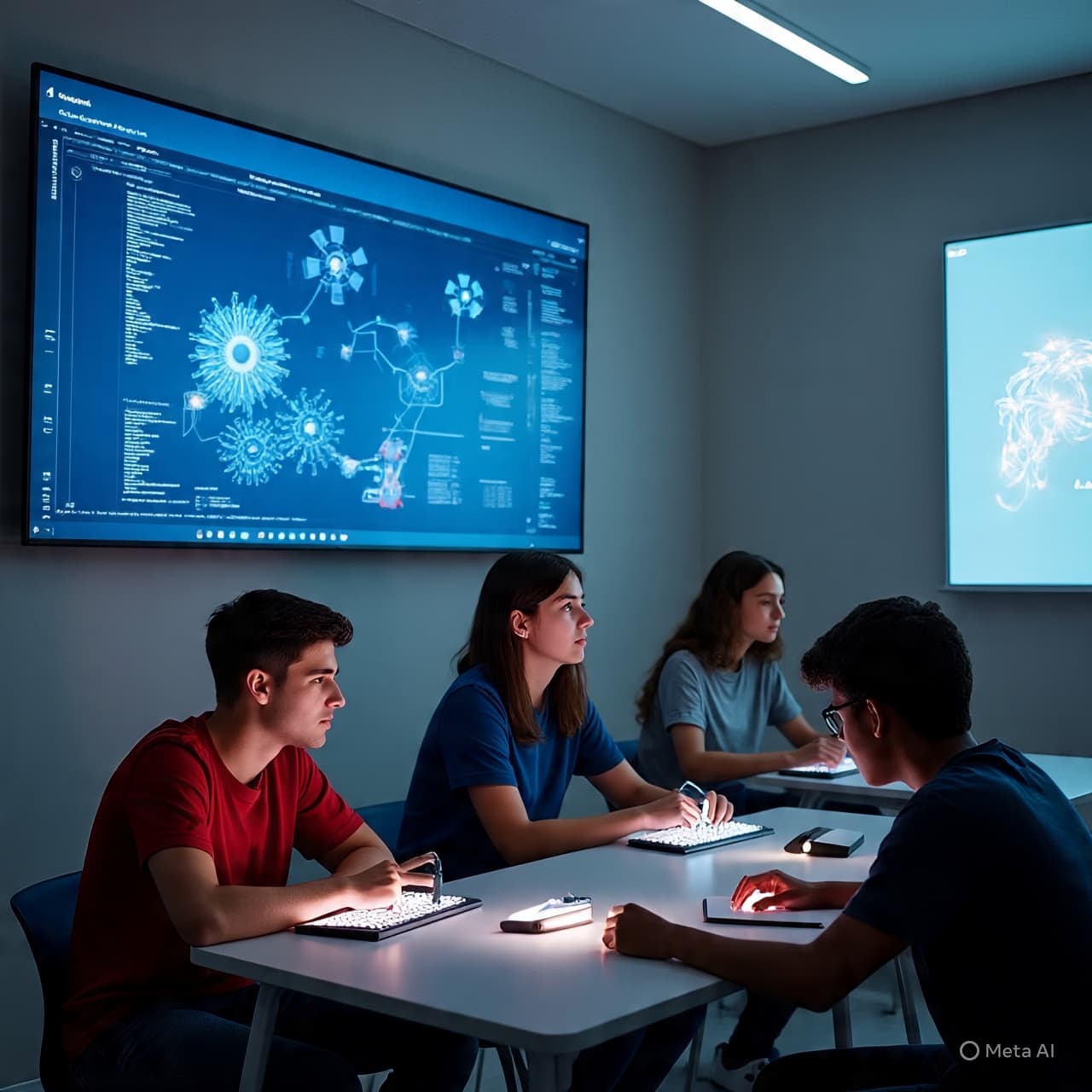
In classrooms where equations once lived only on whiteboards, a different kind of learning is beginning to take shape. It is less certain, more probabilistic, and grounded in concepts that resist everyday intuition. This is the space quantum computing occupies — and increasingly, the space educators are being asked to navigate.
Qilimanjaro has introduced EduQit, a hands-on educational platform designed to bring quantum computing out of abstraction and into practice. The initiative aims to help students, researchers, and professionals engage directly with quantum concepts through guided experimentation, rather than encountering them solely as theoretical constructs.
Quantum computing has long been described as powerful but distant, its promise framed by research papers and specialized laboratories. EduQit seeks to shorten that distance. By offering structured access to quantum tools and learning modules, the platform is positioned as a bridge between foundational theory and real-world application, allowing learners to explore how qubits behave, how algorithms are built, and how errors and uncertainty shape outcomes.
The timing reflects a broader shift in technology education. As quantum research moves steadily toward commercialization, the need for practical literacy has grown. Governments, universities, and companies increasingly recognize that future innovation depends not only on hardware breakthroughs, but on a workforce capable of understanding and working within quantum systems.
EduQit emphasizes experimentation over spectacle. Rather than presenting quantum computing as a distant marvel, it frames it as a discipline that can be explored step by step. Learners are encouraged to test assumptions, observe unexpected results, and become comfortable with the probabilistic nature that defines the field.
There is also a subtle democratizing impulse at work. By lowering barriers to entry, educational platforms like EduQit challenge the idea that quantum knowledge must remain confined to elite research environments. Exposure at earlier stages of education may help normalize concepts that once seemed inaccessible, preparing students for a future where quantum tools coexist with classical computing.
Still, the path is complex. Quantum systems remain sensitive, resource-intensive, and difficult to scale. Education alone cannot resolve these challenges. But it can shape expectations, cultivate skills, and reduce the gap between theoretical promise and practical understanding.
As EduQit enters classrooms and training programs, it signals a quiet evolution in how emerging technologies are taught. The future of quantum computing may depend as much on pedagogy as on physics. And in that careful act of teaching uncertainty, a new generation begins to learn how to compute in ways the classical world never required.
AI Image Disclaimer Illustrations are AI-generated and serve as conceptual representations.
Sources Qilimanjaro Academic literature on quantum computing education Industry reports on quantum workforce development
Published by Banx Network. This article is part of the Banx decentralized media programme, powered by the BXE token on the XRP Ledger.