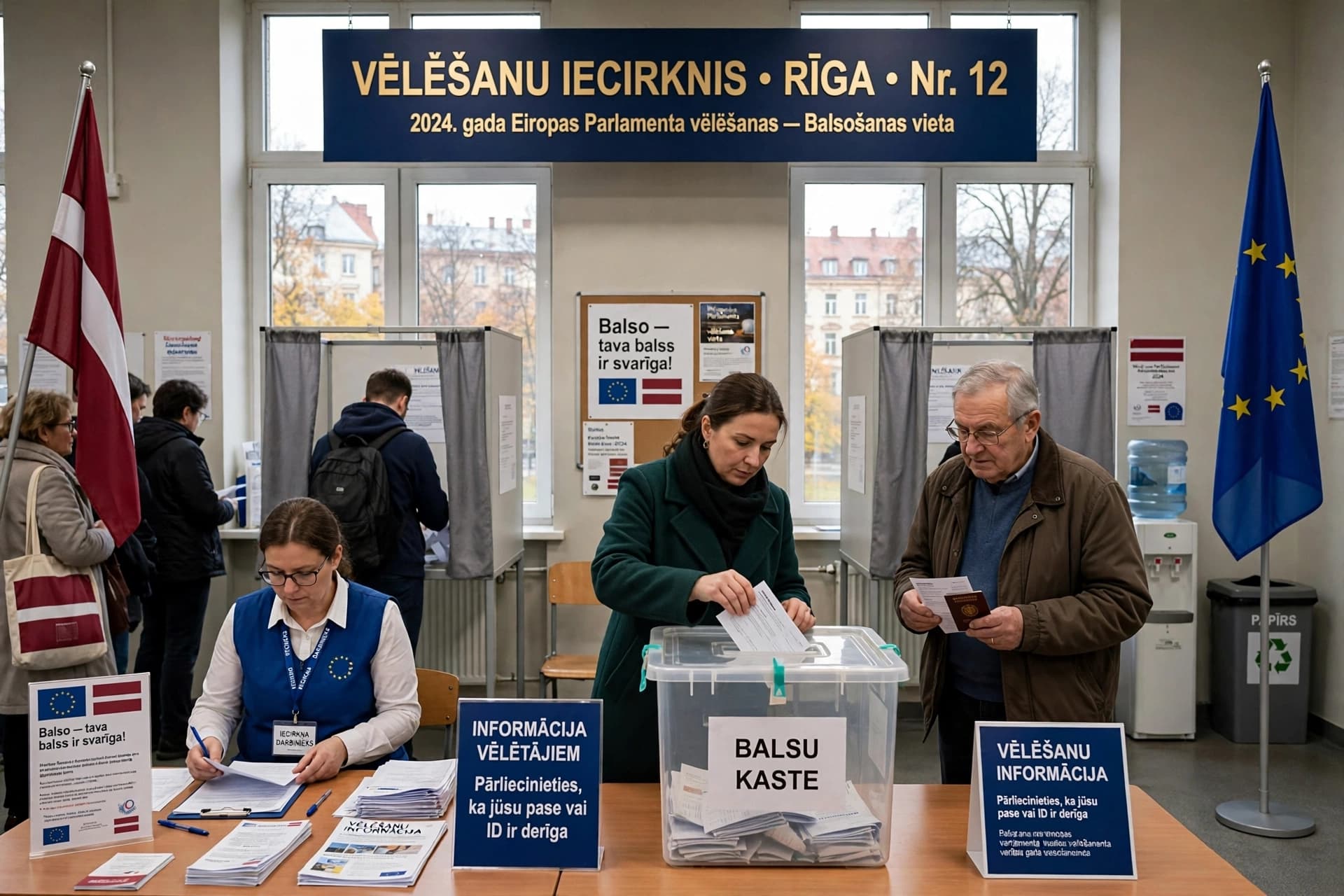
There is a particular clarity that comes to an election held in the shadow of a threat—a clarity that strips away the distractions of ordinary politics and asks voters, in effect, one question: who will keep us safe? In Latvia, a small Baltic nation that borders Russia and its ally Belarus, that question has become increasingly urgent. And on Sunday, voters answered it with a decisiveness that has reshaped the country's political landscape.
Prime Minister Andris Kulbergs and his centrist, pro-Western United List won a commanding victory in Latvia's parliamentary elections, securing approximately 35.3 percent of the vote—the best result for a single political force since Latvia regained independence from the Soviet Union in 1991 . The result translates to around 42 seats in the 100-seat Saeima, nearly tripling the party's previous representation . In his first reaction, Kulbergs described the result as "huge support from the people," adding that voters "want economic growth, stronger defense, clear rhetoric, and a better future for our children" .
The election was defined by security concerns. Latvia, a member of both the European Union and NATO, has invested heavily in its defense since Russia's full-scale invasion of Ukraine. Kulbergs, a 47-year-old former businessman who took office just five months ago, has been a firm supporter of Ukraine and has campaigned on a platform of economic stabilization and national security . His victory suggests that Latvian voters, particularly the majority population, endorse that approach.
But the results also reveal a more complicated picture. The second- and third-place finishers were both populist parties that performed strongly among Latvia's Russian-speaking minority. "Latvia First" took 13.1 percent of the vote, and "Sovereign Power/New Latvians" took 11.7 percent . Both parties are likely to sit in opposition, but their strong showing reflects a persistent divide in Latvian society over how to view the large eastern neighbor—a divide that security-focused politics has not erased.
The outgoing coalition partner, the Union of Greens and Farmers, failed to cross the 5 percent threshold for the first time in its 24-year history, a significant political casualty of the election . Turnout was 51.8 percent, the lowest in a parliamentary election since independence .
Kulbergs is expected to form a government with his current coalition partners, the National Alliance and New Unity, which together would hold a solid majority of 59 seats . President Edgars Rinkēvičs will nominate him to form a government, a process that could move quickly given the scale of his victory. For Latvia, the election represents a clear endorsement of the pro-Western, security-focused direction the country has taken. But it also leaves a question that the results have not answered: whether a government that governs for the majority can also find a way to address the concerns of the minority that voted for change of a different kind.
AI Image Disclaimer: The visual elements in this article were created using AI generation tools and are intended for illustrative purposes only.
Sources: LSM, BTA, LRT, TVP Info, SRF
Published by Banx Network. This article is part of the Banx decentralized media programme, powered by the BXE token on the XRP Ledger.