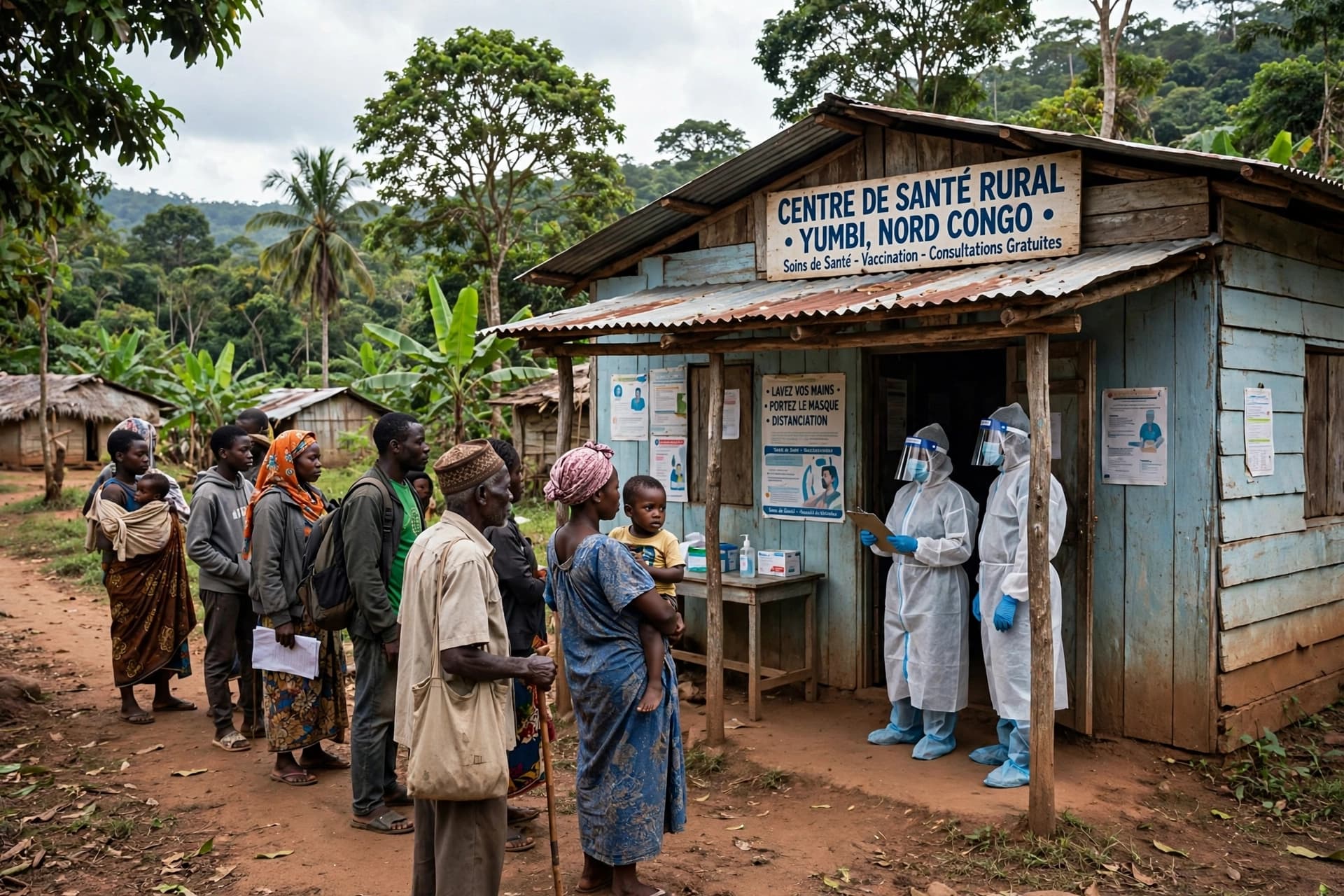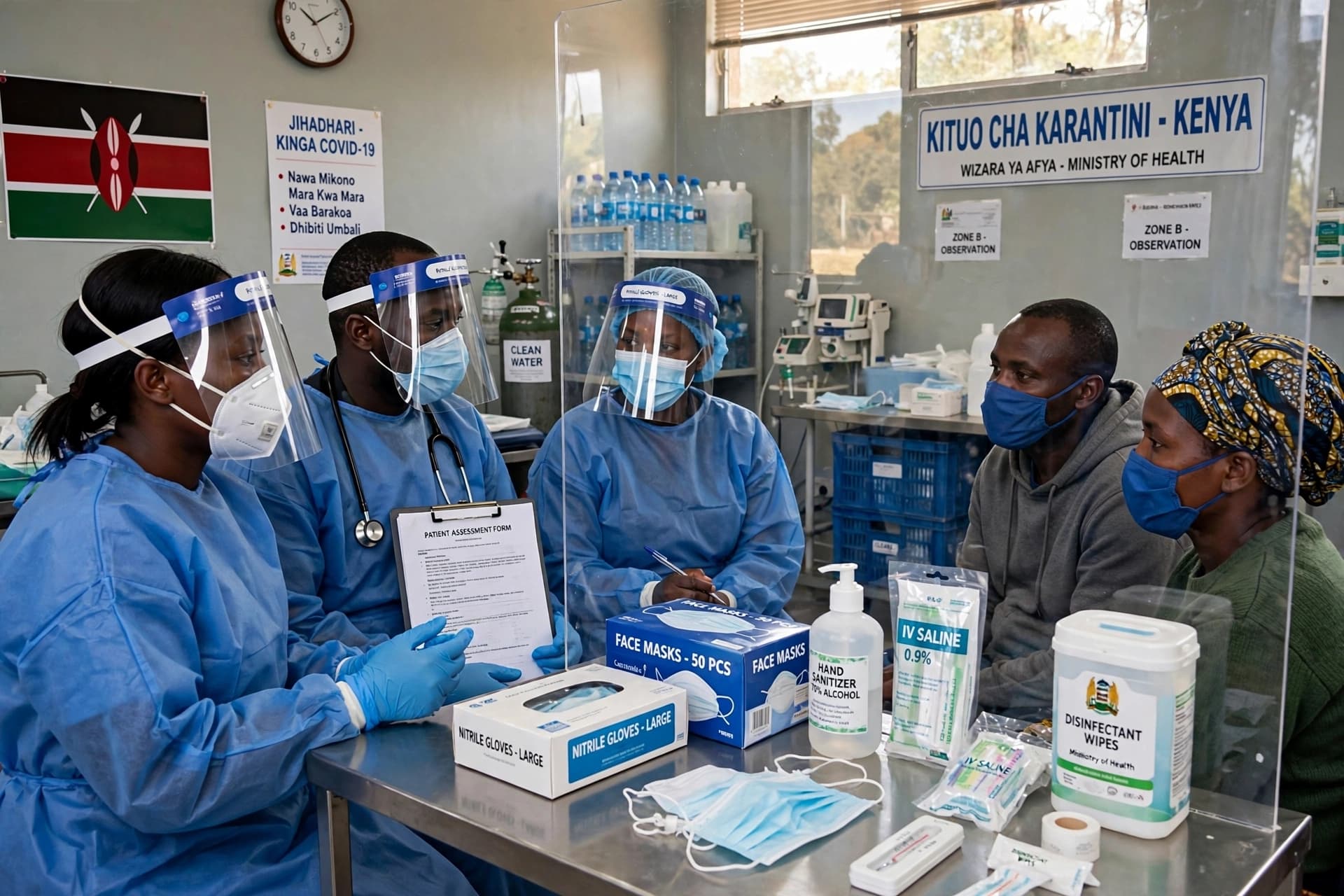
There is a particular vigilance that settles over a country when a distant outbreak crosses its border—not panic, but a heightened attention to the ordinary rituals of protection. A quarantine facility becomes a place of quiet purpose. A contact tracing list becomes a map of care. And a fever, the most common of human symptoms, becomes a signal that must be read correctly the first time.
Kenya's Ministry of Health confirmed four new cases of Ebola Bundibugyo virus disease on Saturday, bringing the country's total to seven, including the first patient who died . The new cases involve a close male relative of the deceased patient and three healthcare workers—two men aged 29 and 35, and a 32-year-old woman—who treated him at a Nairobi hospital between October 3 and 4 . All four developed fever as their first symptom and were immediately isolated; specimens tested positive at both the National Virology Reference Laboratory and the Kenya Medical Research Institute laboratory .
What distinguishes this cluster from a wider crisis is its location. All four individuals were already under quarantine when they developed symptoms—the relative since October 6, the health workers since October 9 . Their early detection, the ministry said, demonstrates the critical role of contact tracing, surveillance, and timely isolation in interrupting transmission . Of the 130 contacts identified, 128 have been traced and placed under quarantine, with efforts ongoing to locate the remaining two . The ministry reported no evidence of community transmission at this stage, and the risk to the general public remains low .
The first case was an imported one. A 40-year-old Kenyan businessman who had lived in the Democratic Republic of Congo for seven years traveled overland to Kampala and flew into Nairobi on October 3, where he died two days later . Kenya had never previously reported a case of Ebola. The country's response since that first diagnosis has been swift and methodical—a testament to the preparedness that has been built across East Africa after years of outbreaks in the region. Uganda recorded twenty cases earlier this year, nearly all linked to travelers from Congo, before being declared Ebola-free in August .
Congo itself remains the epicenter of the outbreak that has now reached Kenya's borders. More than 9,000 cases and over 4,000 deaths have been reported there as of mid-October, making it the second-largest Ebola epidemic on record . The Bundibugyo strain, for which there is no approved vaccine, has complicated the response. Kenya's cases are a reminder that in a world of movement—of trade, of family ties, of travel—the distance between an outbreak and a new country is measured not in borders but in incubation periods.
The Africa CDC has reaffirmed its support to Kenya, and the ministry continues to monitor the situation closely . The four new patients are receiving supportive care. The second and third cases are reported stable and responding well to treatment . The country remains open, with no restrictions on travel, trade, or public gatherings .
For the health workers who treated the first patient, and for the family member who shared his quarantine, the fever was caught in time. That is the narrow margin on which outbreak response depends—the space between exposure and detection, between a symptom noticed and a transmission prevented.
AI Image Disclaimer: The images accompanying this article were generated by artificial intelligence and are intended for illustrative purposes only.
Sources: Africa CDC, WAM, CGTN, Standard Media, ANTARA News, Ahram Online
Published by Banx Network. This article is part of the Banx decentralized media programme, powered by the BXE token on the XRP Ledger.