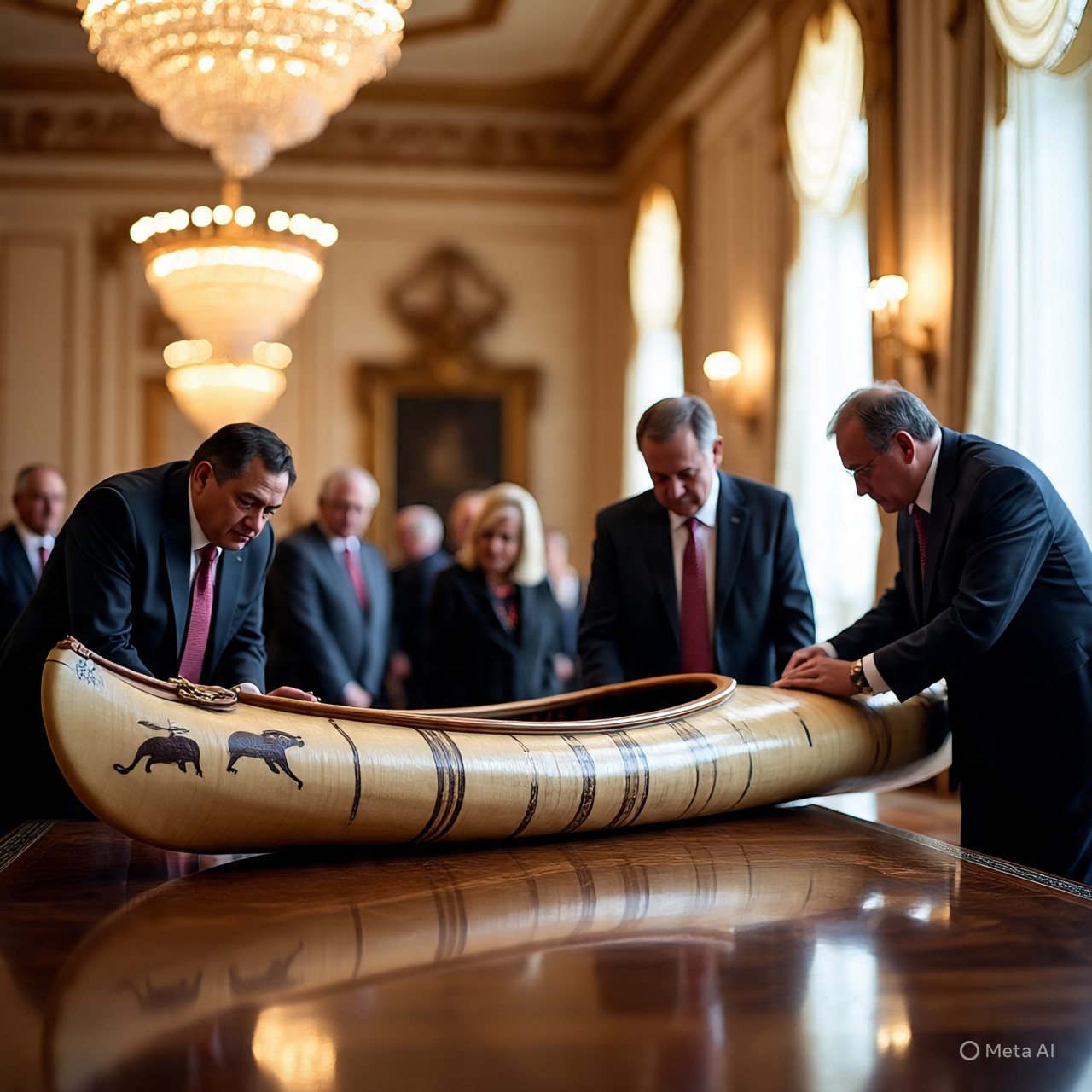
In the soft glow of a November morning in Vatican City, a gesture was made that carried the weight of a century. Sixty-two artifacts — once removed from Indigenous communities in Canada — were handed over by the Vatican in a quiet act of humility and reconciliation. It was not a mere diplomatic routine, but a deeply symbolic offering: a “gift,” as described by church authorities, to acknowledge old wounds and renewed respect.
These items include an iconic Inuit kayak, war clubs, masks, and wampum belts — objects that embody not just artistry, but the spiritual and cultural life of First Nations, Inuit, and Métis peoples. Long held in the Vatican’s Anima Mundi (ethnographic) collection, they were originally gathered for a 1925 exhibition organized by Pope Pius XI.
The formal transfer took place during a meeting between Pope Leo XIV and delegates from the Canadian Conference of Catholic Bishops. In a joint statement, the Vatican and the Canadian bishops framed the return as a “concrete sign of dialogue, respect and fraternity.”
Yet, for all the ceremony, the shadows of the past linger. Historians and Indigenous advocates have long questioned the narrative that the artifacts were freely “gifts” to Rome. During the era when many of these objects were collected, Catholic missionaries held significant power in Indigenous communities — power bolstered by colonial governments that enforced policies of assimilation. The Truth and Reconciliation Commission of Canada has called some of those policies “cultural genocide,” citing bans on ceremonies like the potlatch.
This repatriation process has been building momentum in recent years. In 2022, Pope Francis apologized to Indigenous leaders for the church’s role in Canada’s residential schools. The following year, the Vatican formally repudiated the so-called “Doctrine of Discovery” — the legal and theological justification once used by European powers to seize land and suppress Indigenous peoples.
As a next step, the artifacts will first go to the Canadian Museum of History in Gatineau, Quebec, where experts and Indigenous groups will work to trace each item’s origin. From there, they are expected to be returned to the specific communities from which they came. The Canadian bishops have pledged to ensure that this process happens with care, respect, and true engagement.
AI Image Disclaimer “Graphics are AI-generated and intended for representation, not reality.”
Published by Banx Network. This article is part of the Banx decentralized media programme, powered by the BXE token on the XRP Ledger.