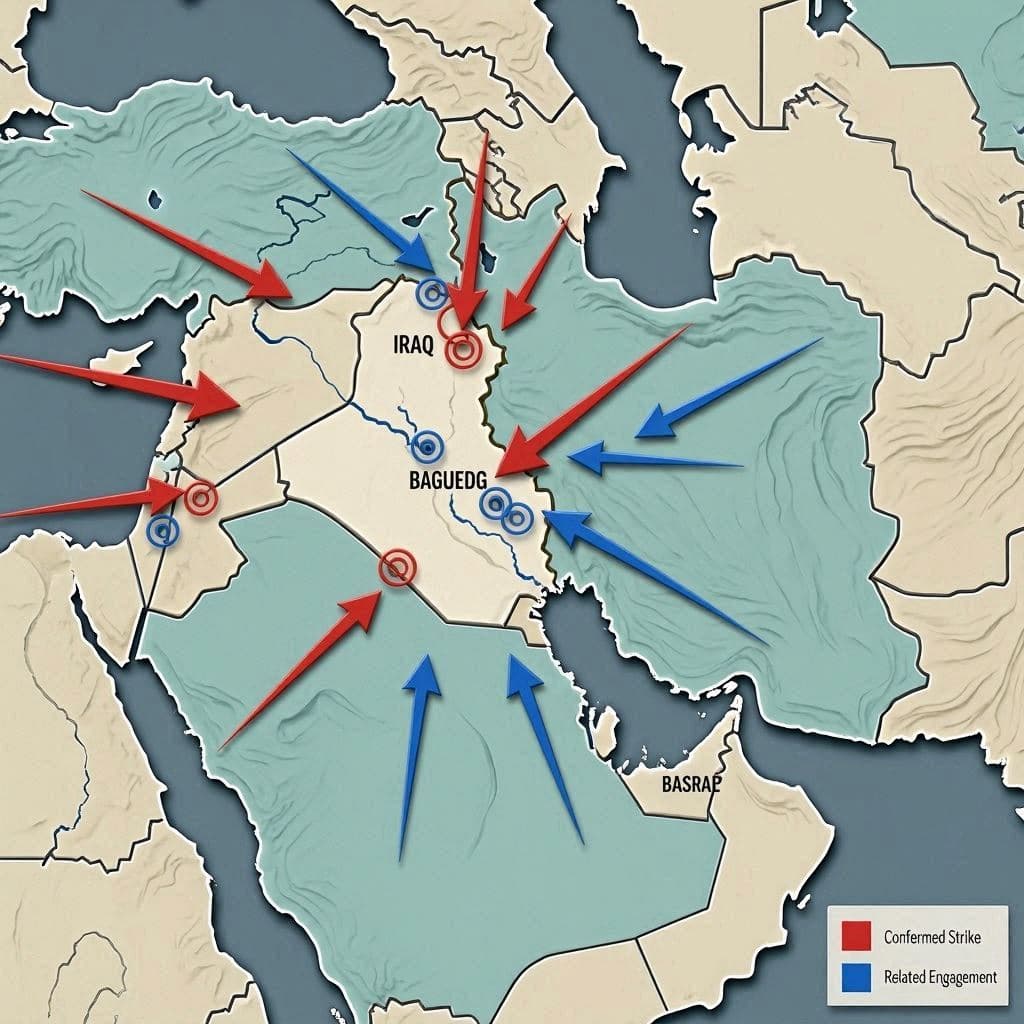
Tensions in the Middle East often ripple outward, affecting nations far beyond the immediate zone of conflict. In a significant escalation, the United States and Saudi Arabia have conducted joint airstrikes against Iran-backed militias in Iraq. This coordinated action marks a pivotal moment in the regional struggle for influence, drawing new lines in a landscape already fraught with complexity and historical grievance.
The strikes, carried out by U.S. Central Command and the Royal Saudi Air Force, targeted multiple logistics and weapons sites in eastern Iraq. Officials stated that the operation was a direct response to a series of drone attacks directed by the Islamic Revolutionary Guard Corps (IRGC) against U.S. forces and Saudi energy infrastructure. The precision of the strikes aimed to degrade the militias’ capabilities while minimizing collateral damage.
Saudi Arabia’s participation is particularly notable, signaling a deepening alignment with U.S. security interests in the region. For years, Riyadh has sought to counter Iranian influence, and this joint operation demonstrates a willingness to take proactive military measures. The collaboration underscores a shared perception of threat and a commitment to collective defense.
Iran-backed militias in Iraq have long been a source of instability, operating with varying degrees of autonomy from Tehran. Their attacks on foreign troops and local rivals have frequently sparked retaliatory cycles, threatening to ignite a broader conflagration. The recent surge in hostilities has raised concerns among international observers about the potential for miscalculation and unintended escalation.
The U.S. Department of Defense emphasized that the strikes were defensive in nature, intended to protect personnel and uphold regional stability. However, critics argue that such actions may further entrench militant groups and provoke harsher responses from Iran. The balance between deterrence and provocation remains a delicate challenge for policymakers in Washington and its allies.
Local reactions in Iraq have been mixed, with some communities welcoming the reduction of militia power while others fear increased violence. The Iraqi government faces the difficult task of maintaining sovereignty while navigating the pressures of external powers. Its ability to mediate between these forces will be crucial in determining the country’s future trajectory.
As the dust settles from the airstrikes, attention turns to Tehran’s next move. Will it seek de-escalation, or will it retaliate through proxy networks? The answer will shape the security architecture of the Middle East for months to come. Diplomatic channels remain open, but the margin for error has narrowed significantly.
The joint U.S.-Saudi strikes represent a bold statement in the ongoing contest for regional dominance. As all parties assess the aftermath, the world watches closely, hoping for a return to stability amidst the shifting sands of Middle Eastern politics.
AI Image Disclaimer: Please note that the visuals in this piece are AI-generated illustrations created to depict the concept of military coordination and regional tension.
Sources: U.S. Central Command, BBC, Arab News, ABC News Australia
Published by Banx Network. This article is part of the Banx decentralized media programme, powered by the BXE token on the XRP Ledger.


.jpg&w=3840&q=75 "Sally Rooney’s Books to Be Withdrawn From UK Sale Over Palestine Action Support")