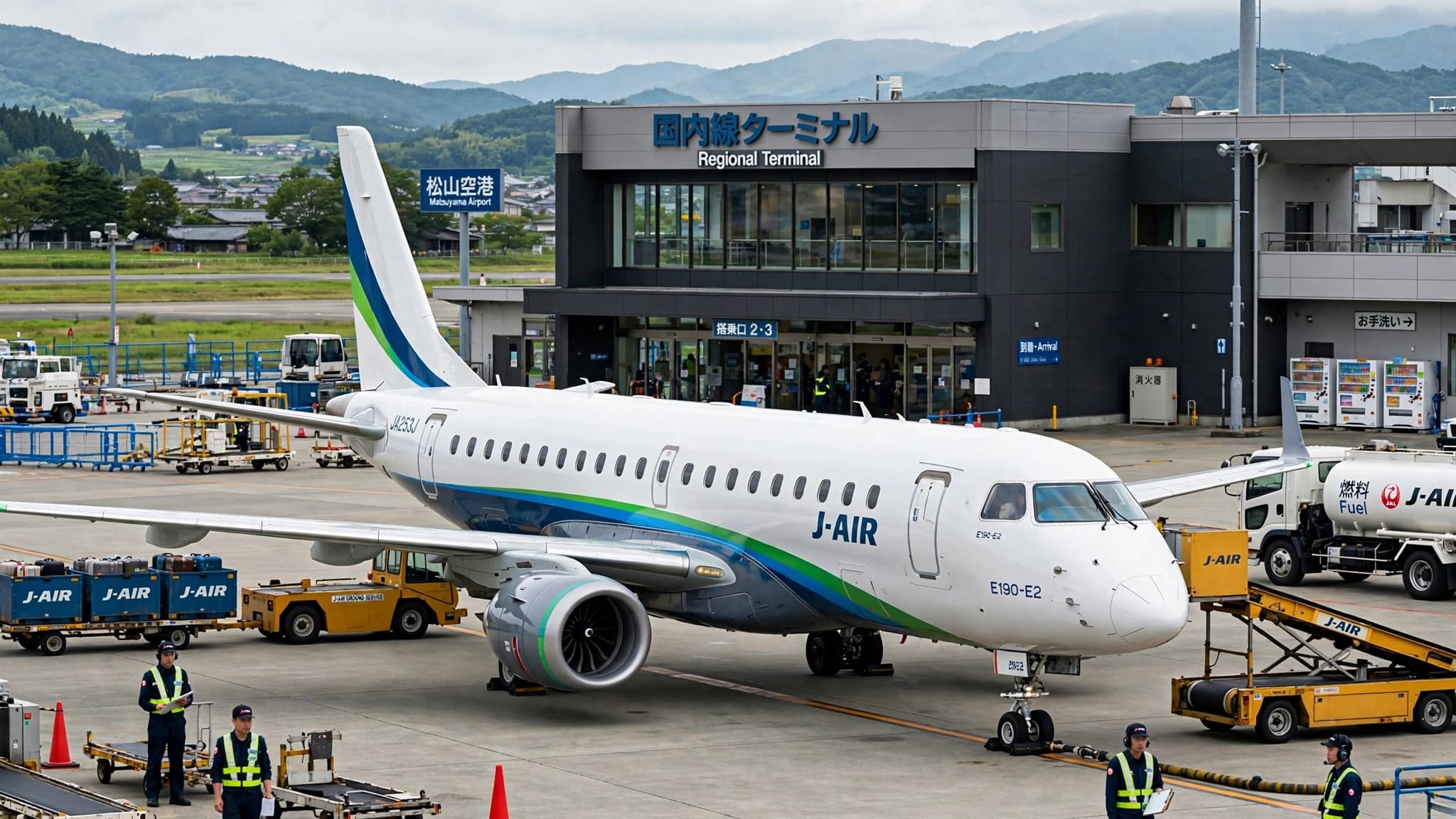
Japan Airlines is approaching a significant decision over the aircraft that could serve its regional network in the years ahead. The carrier is reportedly leaning toward Brazil’s Embraer for an order of about 20 regional jets, although the decision has not yet been finalized.
The aircraft under consideration are Embraer’s E2 family and Airbus’ A220. According to people familiar with the matter cited by Bloomberg, Japan Airlines could make a final decision as soon as October, although circumstances could still change before an agreement is reached.
The potential order follows a longer examination of Japan’s regional aviation needs. In 2025, Japan Airlines was reported to be seeking proposals for about 40 regional jets and as many as 30 turboprop aircraft as part of a broader domestic fleet renewal. The size and composition of that plan have remained subject to change.
For Embraer, a JAL order would deepen its presence within Japan’s aviation market. JAL’s regional subsidiaries already operate Embraer aircraft, while ANA Holdings has also ordered E190-E2 jets. Embraer has additionally secured recent orders from airlines including Finnair and SAS.
The choice between the E2 and A220 reflects the different requirements of regional aviation. The standard Embraer E190-E2 can accommodate up to 97 passengers in a two-class configuration, while Airbus’ A220-100 can carry as many as 120 passengers. Both aircraft use Pratt & Whitney turbofan engines.
For Japan Airlines, the question is closely connected to how domestic demand develops outside the country’s largest metropolitan centers. Smaller aircraft can provide greater flexibility on routes where passenger numbers vary, allowing airlines to match capacity more closely with the size of individual markets.
Japan’s demographic changes also form part of that calculation. The country’s aging and shrinking population has affected expectations for domestic travel, making fleet efficiency increasingly important for airlines serving regional destinations.
The aircraft decision also comes as Japanese airlines face changing operating conditions. Fuel prices, maintenance expenses and the availability of aircraft all influence fleet planning, while carriers must consider how different aircraft types fit into existing maintenance and training systems.
A final decision in October would therefore represent more than a simple purchase agreement. It would help determine how Japan Airlines approaches smaller domestic routes during a period when airlines are seeking greater flexibility and efficiency from their fleets.
For now, the E2 remains a reported preference rather than a confirmed order. The final decision will depend on negotiations and operational considerations still being worked through, leaving the next chapter of Japan Airlines’ regional fleet waiting somewhere between Tokyo’s planning offices and the runways of the country’s smaller cities.
Image Disclaimer: The illustrations are AI-generated visual representations of regional aviation and do not depict an actual confirmed Japan Airlines order or specific flight operation.
Sources: The Japan Times Bloomberg Japan Airlines Embraer Airbus
Published by Banx Network. This article is part of the Banx decentralized media programme, powered by the BXE token on the XRP Ledger.