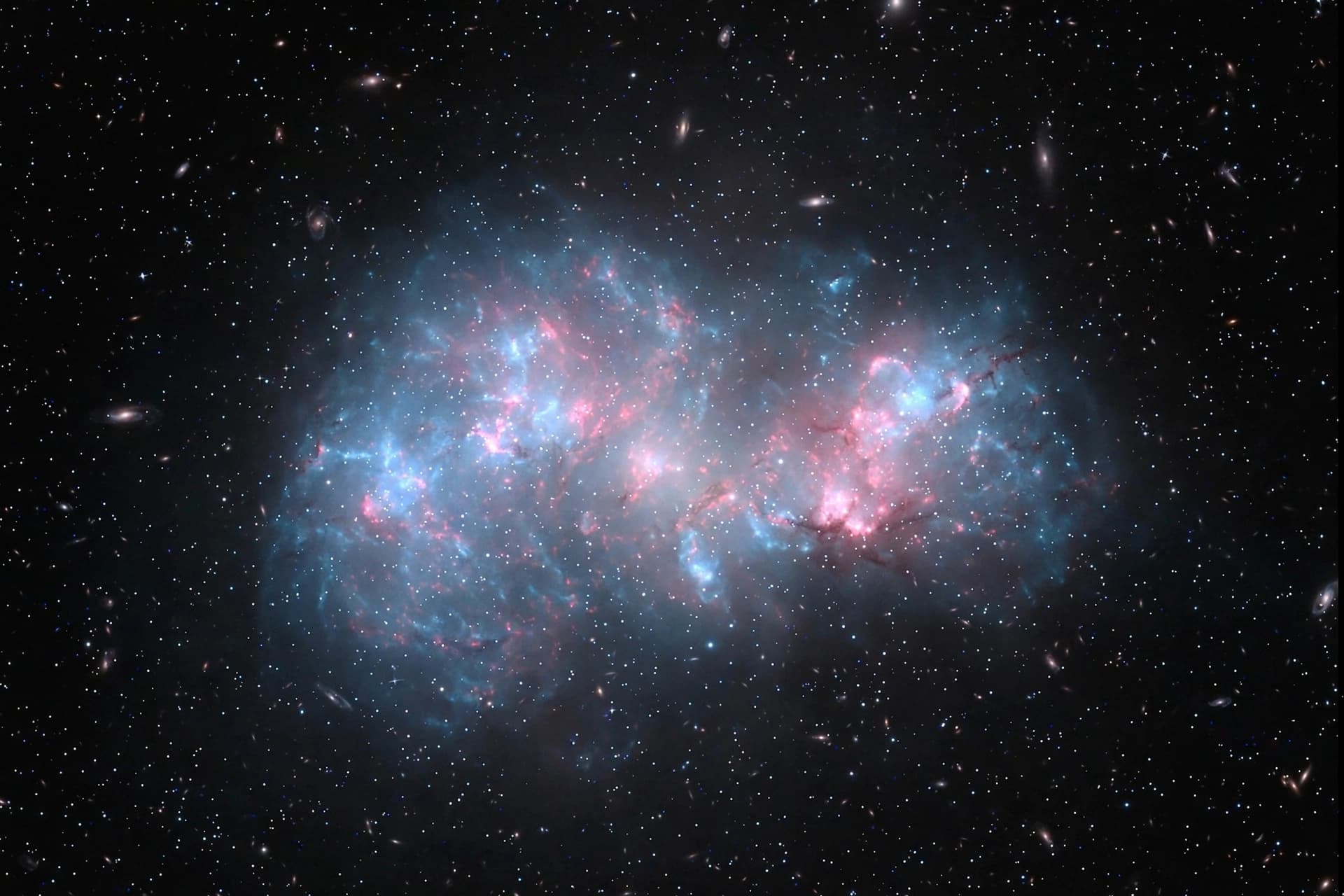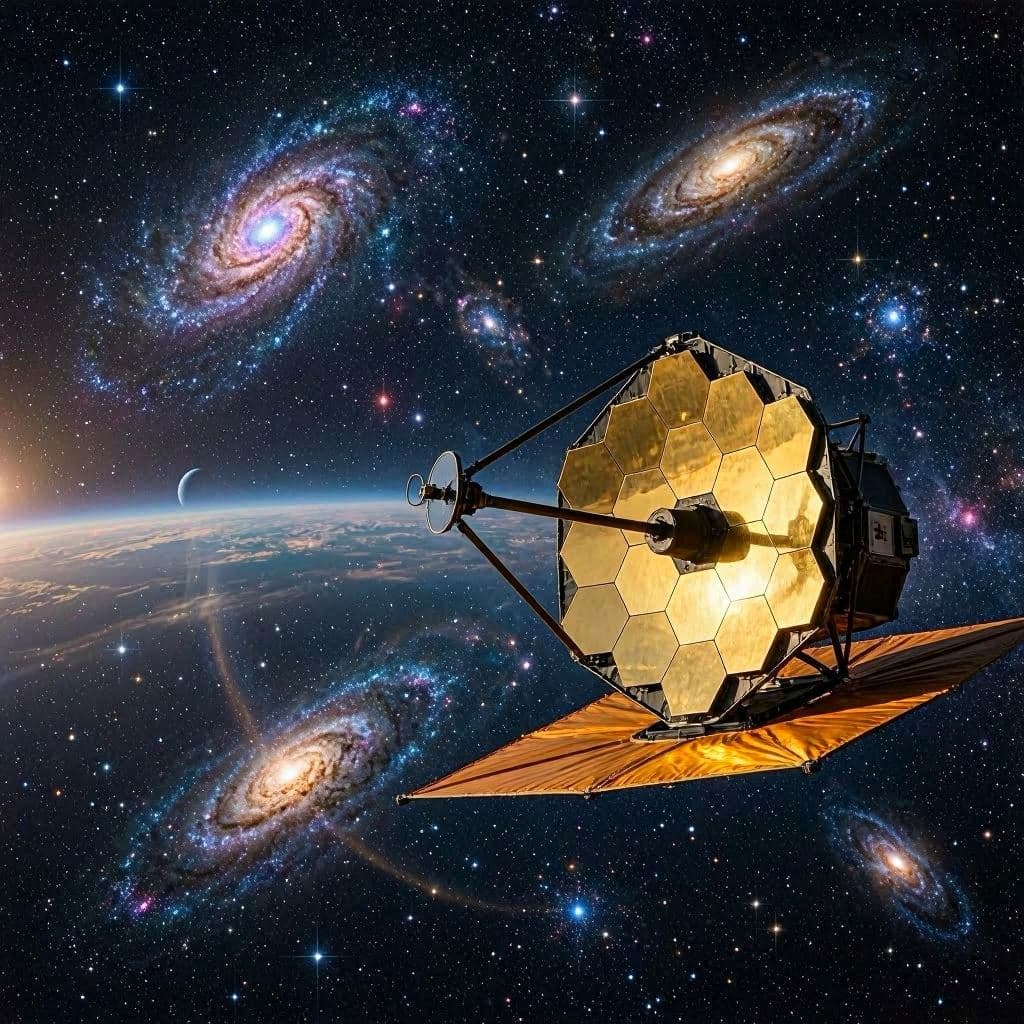
In the quiet vastness of space, where distance is measured not only in light-years but in time itself, the universe preserves echoes of its earliest chapters. The James Webb Space Telescope has opened an unprecedented window into that distant past, offering observations that may point toward unusual cosmic objects described as “black hole stars.”
Body: The James Webb Space Telescope (JWST), developed through an international collaboration led by NASA, has been designed to observe the universe in infrared wavelengths, allowing it to see through cosmic dust and peer further back in time than any previous instrument.
Recent analyses of distant galaxies have revealed objects whose brightness and structure do not neatly align with conventional models of star formation. These anomalies have led some researchers to explore alternative explanations, including the possibility of early-universe objects influenced heavily by black hole dynamics.
The term “black hole stars” is not yet a confirmed classification, but rather a theoretical concept used to describe hypothetical objects where massive black holes may have interacted with surrounding gas in ways that produce star-like luminosity. These ideas remain under active investigation.
Scientists caution that early-universe observations are inherently complex. Light from these objects has traveled billions of years before reaching Earth, meaning that what is observed today represents conditions from a very different cosmic era.
Data from JWST is continuously compared with theoretical models of galaxy formation and stellar evolution. Researchers aim to determine whether these unusual signals represent new physics, rare cosmic events, or refinements needed in existing models.
While excitement surrounds these findings, the scientific process remains grounded in verification and peer review. Multiple observations over time are required before any new category of cosmic object can be formally established.
Closing: As the James Webb Space Telescope continues its mission, astronomers expect more data that could either clarify or further deepen these cosmic mysteries. For now, “black hole stars” remain an intriguing possibility within the expanding story of the universe’s origins.
AI Image Disclaimer: This article includes AI-generated visuals intended for editorial illustration purposes only.
Sources (source verification check): NASA, European Space Agency (ESA), Space Telescope Science Institute, Science News
Published by Banx Network. This article is part of the Banx decentralized media programme, powered by the BXE token on the XRP Ledger.