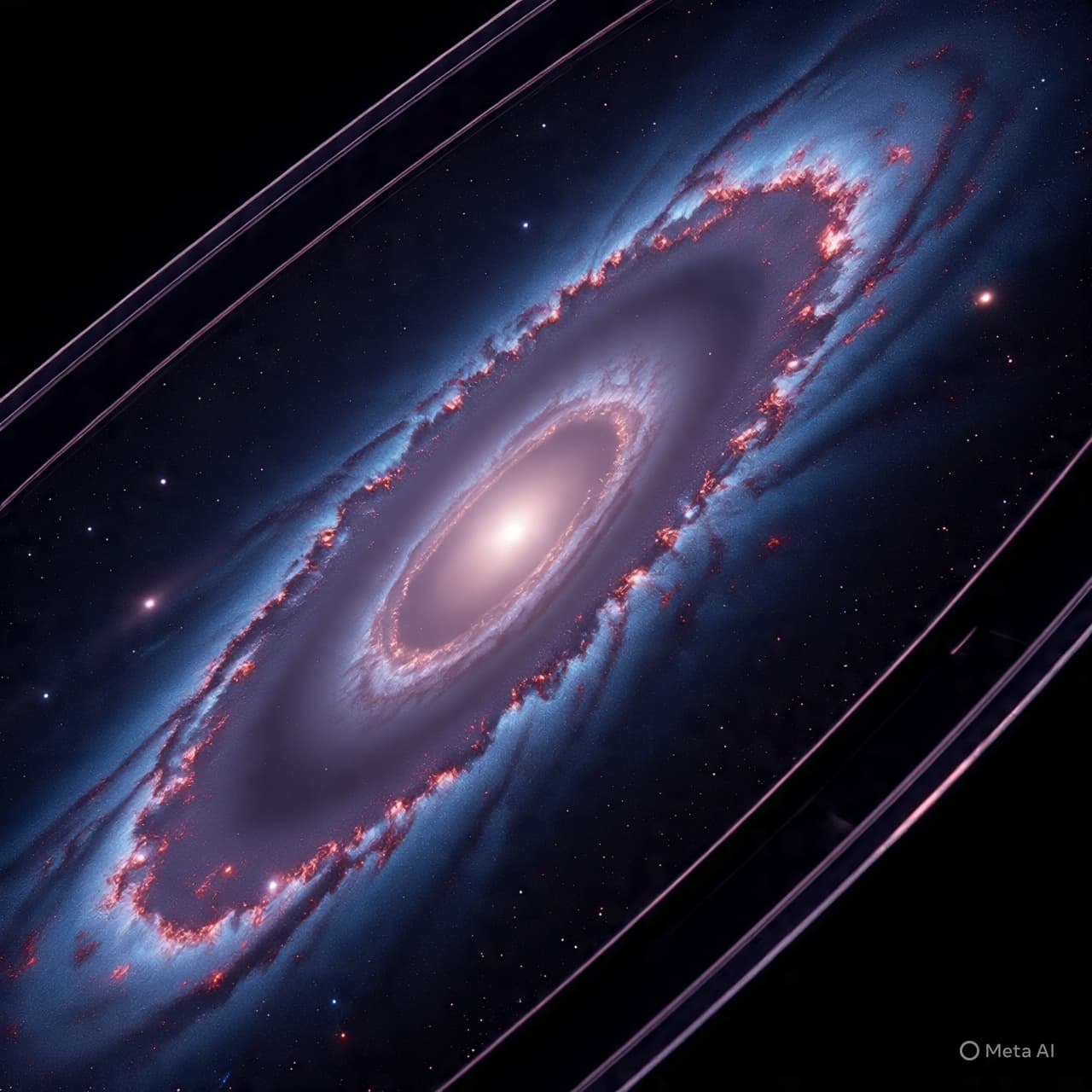
The James Webb Space Telescope (JWST) has captured striking images of a galaxy nicknamed the “cosmic jellyfish”, offering astronomers a rare glimpse into the processes that shaped galaxies in the early universe. The observations highlight how powerful cosmic forces can distort and transform galactic structures over time.
The jellyfish-shaped galaxy displays elongated streams of gas and stars that resemble tentacles extending from a central core. Astronomers say these features are likely the result of intense gravitational interactions, star formation, and the influence of surrounding intergalactic material. By studying these structures, scientists hope to better understand how galaxies grow, merge, and evolve.
This discovery provides unique insights into the mechanics of galactic evolution. Observations suggest that interactions with nearby galaxies, along with internal dynamics, play a critical role in shaping the morphology and star formation activity within galaxies. The data captured by JWST allows researchers to analyze these processes in unprecedented detail, particularly in galaxies formed billions of years ago.
Astronomers emphasize that the early universe was a dynamic environment, where galaxy collisions and mergers were more frequent than in the present day. Studying objects like the cosmic jellyfish helps bridge gaps in understanding how simple protogalaxies developed into the diverse structures observed in the modern cosmos.
The James Webb Space Telescope continues to transform our knowledge of the universe by providing high-resolution infrared images that penetrate dust and gas clouds, revealing details previously hidden from even the most advanced instruments. Each new observation adds to a growing picture of cosmic history, from the formation of the first stars to the evolution of complex galactic systems.
As analysis continues, researchers hope the cosmic jellyfish will offer clues not only about galactic morphology but also about the processes governing star formation, black hole activity, and the redistribution of interstellar material in the early universe.
Published by Banx Network. This article is part of the Banx decentralized media programme, powered by the BXE token on the XRP Ledger.