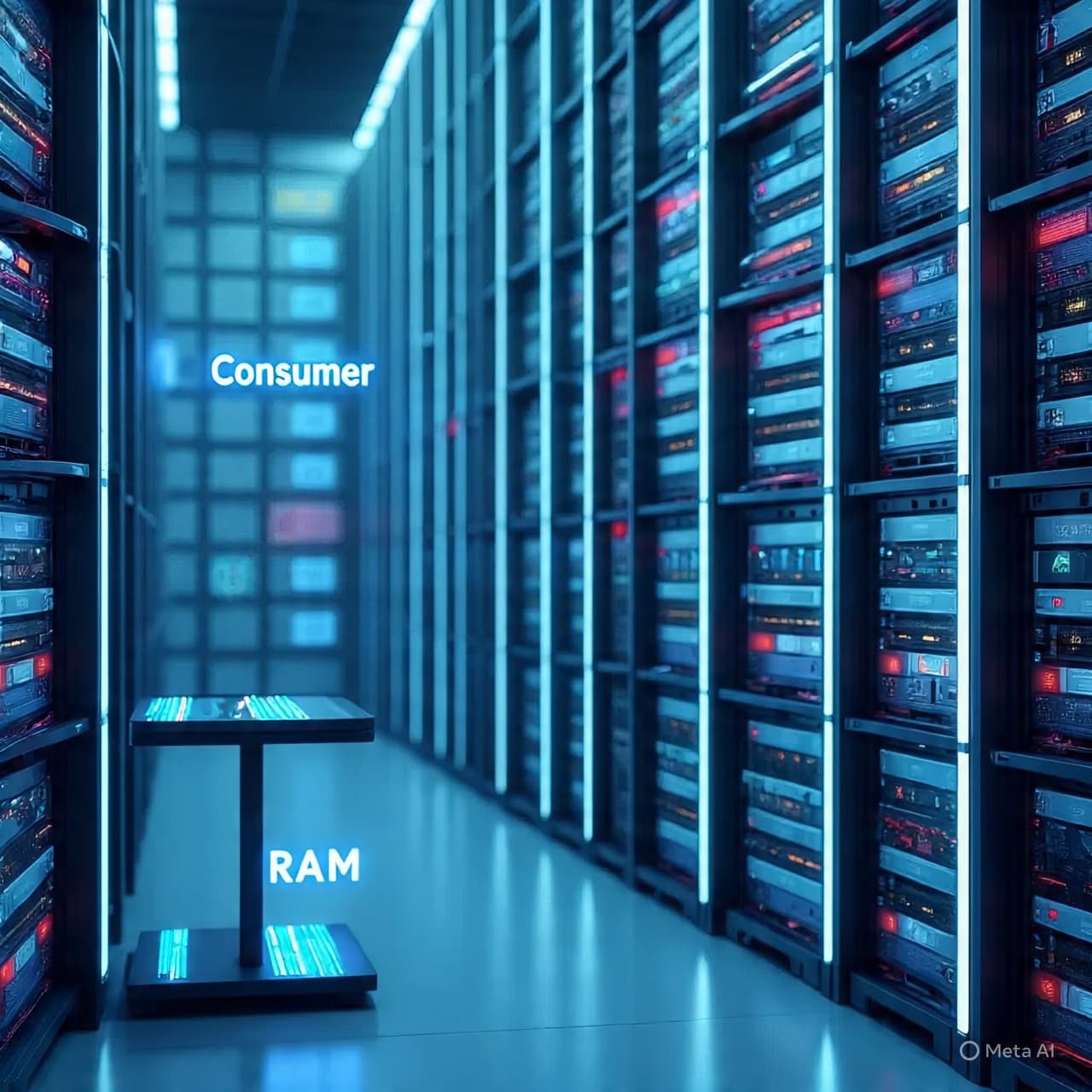
A few years ago, memory — the RAM inside our laptops, desktops, phones and consoles — was like air in a comfortable home: abundant, taken for granted, almost invisible as long as it worked. But in 2025, that quiet air seems to have grown thin: supply shortages, rising prices and shifting priorities have turned RAM into a scarce commodity — and for many, a new kind of burden.
In an era when artificial intelligence demands more memory than ever, memory-chip makers are redirecting vast portions of their production capacity to serve large AI data centers first. As a result, consumer hardware — your PC build, your smartphone, your gaming rig — is caught in the squeeze.
For ordinary consumers and PC builders, the effects are stark. RAM kits that once were relatively affordable are now spiking in price. Budget-friendly upgrades feel out of reach. Enthusiasts who used to refresh their rigs with ease now face a tough decision: pay more, wait longer, or settle for lesser specs.
But the issue isn’t only about money. It’s also about performance — or more precisely, about what happens when memory becomes mis-managed or insufficient for real needs. When a system doesn’t have enough RAM to hold active programs and data comfortably, it relies heavily on storage-based memory tricks (virtual memory, paging), which are far slower. This can lead to lag, freezes, bottlenecks and even crashes.
On the other hand, piling in “too much” RAM doesn’t always guarantee smooth sailing. There is a principle of diminishing returns: once you pass a threshold, extra RAM may not meaningfully improve performance — and in some cases might even increase power consumption or introduce management inefficiencies.
Memory leaks, buggy drivers, background processes, and sometimes even malware can make RAM vanish in the blink of an eye — making your “plenty of memory” feel like not enough.
For everyday tasks — browsing, writing, light work — a modest amount of RAM was enough. For heavy workloads — gaming, video editing, virtual machines — users would plan for higher memory. But today, even that predictable planning is shaken. Price uncertainty, supply volatility, and shifting hardware-market dynamics have turned the familiar act of “upgrading RAM” into a gamble.
In short: what once was a stable foundation of digital life — memory — now feels unpredictable. For many, the convenience and flexibility we expected from personal computing is under threat.
As the RAM supply squeeze intensifies, we may find ourselves forced to choose between performance and price — or even between working and waiting. And that tension may shape not only how we build our computers, but how we think about digital life itself.
AI-Image Disclaimer Visuals are created with AI tools and intended as conceptual illustrations, not real photographs.
Sources The Verge; TechRadar; PC Gamer (as reported by TechRadar); general memory management documentation (Wikipedia / computing memory paging and thrashing entries)
Published by Banx Network. This article is part of the Banx decentralized media programme, powered by the BXE token on the XRP Ledger.