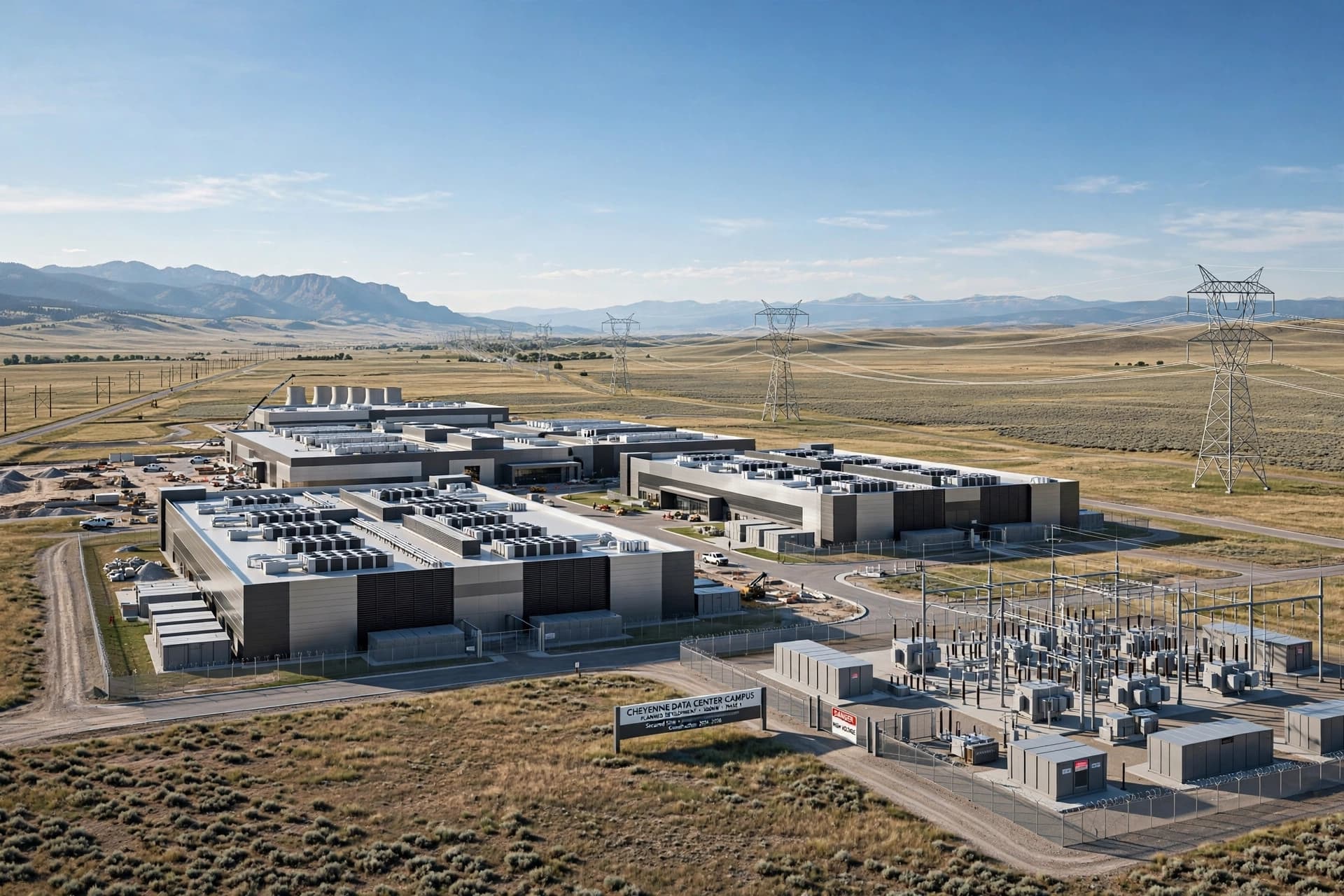
In a world increasingly shaped by algorithms and digital insight, the hum of massive server farms has become the new backdrop to innovation. These sprawling data centers — the engines that power artificial intelligence — are often tucked away from view, tucked behind fences and fiber‑optic cables, far from the ordinary gaze. Yet, as AI’s influence expands, so does the spotlight on its environmental footprint — a footprint that, to some observers, feels almost paradoxical: a technology designed to solve grand challenges now figured among the unfolding stories of climate strain and pollution.
The concern centers on how much electricity, water, and resources AI systems consume. Training large AI models — the elaborate computational processes that enable today’s most powerful generative tools — demands intense energy. A notable roadmap from researchers suggests that, by 2030, growing AI infrastructure could contribute an additional 24 – 44 million metric tons of carbon dioxide per year — roughly equivalent to the annual emissions of millions of typical cars — if built out without major efficiency gains.
Energy consumption in data centers isn’t just about overall use; it also ties into how power is generated. In many regions, grids are still heavily dependent on fossil fuels, meaning increased demand from AI can lead to higher greenhouse gas emissions, even as renewable sources expand. Moreover, the scale of AI’s infrastructure — from server hardware to cooling systems — carries broader environmental costs, including water use and e‑waste from rapidly cycling technology.
Yet, the narrative is not solely one of climate risk. Currently, AI’s direct share of global emissions remains relatively modest — some studies estimate AI-related activity contributes around 0.1–0.2% of worldwide greenhouse gases today — which is small compared with major industrial sectors but growing as demand rises. What makes the issue pressing is the trajectory: AI growth could significantly increase data center power demands unless improvements in efficiency and energy sourcing keep pace. Models suggest data center electricity use could surge dramatically by the end of the decade under current trends.
Importantly, AI isn’t only part of the problem; it can also be part of the solution. A major study published by climate researchers found that AI applications — when deployed to improve power systems, transportation, food supply chains, and other emissions‑intensive sectors — could potentially reduce global greenhouse gas emissions by 3.2–5.4 billion tonnes annually by 2035. This volume of reduction could outweigh the additional emissions from AI’s power use if harnessed responsibly.
Optimizing energy grids, enhancing renewable output forecasting, and improving industrial efficiency are just a few ways AI can help reshape emissions pathways. The technology’s capacity to analyze vast datasets and model complex systems offers tools that may accelerate the transition to cleaner energy — provided that development and deployment prioritize environmental outcomes over unchecked expansion.
Yet critics caution that AI’s environmental promise depends on values and policy choices. Without firm commitments to renewable power, transparent reporting of energy use, and regulations targeting sustainability, the technology’s growing appetite for resources risks undermining broader climate goals.
AI’s impact on the climate is neither a simple villain nor an unalloyed hero. It is a mirror reflecting broader tensions in our technological age: the drive to innovate, the need for rapid solutions to global problems, and the challenge of doing so without deepening environmental strain. As data centers multiply and AI applications spread, the critical task ahead is to ensure that this powerful tool strengthens — rather than weakens — the journey toward a sustainable planet. With thoughtful stewardship, the goal remains not just smarter machines, but a healthier climate for all.
AI Image Disclaimer: Visuals are created with AI tools and are not real photographs.
Sources: The Guardian; Cornell University News; LSE Grantham Research Institute on Climate Change and the Environment; Oeko‑Institut analysis; World Economic Forum reporting.
Published by Banx Network. This article is part of the Banx decentralized media programme, powered by the BXE token on the XRP Ledger.