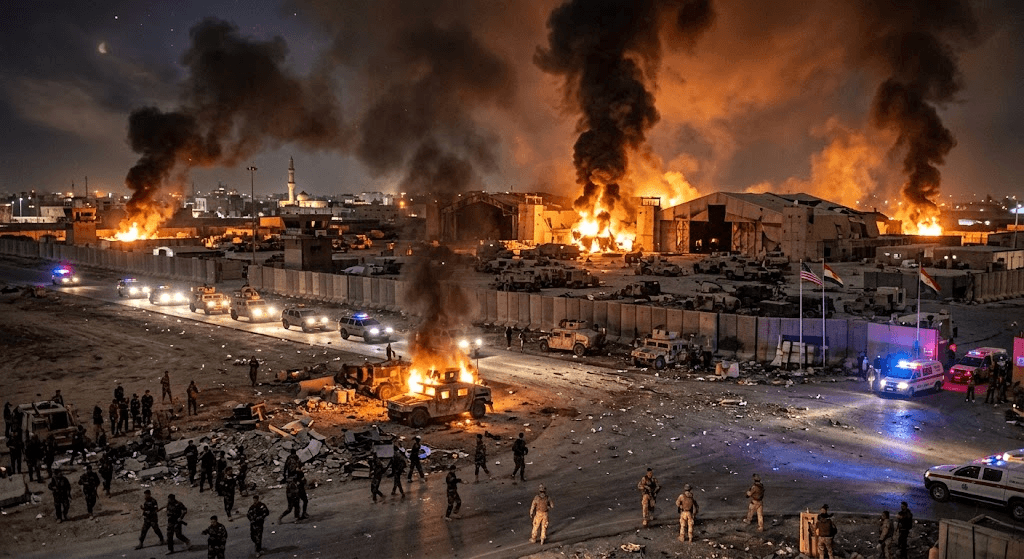
ERBIL, Iraq — Tensions escalated dramatically across the Middle East on Wednesday as Iran’s Islamic Revolutionary Guard Corps (IRGC) launched a coordinated barrage of ballistic missiles and kamikaze drones targeting U.S. military positions in Erbil, the capital of Iraq’s Kurdistan region.
The strike comes as part of a wider wave of retaliatory operations following large-scale U.S. military strikes against IRGC assets near the strategic Strait of Hormuz. According to statements released by Iranian state media, the IRGC Ground Forces targeted key infrastructure within the American operational footprint in Erbil. Iranian officials claimed the barrage successfully hit technical equipment warehouses, a maintenance center, fuel storage depots, and guidance systems used for surveillance equipment stationed at the base.
Explosions reverberated near the Erbil International Airport and the surrounding diplomatic district housing the U.S. consulate, sending air defense sirens blaring across the city. While state-backed outlets in Tehran claimed significant casualties and damage, coalition forces and local Iraqi Kurdish authorities have not yet released an official verification of the full casualty count or the structural extent of the impact.
The strike in Erbil is part of a multi-front exchange across the Persian Gulf and broader region, with simultaneous missile and drone intercepts reported over Jordan, Bahrain, and Kuwait. The U.S. Central Command (CENTCOM) previously stated that American action was taken to neutralize IRGC threats against commercial shipping corridors and regional coalition personnel.
Local security forces in Erbil have closed off roads surrounding coalition compounds and heightened defense postures across Kurdistan. International observers warn that direct exchanges between Washington and Tehran risk pulling regional partners deeper into an unrestrained conflict, with diplomatic channels rapidly straining under the barrage of ongoing tit-for-tat retaliations.
The rapid expansion of direct military engagements has triggered urgent diplomatic responses, with Iraqi federal authorities condemning the strikes as a severe breach of national sovereignty. Officials in Baghdad warned that turning Iraqi territory into an arena for proxy warfare threatens the country's fragile stability and complicates coalition counter-terrorism partnerships. Meanwhile, neighboring intelligence networks and international monitoring groups report heightened readiness levels along regional border corridors as global leaders call for emergency UN consultations to prevent the ongoing retaliatory strikes from degenerating into a full-scale regional war.
Published by Banx Network. This article is part of the Banx decentralized media programme, powered by the BXE token on the XRP Ledger.