There is a particular gravity that settles over a nation when the person responsible for its security speaks not of external threats but of internal collapse—when the language of war gives way to the language of survival, and the enemy is no longer a foreign power but the arithmetic of a failing economy. In Iran, that moment has arrived. On Saturday, Mohsen Rezaei, the country's top security official and secretary of the Supreme National Security Council, warned that the rapidly deteriorating economy has plunged Iran into "one of the most difficult phases" in its history. The admission was rare, and it came at a high-level government meeting convened to discuss how to stabilize a situation that has grown increasingly desperate.
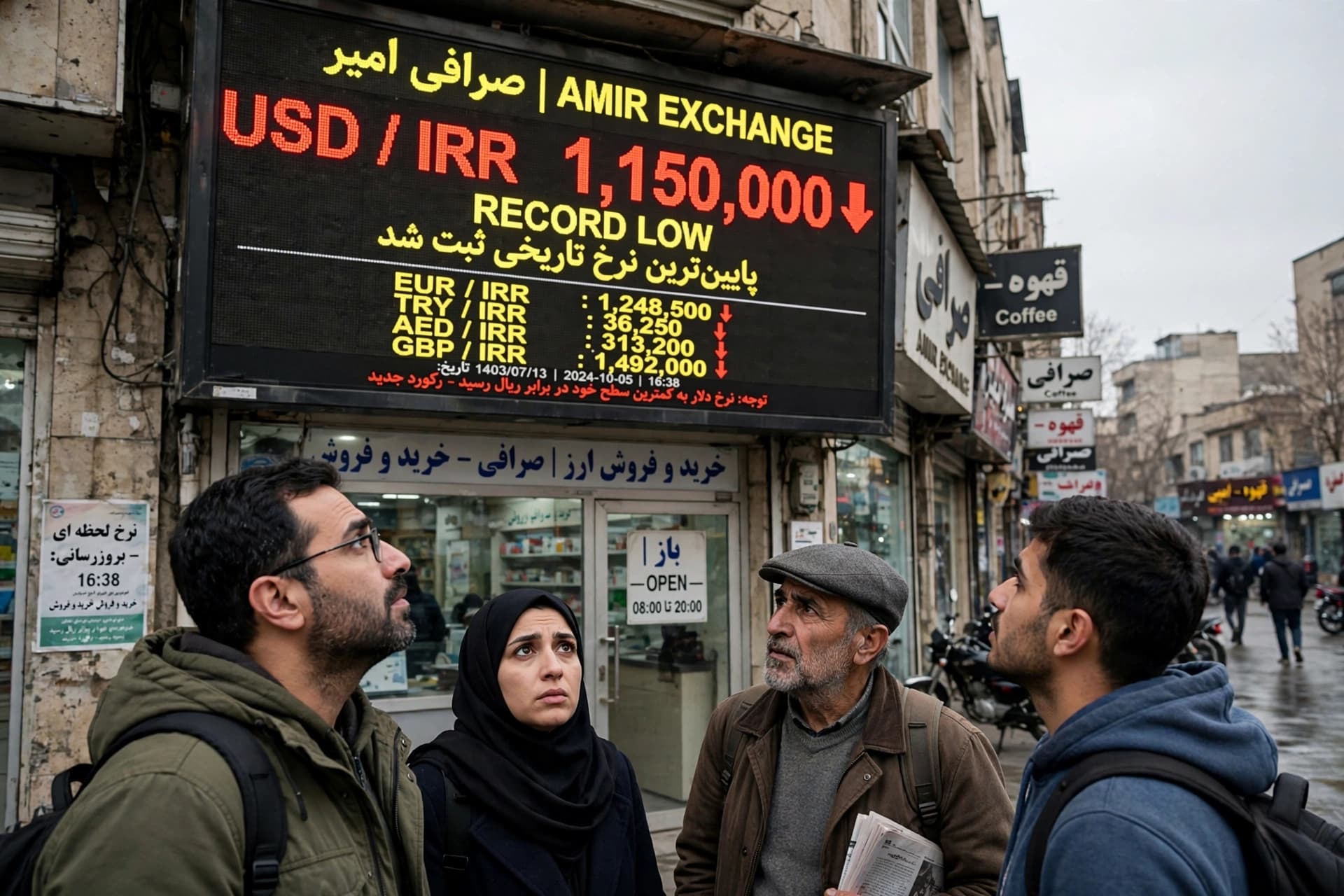
The numbers behind the warning tell a story of sustained and accelerating pressure. Iran's currency, the rial, has plummeted since the United States and Israel launched the war in February. On Saturday, the dollar was trading at approximately 2.69 million rials on the open market, a record low that represents a loss of about 25 percent of the currency's value in just the past two months. Inflation is nearing 90 percent, eroding the ability of ordinary Iranians to afford basic necessities. And in September, for the first time since the 1979 Islamic Revolution, Iran loaded no oil at its export terminals—a direct consequence of the U.S. naval blockade that has choked off the country's most vital source of revenue.
The economic crisis is not an abstraction in Tehran. It is visible in the price of imported goods, in the rationing of energy, and in the growing anxiety about social cohesion that has been expressed at the highest levels of government. Supreme Leader Ayatollah Mojtaba Khamenei has voiced concern about the strain on the population. An Iranian official, speaking anonymously to Bloomberg, described the economic situation as "very painful, but the country is adapting to it". That adaptation has meant preparing for a new American bombing campaign—one that officials believe may be larger than previous strikes—while maintaining the capacity to respond.
The security chief's warning carries particular weight because of who delivered it and when. Rezaei's statement on Saturday was inward-facing, an acknowledgment of strain at home rather than a deterrent aimed at neighbors or Washington. In August, he had warned Gulf states against joining the U.S. economic war and vowed to prevent "a single drop of oil" from leaving the region. The shift from deterrence to admission suggests that the pressure is being felt in ways that cannot be ignored, even by a government accustomed to sanctions and hardship.
For the United States, the public admission of distress may be read as evidence that the sanctions and blockade are working. But it also raises the question of what comes next. Iranian officials see little chance of a peace agreement before the U.S. midterm elections on November 3, and believe escalation is more likely afterward. The Revolutionary Guard Corps has said it is prepared to deliver an "immediate and painful response" to any new aggression. The war has already lasted more than seven months. The economy is contracting. The currency is in free fall. And the man responsible for Iran's security has said, in effect, that the country is in one of the darkest periods it has ever known.
AI Image Disclaimer: The visual elements in this article were created using AI generation tools and are intended for illustrative purposes only.
Sources: The New York Times, Bloomberg via Roya News, The Brief
Published by Banx Network. This article is part of the Banx decentralized media programme, powered by the BXE token on the XRP Ledger.