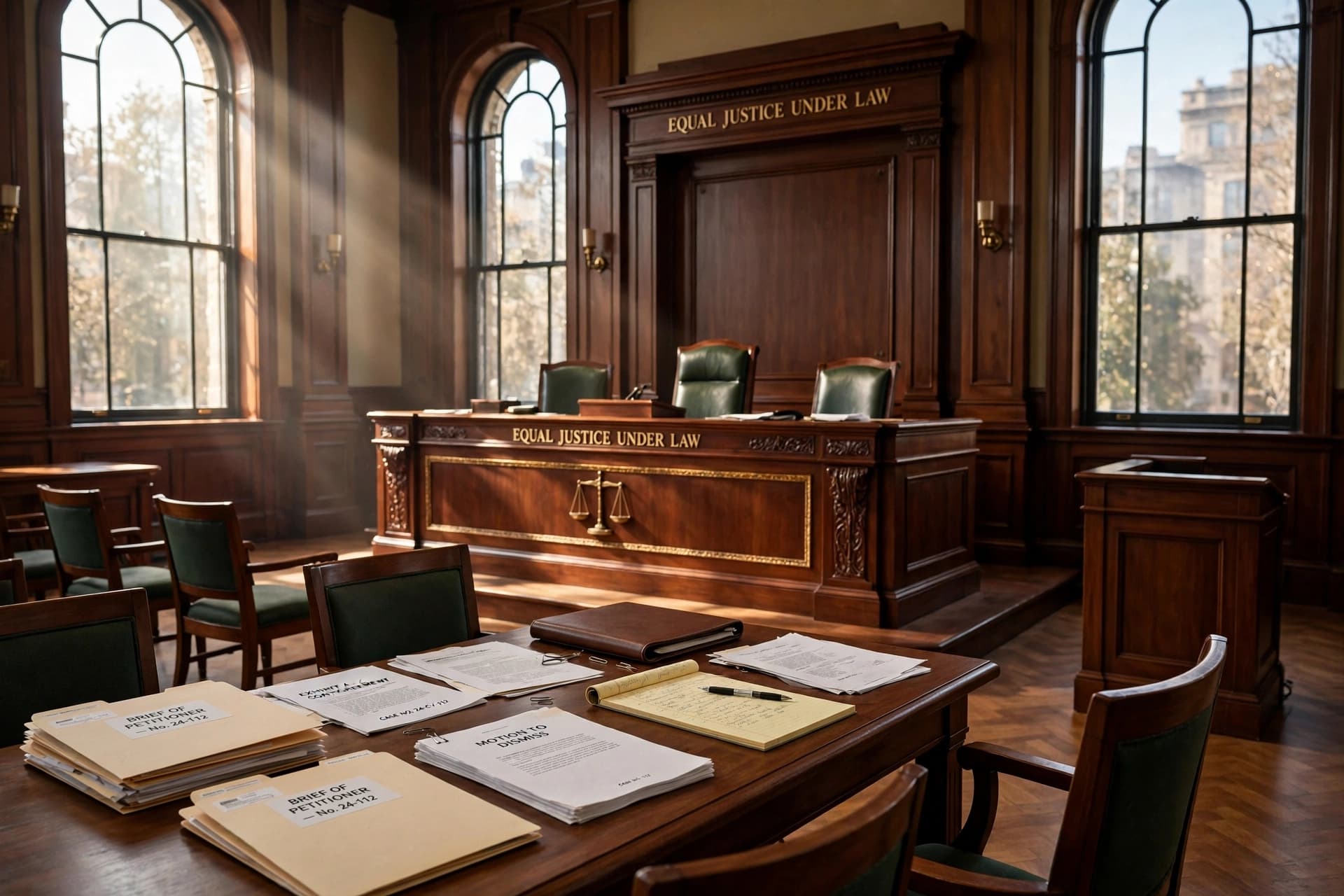
There is a particular gravity that settles over the Supreme Court as October arrives—a sense that the quiet marble corridors are about to become the stage for arguments that will echo through decades, that the decisions rendered in the coming months will shape not just laws but lives. On Monday, the justices return to the bench for a new term, and the docket they face is heavy with the questions that have divided the nation: climate change, immigration, and the reach of the Second Amendment.
The first case up is a major test of whether state and local governments can sue fossil fuel companies for the impacts of a warming planet. The city and county of Boulder, Colorado, are asking the court to allow their lawsuit against Suncor Energy and ExxonMobil to proceed. Boulder alleges the companies knowingly contributed to climate change and deceived the public, causing concrete harm—flood damage, wildfire risk, and infrastructure destruction. The companies argue that federal law preempts state claims, and that allowing every municipality to sue would create a chaotic patchwork of regulations. Justice Samuel Alito has recused himself from the case, leaving the possibility of a 4-4 split.
December brings a gun case that could define the scope of the Second Amendment for a generation. The justices will hear arguments on whether local governments can ban AR-15s and similar semiautomatic rifles—the most popular type of long gun sold in the United States. The challenge comes from Cook County, Illinois, where a law banning assault weapons is being defended against gun rights groups who argue the weapons are in “common use” and therefore protected. Gun rights advocates have been pushing for this fight, seeing a court ready to strike down bans in more than ten states. Lower courts have so far upheld the restrictions.
Immigration cases dominate the rest of the early docket, reflecting the Trump administration’s aggressive enforcement agenda. In one case, the justices will decide whether the Department of Homeland Security can deport migrants to “third countries” they have no ties to, without giving them meaningful notice or an opportunity to contest their removal. A federal judge in Boston had ruled the policy unlawful, and the Supreme Court allowed it to continue while litigation proceeds—but has now agreed to decide the merits. In another case, the court will weigh whether immigrants arrested inside the U.S. can be detained indefinitely without bond hearings, a policy that has led to tens of thousands being held as they await removal proceedings. Two appeals courts have sided with the administration; nine have ruled against it.
What is notably absent from the early docket are the blockbuster cases involving President Trump’s personal policies—his tariffs, his firings of agency leaders, his attempt to restrict birthright citizenship. Those were the defining cases of last term. This term, the court returns to the broader constitutional questions that have been building for years, the ones that do not involve the president directly but will shape the legal landscape long after he leaves office. The justices have agreed to hear 27 cases so far, with perhaps 30 more slots to be filled. For now, the arguments begin Monday. The decisions will follow. And the country will live with whatever the court decides.
AI Image Disclaimer: The images accompanying this article were generated by artificial intelligence and are for illustrative purposes only.
Sources: CBS News, PBS NewsHour, Washington Times, Reuters
Published by Banx Network. This article is part of the Banx decentralized media programme, powered by the BXE token on the XRP Ledger.