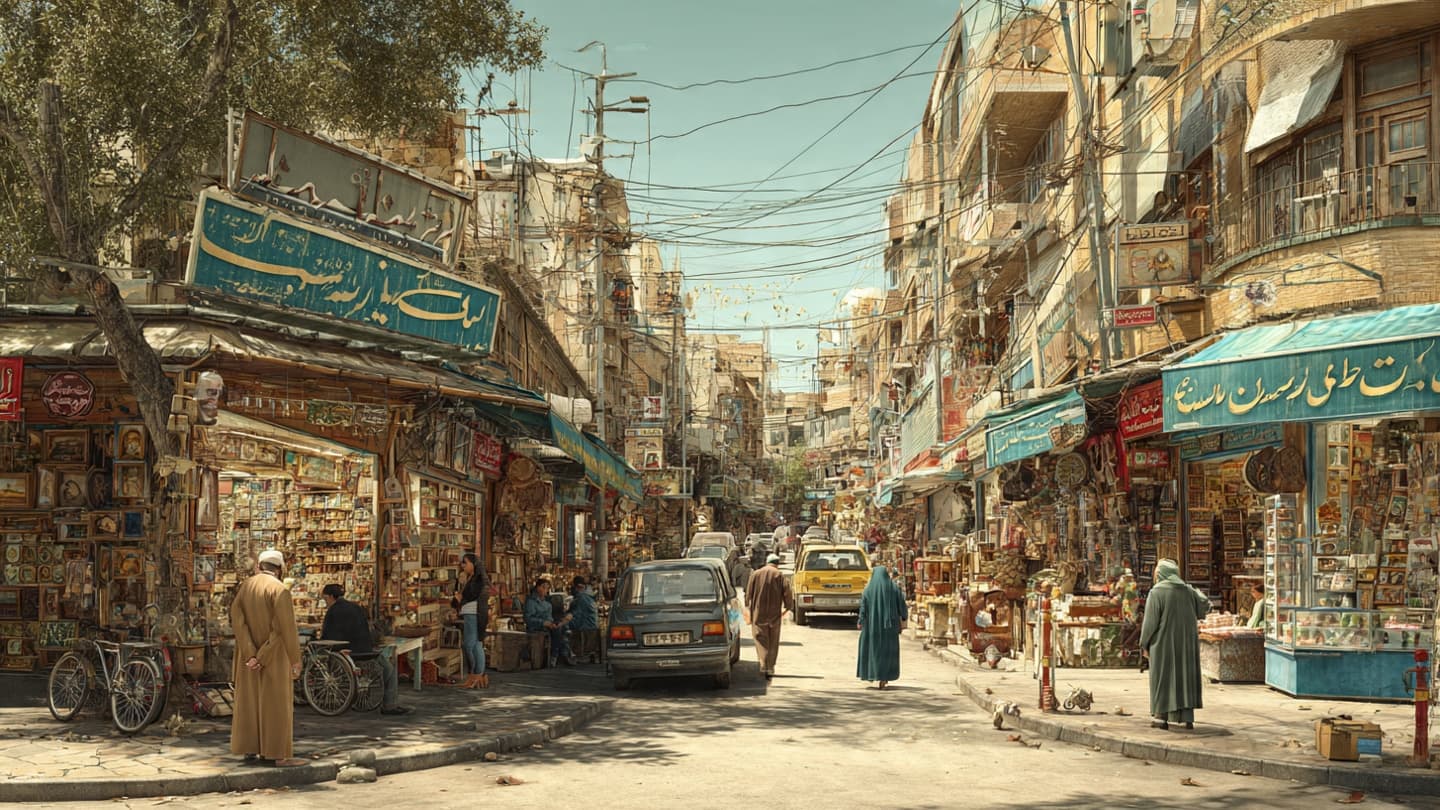
There are moments when an economy's pressure becomes visible not through a single statistic, but through many small movements happening at once. A currency changes hands at a different rate, imported goods become harder to obtain, and oil tankers that once carried revenue outward remain still. In Iran, those movements have increasingly converged.
U.S. economic pressure is now weighing heavily on Iran's ability to earn foreign currency and finance imports, according to three senior Iranian sources cited by Reuters. The pressure has intensified as restrictions on oil exports and sanctions-evasion networks make it more difficult for Tehran to access international financial channels.
Oil remains at the center of the squeeze. Reuters reported that Iranian crude loadings had fallen to roughly 260,000 barrels per day in September, compared with about 1.7 million barrels per day a year earlier, according to Kpler data. The decline has sharply reduced one of Iran's most important sources of foreign-currency revenue.
The contraction in oil shipments has also affected the broader trade system. Iran has relied for years on networks involving intermediaries, front companies and shipping arrangements to keep commerce moving despite sanctions. But the latest financial restrictions are increasing the cost and difficulty of maintaining those channels, according to Iranian officials and traders quoted by Reuters.
The Iranian rial has reflected some of that pressure. Reuters reported that the currency had fallen beyond 2.2 million rials per U.S. dollar, compared with roughly 1 million a year earlier. A weaker currency makes imported products and raw materials more expensive, adding another layer to the difficulties already facing businesses and households.
Inflation has remained another major concern. Official figures cited by Reuters put Iran's 12-month average inflation rate at 69.9 percent, while prices for food, beverages and tobacco were rising at nearly twice that rate. The result is a widening gap between household incomes and the cost of everyday necessities.
Trade through neighboring financial and commercial channels has also been disrupted. Reuters reported that the United Arab Emirates had halted commercial exchanges and financial dealings with Tehran until further notice, removing another route historically used by Iranian businesses to obtain goods and conduct international transactions.
The pressure is appearing in employment as well. Official unemployment reached 9.1 percent in the spring, while the number of people employed fell by about 450,000 from a year earlier, according to figures cited by Reuters. For workers who remain employed, the rapid increase in living costs has reduced the purchasing power of wages.
Iran still has oil stored offshore and continues to look for ways to maintain exports, but the economic environment around those efforts has changed. Buyers and intermediaries are demanding greater compensation for risk, while restrictions on financial transactions make each commercial route more complicated and expensive.
The coming months will reveal whether Iran can restore some of its trade channels or whether the current financial pressure continues to narrow the economy's room to maneuver. For businesses and households inside the country, however, the effects are already more immediate: a weaker currency, higher prices and fewer straightforward routes through which goods and money can move.
AI Image Disclaimer The images accompanying this article are AI-generated visualizations created for contextual editorial use. They are not photographs of actual Iranian oil terminals, markets, people or financial transactions.
Sources Reuters Kpler International Monetary Fund Iranian official data cited by Reuters
Published by Banx Network. This article is part of the Banx decentralized media programme, powered by the BXE token on the XRP Ledger.