
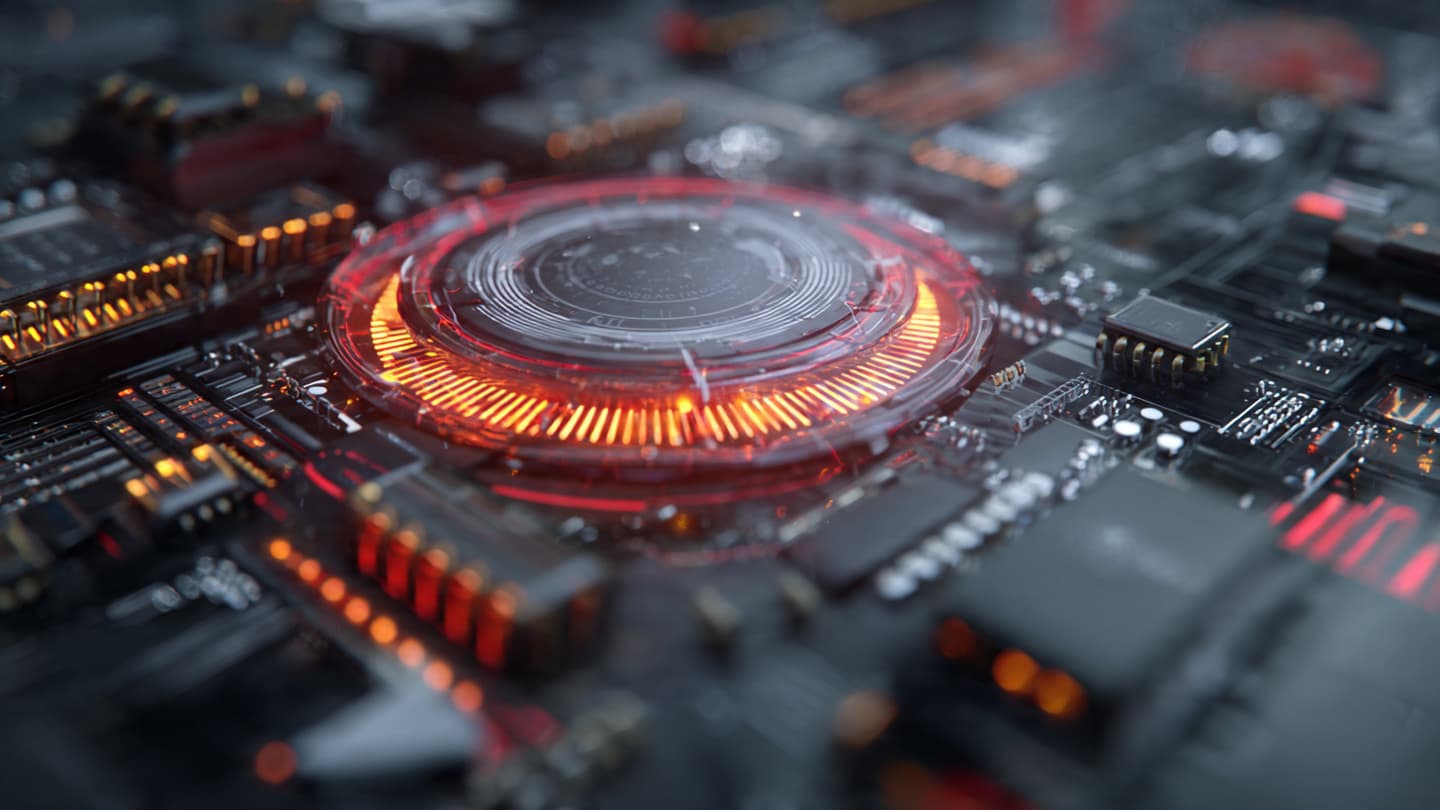
Space exploration has always depended on human ingenuity, but distance creates limitations that even the fastest communication systems cannot fully overcome. Signals traveling between Earth and distant spacecraft often require minutes or hours to arrive. To address this challenge, NASA is developing a new artificial intelligence chip designed to help spacecraft make faster decisions independently while operating far from Earth.
The experimental chip reportedly combines advanced processing efficiency with radiation-resistant engineering suited for harsh space environments. Researchers hope the technology will allow spacecraft to analyze information, respond to unexpected conditions, and prioritize scientific tasks without waiting for direct instructions from mission control.
Modern space missions generate enormous amounts of data through cameras, sensors, and scientific instruments. Managing this information efficiently becomes increasingly important as missions travel farther into deep space where communication delays grow significantly longer.
NASA engineers explained that artificial intelligence systems could assist spacecraft in identifying technical problems, navigating hazardous terrain, or selecting scientifically valuable targets automatically. Such capabilities may become essential for future missions exploring distant planets, moons, and asteroids.
Deep-space environments present unique engineering challenges for computer systems. Radiation exposure, extreme temperatures, and limited power availability require specialized hardware capable of operating reliably over long periods without maintenance or repair.
The development also reflects broader global interest in combining artificial intelligence with aerospace technology. Governments and private companies alike are exploring how machine learning systems may improve navigation, robotics, and autonomous operations in future exploration programs.
Some experts caution that autonomous systems in space must remain carefully supervised despite technological advances. Engineers continue emphasizing that human oversight remains central to mission planning and safety decisions, particularly for crewed exploration projects.
The growing role of AI in space science mirrors wider technological changes occurring across industries on Earth. From healthcare to transportation, intelligent systems increasingly assist humans in processing information and responding to complex environments more efficiently.
As NASA continues refining the new chip technology, the project highlights how future exploration may depend not only on larger rockets or stronger engines, but also on smarter machines capable of adapting independently in distant and unpredictable conditions far beyond Earth.
AI Image Disclaimer: Some space technology visuals linked to this article are AI-generated conceptual illustrations.
Sources NASA ScienceDaily Reuters
Published by Banx Network. This article is part of the Banx decentralized media programme, powered by the BXE token on the XRP Ledger.



