On the Siberian steppe, where winters stretch like unbroken white canvases, time itself can freeze and preserve more than just ice. In an extraordinary twist of natural fortune, researchers have unlocked an unexpected portal to the distant past — not from a bone in the cold ground, but from the last meal of a wolf pup that lived and died more than 14,000 years ago. The pup’s digestive tract, frozen in the permafrost near the village of Tumat, contained remnants of a woolly rhinoceros, a giant of the Ice Age. From this rare fragment, scientists have now recovered an entire genome of the woolly rhino, shedding new light on the twilight of these magnificent creatures that once roamed with mammoths and saber‑toothed cats.
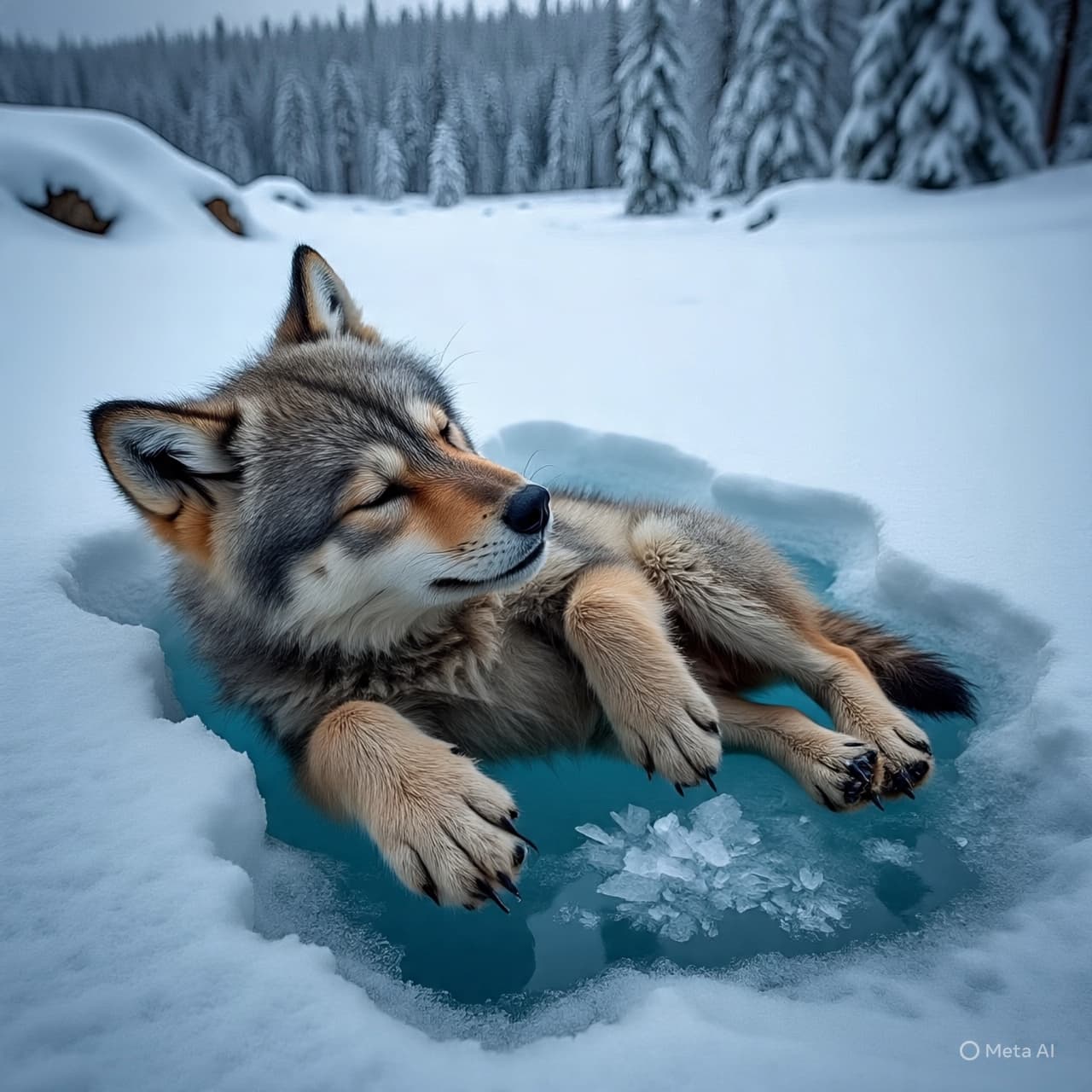
In its brief life, the young wolf stumbled into a landslide that sealed its fate and preserved its remains with remarkable fidelity. Within its stomach lay a small piece of partially digested flesh — a relic of what had been its last meal. Paleogeneticists at the Centre for Palaeogenetics in Stockholm and collaborators painstakingly isolated and sequenced the DNA from that fragment, identifying it as Coelodonta antiquitatis, the woolly rhinoceros, one of the most iconic megafauna of the Pleistocene. This method, unprecedented in paleontology, represents the first time scientists have managed to reconstruct a complete genome of an extinct animal from tissue preserved in another creature’s gut.
By comparing the newly sequenced genome with older woolly rhino genomes from specimens dated about 18,000 and 49,000 years ago, researchers found no clear signs of genetic decline or inbreeding in the lead‑up to extinction. This challenges earlier notions that the species may have dwindled slowly over time and instead supports the idea that their disappearance was rapid and linked with abrupt climatic warming at the end of the last Ice Age, disrupting habitats and food sources across the northern landscapes.
The implications of this discovery reach beyond the rhinoceros itself. It highlights how permafrost‑preserved remains can act like time capsules, offering snapshots of life and extinction in eras long past. By peering inside the stomach of an Ice Age predator, scientists have glimpsed a world otherwise locked away, painted in the molecular threads of ancient DNA. Such insights enrich our understanding of how rapidly ecosystems can shift and vanish — a story that resonates deeply as modern climates change at unprecedented rates.
In the quiet aftermath of this remarkable find, we are reminded that the earth’s deep history sometimes speaks in the most unexpected ways — in the silenced echo of an animal’s last meal, frozen in time beneath the endless Arctic frost.
AI Image Disclaimer “Visuals are created with AI tools and are not real photographs.”
Sources Reuters National Geographic Live Science Popular Science The Guardian
Published by Banx Network. This article is part of the Banx decentralized media programme, powered by the BXE token on the XRP Ledger.