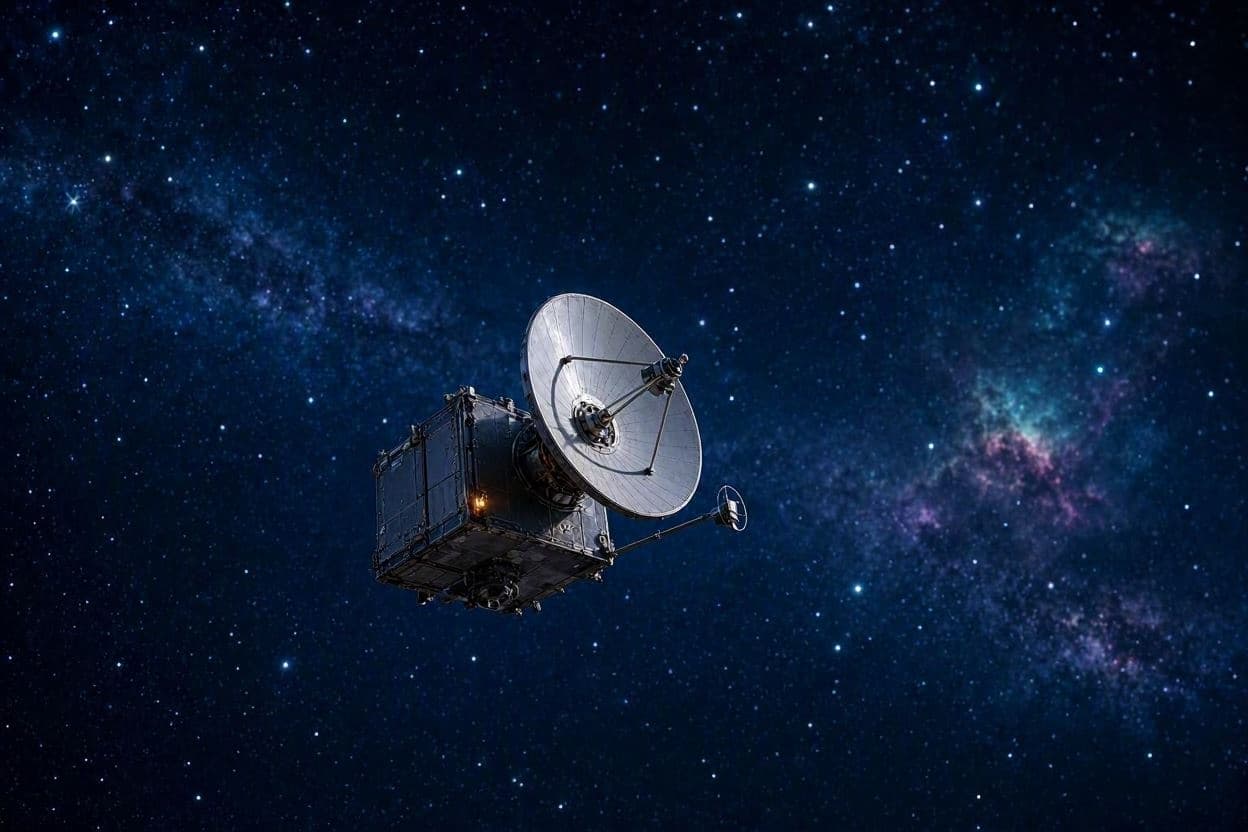
In the silent, frozen expanse of interstellar space, two small emissaries from Earth continue their lonely journey. Voyager 1 and Voyager 2, launched in the late 1970s, have traveled farther than any human-made objects in history. But as they drift deeper into the void, their nuclear power sources dwindle, forcing mission controllers at NASA’s Jet Propulsion Laboratory to make difficult choices. To keep these aging pioneers alive, engineers are preparing a daring maneuver known internally as the "Big Bang," a risky but necessary step to extend their operational lives.
The challenge is simple yet profound: power is finite. The radioisotope thermoelectric generators (RTGs) that have fueled the spacecraft for nearly five decades are losing heat and electrical output. To conserve energy, NASA has already begun shutting down non-essential instruments. In April 2026, the Low-Energy Charged Particles (LECP) experiment on Voyager 1 was deactivated, a move that saved precious watts but reduced the scientific return. Each shutdown is a calculated sacrifice, balancing data collection against survival.
The "Big Bang" plan refers to a more radical approach: rebooting the spacecraft’s flight data system or reconfiguring its power distribution in ways never tested before. Because the Voyagers were built with 1970s technology, every command must be meticulously crafted and verified. A single error could permanently disable the probe, ending the mission instantly. Yet, doing nothing guarantees an eventual silence. The team is currently testing these procedures on ground-based models, simulating the extreme conditions of deep space.
Communication with Voyager 1 is no longer instantaneous. With the spacecraft now over 15 billion miles away, a radio signal takes more than 23 hours to travel one way. By late 2026, this delay will reach 24 hours, meaning a full round-trip conversation takes two days. This latency requires immense patience and precision. Engineers must anticipate problems before they occur, sending commands that will not be executed until long after they are transmitted.
Despite the risks, the potential reward is immense. Keeping Voyager 1 operational allows scientists to continue studying the heliosphere’s boundary and the interstellar medium. The data it sends back is unique, offering insights into the environment beyond our solar system that no other instrument can provide. For many researchers, the Voyagers are not just machines but partners in discovery, their longevity a testament to human ingenuity.
Public interest in the mission remains high, fueled by the romantic notion of these tiny probes carrying golden records into the cosmos. They serve as ambassadors of humanity, drifting toward distant stars long after their creators are gone. The effort to keep them alive is thus both scientific and symbolic, a refusal to let the connection with our deepest explorers fade quietly.
As the tests progress, the mood at JPL is one of cautious optimism. The team knows the odds are slim, but the spirit of exploration demands they try. If the "Big Bang" maneuver succeeds, it could buy Voyager 1 several more years of operation, pushing its legacy further into the future. If it fails, the mission will end with dignity, having already achieved more than anyone dreamed possible.
For now, the Voyagers continue to send faint whispers across the darkness. Their survival depends on the skill and courage of the people on Earth who refuse to give up on them. In this delicate dance of power and distance, we are reminded of how far we have come, and how much further we still wish to go.
AI Image Disclaimer: The visual elements in this article are AI-generated illustrations depicting deep space probes and abstract representations of signal transmission, designed to reflect the themes of exploration without showing real proprietary engineering diagrams.
Sources: NASA, CNN, Live Science, SpaceDaily
Published by Banx Network. This article is part of the Banx decentralized media programme, powered by the BXE token on the XRP Ledger.