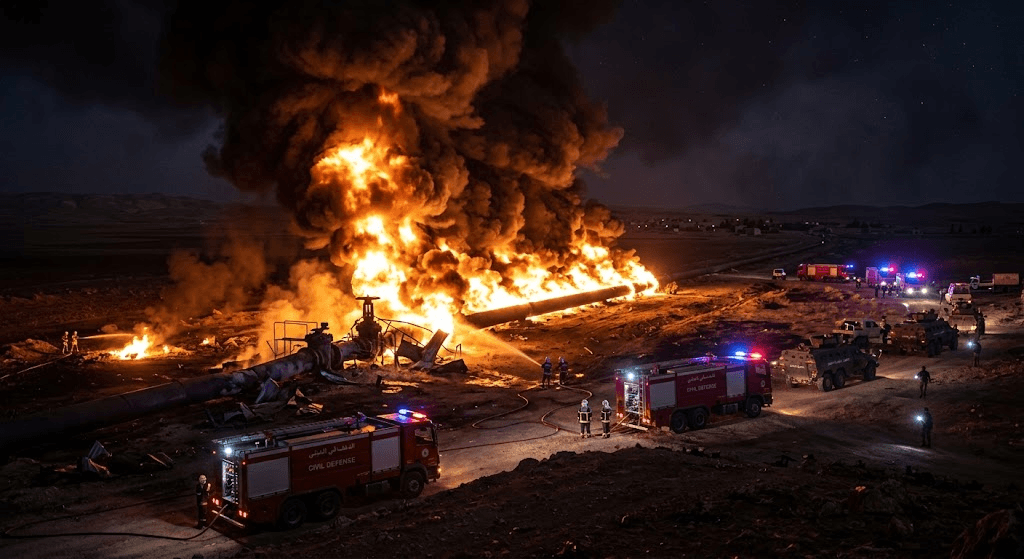
DEIR EZ-ZOR, SYRIA — A natural gas pipeline exploded into a massive fire between the Al-Shola area and Deir ez-Zor in eastern Syria after an isolation valve was targeted in a suspected act of sabotage.
The explosion, which erupted late Monday evening, triggered a fierce inferno visible from miles away. According to Syrian Petroleum Company official Hisham Al-Saleh, the resulting fire forced an immediate halt to all natural gas flows originating from the key Jbeissa gas plant and heading toward regional electricity generation stations.
Firefighting crews and civil defense teams rushed to the site near Al-Shola to isolate the affected section of the line on both sides of the blast. Emergency personnel worked through the night to bring the blaze under control as gas pressure inside the severed pipeline gradually dropped.
The corridor connecting Al-Shola to Deir ez-Zor is a critical energy hub that houses key facilities responsible for processing and transporting natural gas across eastern Syria. The sudden interruption of gas supplies threatens to exacerbate existing energy shortages and trigger wider power disruptions across the region.
Syrian state media and energy officials confirmed that an initial assessment pointed directly to intentional sabotage as the cause of the valve explosion.
Authorities have established a security perimeter around the scene while forensic experts examine the damaged pipeline infrastructure to determine the exact type of explosive device used. While no group has officially claimed responsibility for the targeted attack, security forces have launched an investigation in the surrounding region to identify those responsible.
Technical repair crews from the Ministry of Petroleum are already on standby to begin urgent restoration works once security teams finish clearing the immediate site for unexploded ordnance or secondary devices. Officials estimate that replacing the damaged isolation valve and restoring baseline natural gas distribution to regional power plants could take several days, prompting utility authorities to implement rolling load-shedding schedules to conserve remaining reserves.
Published by Banx Network. This article is part of the Banx decentralized media programme, powered by the BXE token on the XRP Ledger.