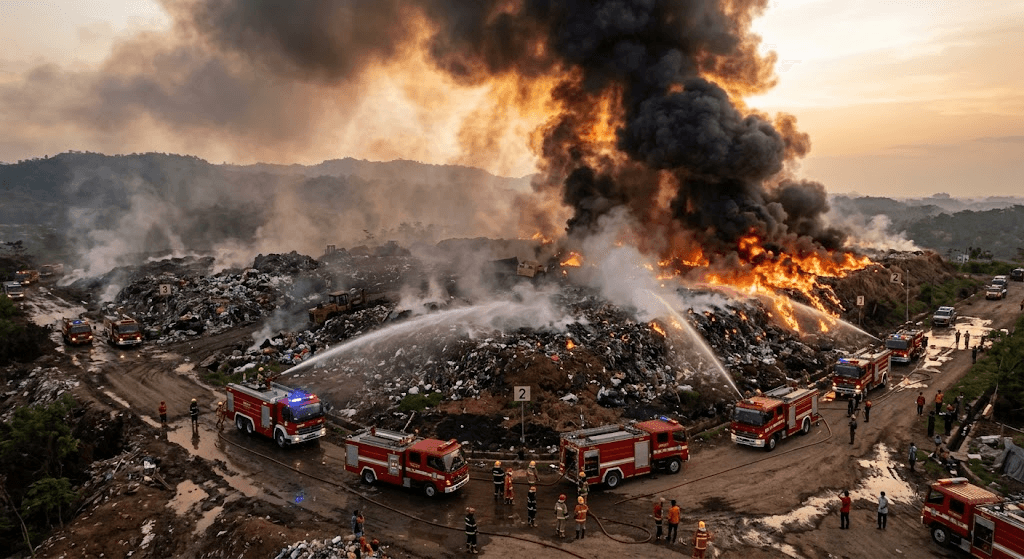
SEMARANG, Indonesia — Fire crews in Central Java are battling a massive, recurring blaze at the Jatibarang Landfill, where flames have rapidly swept across three distinct dumping zones, sending plumes of acrid, toxic smoke over surrounding communities in Semarang.
The fire broke out during the height of the dry season, ignited by combustible methane gas trapped beneath layers of decomposing waste. Fanned by strong seasonal winds and soaring afternoon temperatures, the flames quickly breached containment barriers, spreading from Zone 3 into neighboring active dumping sectors.
Firefighters, joined by local disaster management teams and water cannon trucks, have been working around the clock to contain the inferno. Crews are deploying foam and heavy earth-moving equipment to smother hotspots and dig firebreaks, preventing the blaze from reaching nearby residential neighborhoods and critical forestry reserves.
Health officials have issued air quality warnings across parts of Semarang, advising residents downwind to wear heavy-duty masks and minimize outdoor exposure as thick gray smoke blankets the sky. Emergency medical posts have been established near the site to treat residents showing signs of acute respiratory distress.
The incident underscores the growing environmental and public safety hazards posed by open-dumping landfills across Indonesia, where prolonged heat waves and inadequate methane management systems regularly spark persistent, hard-to-extinguish blazes. Local authorities have pledged a full investigation into landfill management protocols once the fire is fully suppressed.
Environmental advocates and city council members are renewing calls for long-overdue infrastructure upgrades, pointing to the recurring nature of the Jatibarang fires as evidence of systemic waste management failures. Experts advocate for accelerating the transition toward waste-to-energy technologies and installing proper gas venting systems to permanently mitigate subterranean methane buildup.
In the interim, local government agencies are coordinating temporary relief efforts for surrounding villages most heavily impacted by the air pollution. School districts in neighboring areas are considering short-term closures or shifting to remote learning if atmospheric conditions do not improve significantly over the coming days.
Published by Banx Network. This article is part of the Banx decentralized media programme, powered by the BXE token on the XRP Ledger.