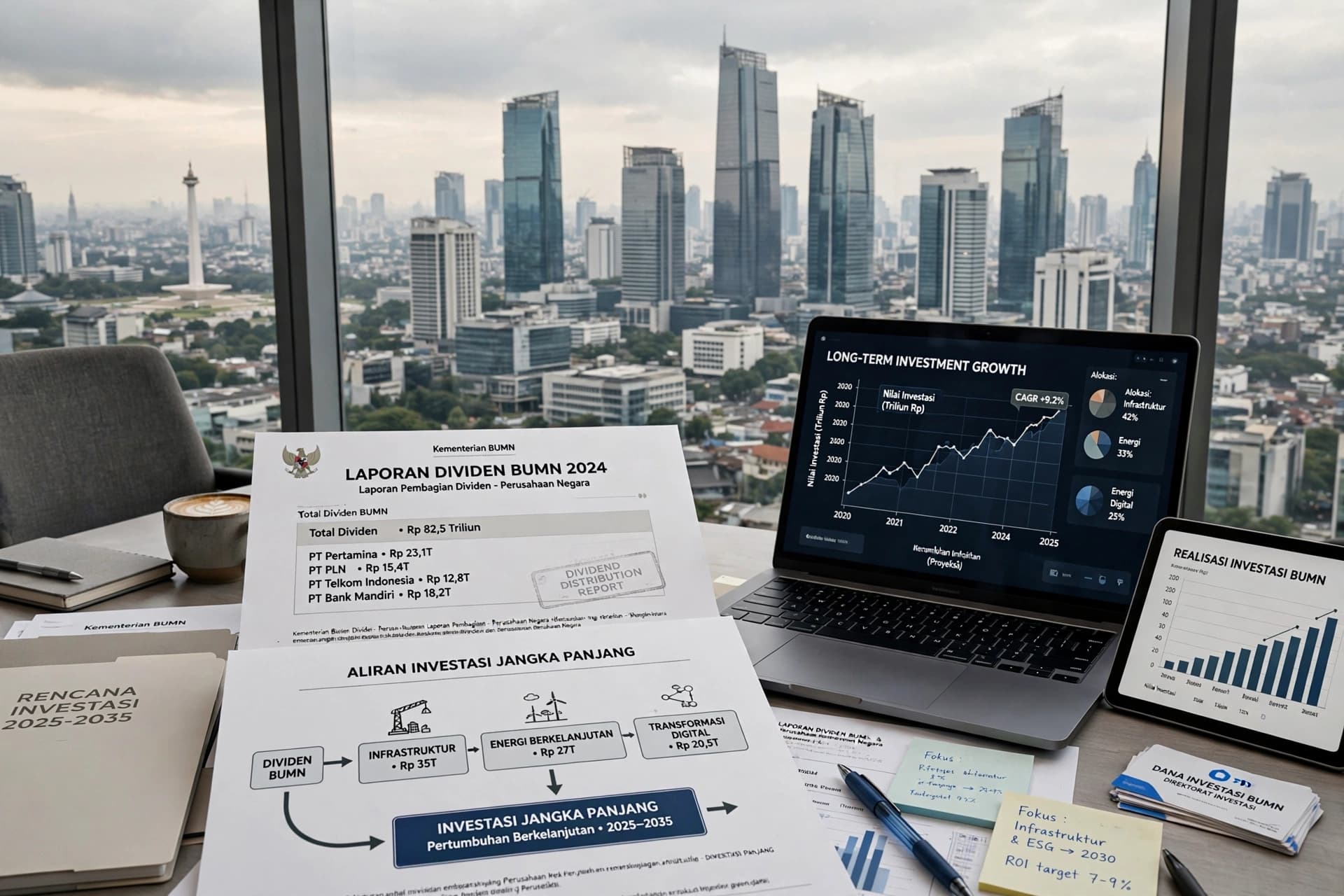
Finance Minister Suahasil Nazara said dividends from state-owned enterprises pooled by Danantara are not reflected in either the current or next year's state budgets. Instead, Danantara will retain the funds and use them for projects and as leverage to attract private capital.
The decision marks an important distinction in the way Indonesia's state assets are being managed. Under the newer structure, Danantara operates as a state asset manager, allowing returns from companies under its management to be reinvested rather than immediately treated as ordinary non-tax state revenue.
The approach is intended to give Danantara a larger pool of capital with which to pursue investment opportunities. Rather than receiving dividends and spending them through the conventional budget process, the state asset fund can potentially recycle those returns into projects capable of generating additional economic value.
That model also changes the relationship between Danantara and the state budget. Suahasil said the arrangement would allow the budget to concentrate more heavily on public services, basic infrastructure and social protection, while Danantara focuses on investment activity.
The issue has nevertheless attracted attention because the government had previously considered transferring Rp120 trillion in SOE dividends to the state budget as a fiscal buffer. That proposal became the subject of disagreement between the Finance Ministry and Danantara before the change in finance minister in September.
The shift comes at a time when Indonesia is seeking additional sources of capital for long-term development. Danantara has been positioning itself as a vehicle capable of supporting large investments while bringing private investors into projects that might otherwise require heavier direct public financing.
The potential leverage effect is central to the concept. If state-owned assets generate dividends that are then reinvested, those funds can theoretically serve as a foundation for larger pools of capital. Private investors can participate alongside state-backed investment, creating a structure in which one rupiah of public capital may help attract additional financing.
Yet the model also places greater importance on investment discipline. Once dividends are retained for investment rather than transferred to the budget, the performance of those investments becomes more consequential. Capital that remains inside the investment system needs to be managed carefully so that its long-term returns justify the opportunity cost of not using it for immediate public spending.
The latest decision therefore represents more than a technical adjustment to the flow of SOE dividends. It is part of a larger experiment in how Indonesia manages public assets: whether state-owned companies should primarily provide annual revenue to the government, or whether their earnings can become a continuously recycled source of investment capital.
For Danantara, the answer is increasingly moving toward the second model. The results will take time to measure, but the direction is already visible: Indonesia is attempting to turn state-owned corporate returns into a longer investment cycle, with the ambition of allowing public assets to generate value beyond a single year's budget.
AI Image Disclaimer
AI-generated illustration for editorial purposes only. It is a conceptual visualization and does not depict an actual Danantara investment meeting or project.
Sources
The Jakarta Post Ministry of Finance of Indonesia Danantara Bloomberg
Published by Banx Network. This article is part of the Banx decentralized media programme, powered by the BXE token on the XRP Ledger.