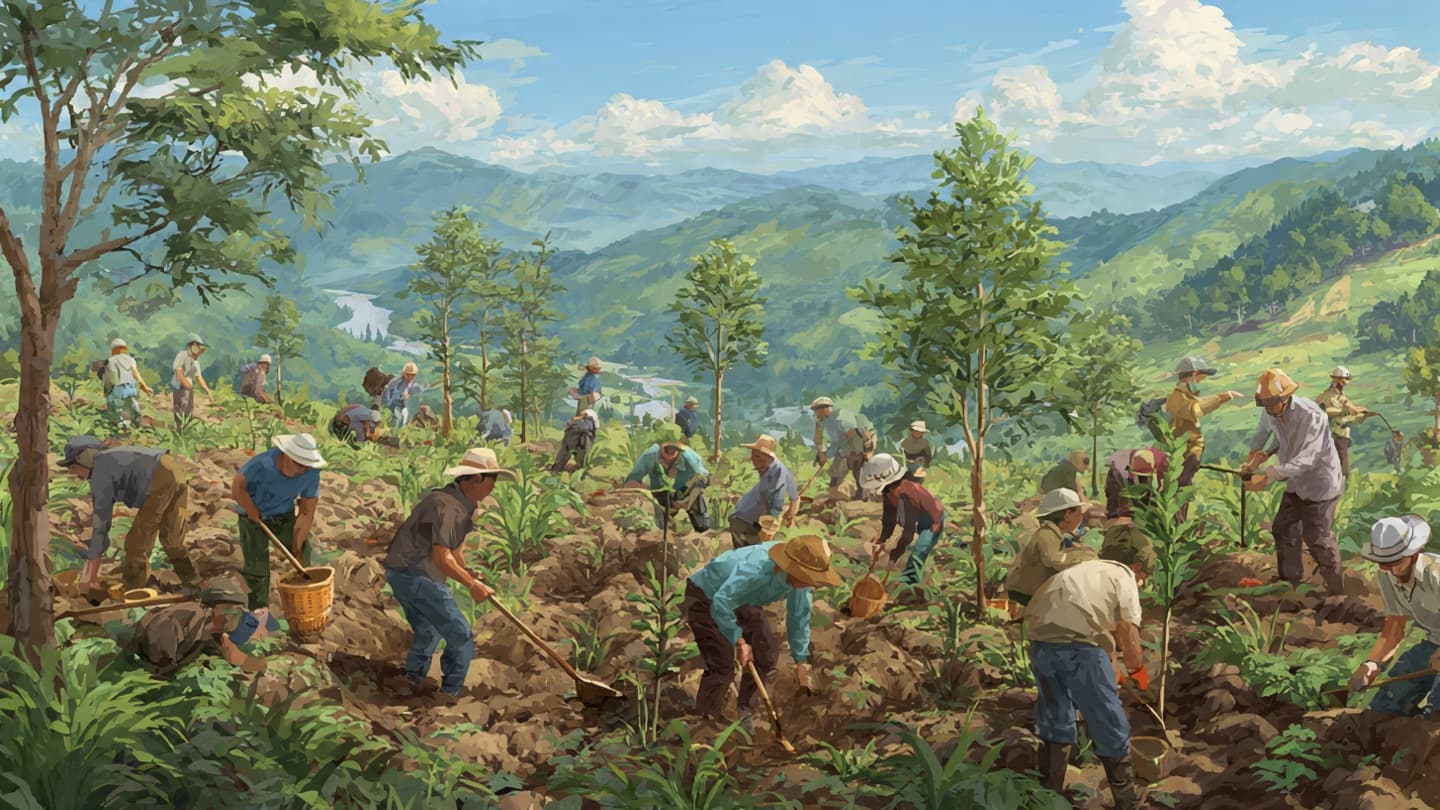
Indonesia continues expanding national forest restoration programs through reforestation, ecosystem rehabilitation, and biodiversity conservation efforts. Government agencies, environmental organizations, researchers, and local communities are working together to restore degraded forest landscapes while strengthening long-term environmental sustainability.
Scientists are using satellite monitoring, drones, and geographic information systems to evaluate forest recovery and biodiversity. Restoration activities include native tree planting, watershed protection, and habitat improvement for wildlife.
Community participation remains central to restoration success, with volunteers and local organizations supporting conservation education and sustainable forest management. These initiatives also contribute to climate resilience and water resource protection.
Environmental experts believe healthy forests are essential for biodiversity conservation, carbon storage, ecosystem stability, and sustainable livelihoods for surrounding communities.
Analysts expect Indonesia's forest restoration programs to continue expanding through scientific research, technological innovation, and collaboration among government, academia, and civil society.
AI Image Disclaimer These graphics were generated using AI for conceptual illustration and are intended solely as visual representations rather than actual documentary images.
Source Check Reuters, Antara, Ministry of Environment and Forestry Indonesia, CIFOR-ICRAF, Mongabay Indonesia
Published by Banx Network. This article is part of the Banx decentralized media programme, powered by the BXE token on the XRP Ledger.