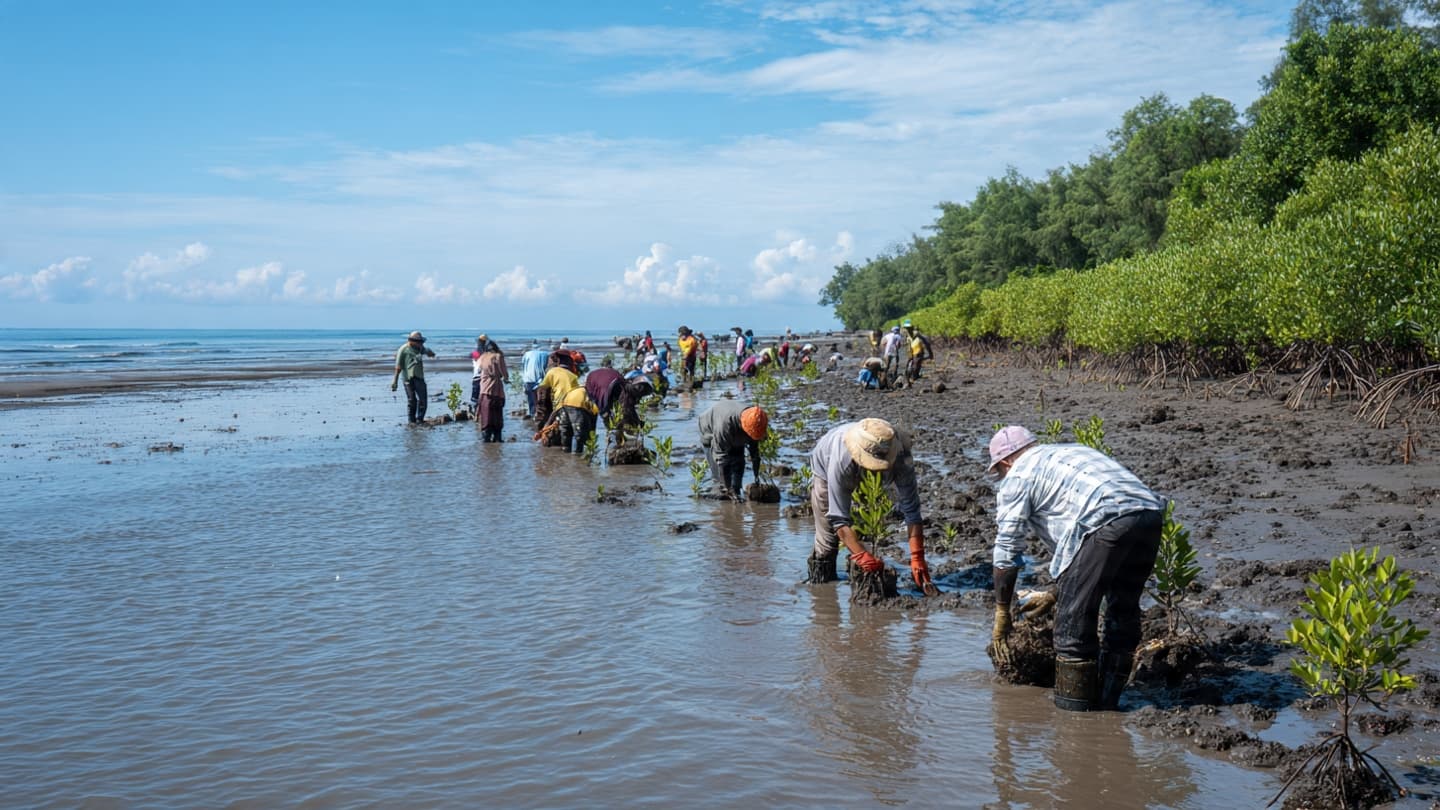
Indonesia continues expanding mangrove restoration programs to strengthen coastal resilience and protect biodiversity. Government agencies, environmental organizations, universities, and local communities are working together to restore degraded coastal ecosystems across several provinces.
Mangrove forests play an important role in preventing coastal erosion, absorbing carbon emissions, and providing habitats for marine species. Restoration projects include replanting native mangrove trees, monitoring ecosystem recovery, and educating local communities about sustainable coastal management.
Scientists continue studying mangrove ecosystems to improve restoration techniques and better understand their contribution to climate resilience. Modern mapping technologies and satellite monitoring are supporting conservation efforts.
Environmental experts emphasize that healthy mangrove forests provide long-term ecological and economic benefits by supporting fisheries, protecting coastlines, and enhancing biodiversity.
Officials remain optimistic that continued collaboration among communities, researchers, and conservation organizations will strengthen Indonesia's coastal ecosystems for future generations.
AI Image Disclaimer The images accompanying this article are AI-generated illustrations intended for conceptual representation rather than real photography.
Source Check Reuters, Antara News, Mongabay Indonesia, Kompas, The Jakarta Post
Published by Banx Network. This article is part of the Banx decentralized media programme, powered by the BXE token on the XRP Ledger.