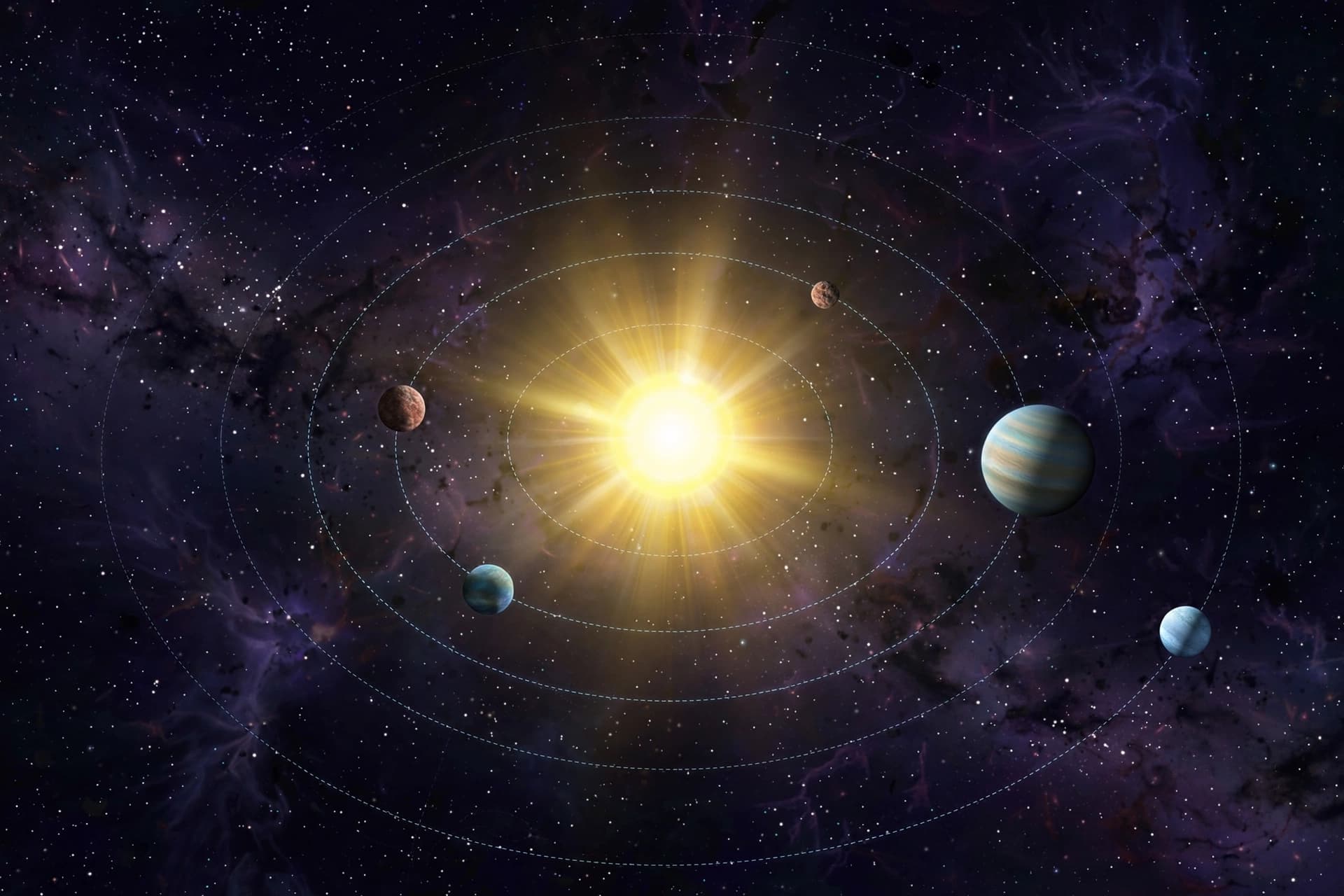
Under the vast canvas of our solar system, the birth of worlds — like brush strokes on a cosmic painting — often begins in motion and dust. We imagine swirling disks of gas circling newborn stars, where gravity and chemistry mingle, shaping planets, moons, and the raw materials of creation. In such gentle whorls of early celestial activity around Jupiter, new research suggests that the seeds of life’s chemistry were woven into the very fabric of its largest moons long before oceans formed beneath icy crusts.
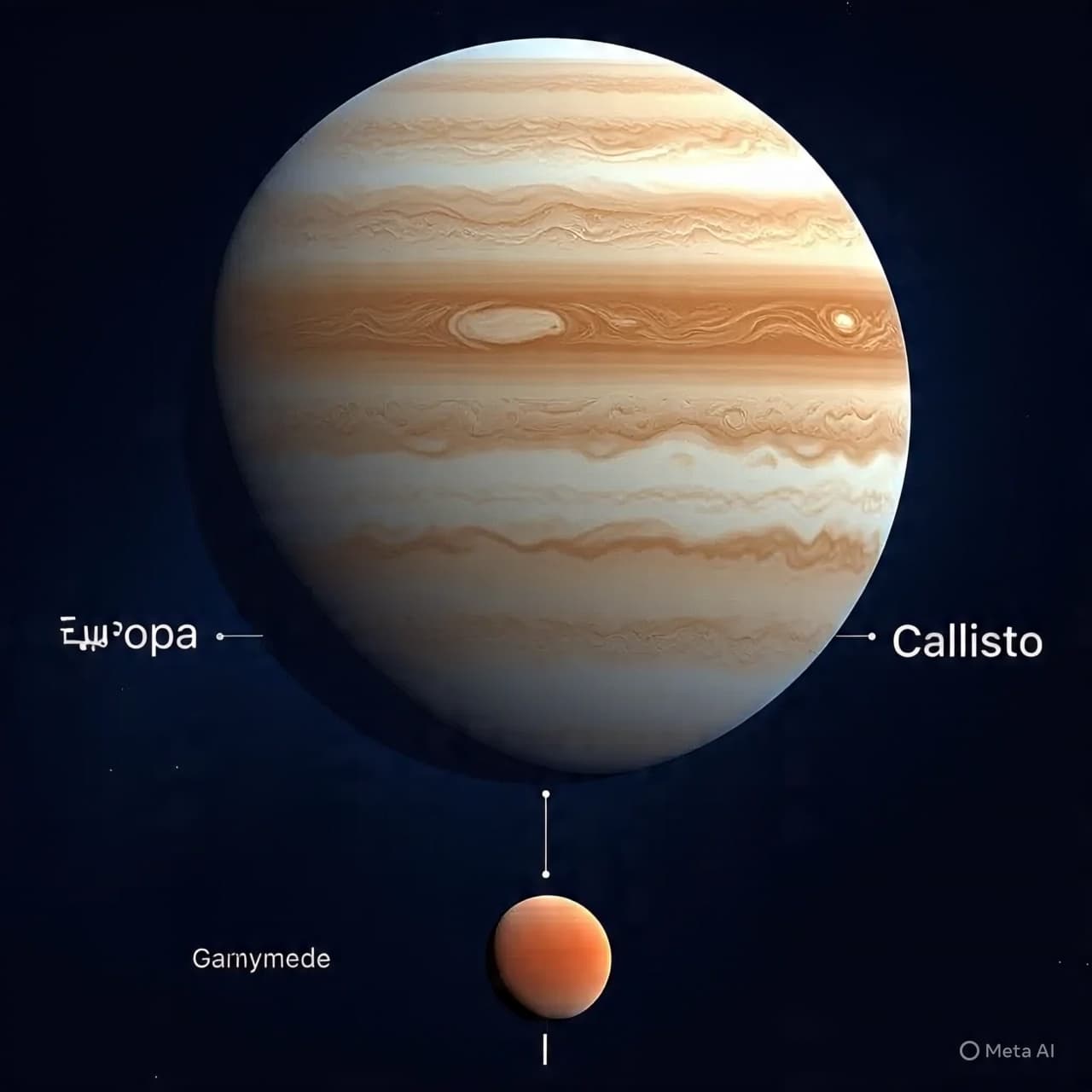
The four Galilean moons — Europa, Ganymede, Callisto, and Io — have long fascinated scientists because of their varied landscapes and, in some cases, hidden oceans beneath ice. Now, scientists modeling the early solar system have shown that complex organic molecules — carbon-rich compounds containing oxygen and nitrogen that are the essential precursors to amino acids and nucleotides — could have formed while these moons were coalescing from the primordial material around Jupiter.
In the dim light of our young Sun, icy grains saturated with simple chemicals such as methanol, carbon dioxide, and ammonia danced through a protoplanetary disk. Radiant ultraviolet energy and mild heating drove reactions on those grains, tying atoms together into larger, organic molecules. Then, as these grains drifted inward and joined the circumplanetary disk — the ring of matter encircling nascent Jupiter — they carried their freshly made organic chemistry with them. In some modeled scenarios, nearly half of that icy material retained its organic inventory and became part of the forming moons without substantial chemical alteration.
This means that Europa and its siblings might not have begun as chemically blank slates. Instead, they were born with a rich supply of carbon-based molecules already infused into their icy cores. Some of these molecules may have even formed close to Jupiter itself, where local heating in the giant planet’s own disk could trigger complex chemistry.
These findings shift how we think about where the ingredients for life might come from. Traditionally, scientists asked whether life’s building blocks arrived late — delivered by comets, asteroids, or interplanetary dust — or whether they were present from the beginning. If these organic precursors were already embedded in the moons’ materials billions of years ago, then a chemical groundwork for prebiotic processes could have existed long before watery oceans warmed beneath icy shells.
The implications are especially compelling for Europa, believed to host a subsurface ocean beneath kilometers of ice. Water, internal energy from tidal heating, and now potentially built-in organic chemistry combine into an environment that, at least chemically, resembles the basic recipe for life as we understand it.
As NASA’s Europa Clipper and ESA’s JUICE spacecraft approach the Jovian system, these missions will measure the composition and structure of these moons in unprecedented detail. Scientists hope to test whether these inherited organic molecules survive to this day, and how they interact with subsurface waters. In doing so, we may gain a clearer view not only of Jupiter’s moons, but of how life’s essential chemistry arises across the cosmos.
AI Image Disclaimer Visuals are created with AI tools and are not real photographs.
Source Check — Credible Mainstream/Niche Sources Exist ScienceDaily — summarizing the latest research on complex organic molecules in Jupiter’s moon-forming disk. Phys.org — detailed science coverage on Jupiter’s Galilean moons and organic precursors. Earth.com — explanatory reporting on organic molecule inheritance in the Jovian system. DailyGalaxy.com — narrative science site covering planetary formation and life’s ingredients. Universe Today — contextual science and astrobiology perspective.
Published by Banx Network. This article is part of the Banx decentralized media programme, powered by the BXE token on the XRP Ledger.