High above the shifting weather and restless oceans of Earth, laboratories orbit in quiet circles around the planet. Inside the modules of the International Space Station, science often unfolds in small and patient ways—drops of liquid drifting through weightless air, seedlings stretching toward artificial light, and microorganisms quietly multiplying inside sealed containers.
Among these delicate experiments, researchers are exploring an idea that once belonged almost entirely to science fiction: mining the resources of space.
For decades, scientists have imagined harvesting metals from asteroids or distant planetary surfaces. Such materials—iron, copper, nickel, and rare elements—could one day support long-term exploration beyond Earth. Yet the challenge has always been practical. Traditional mining machinery is heavy, complex, and difficult to operate in environments where gravity is weak and human presence is limited.
In recent years, researchers have begun to look toward an unexpected partner in this task: microbes.
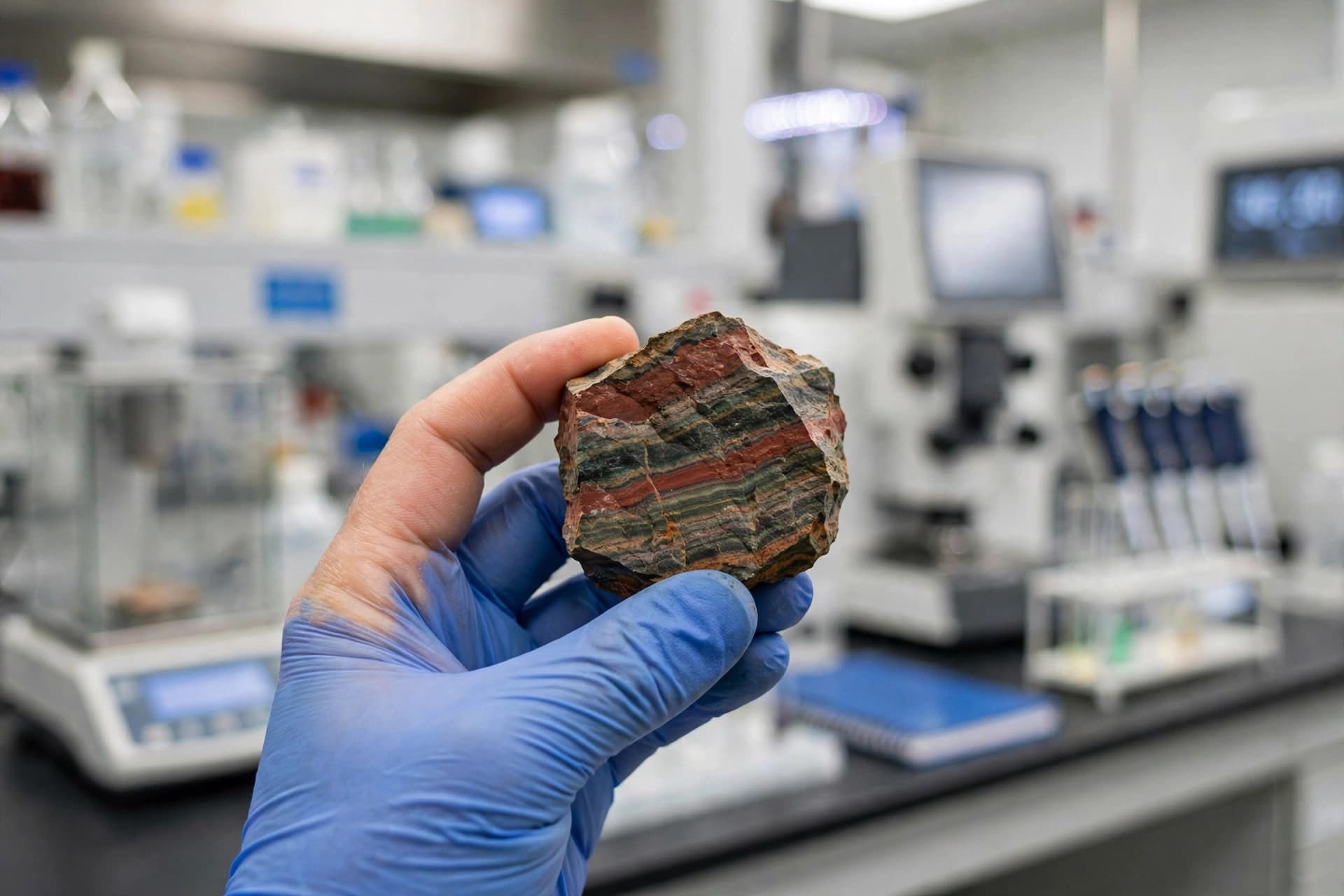
Certain species of bacteria and fungi possess a remarkable ability known as biomining. On Earth, these organisms naturally interact with rocks and minerals, releasing metals through biochemical processes. In industrial settings, companies already use microbes to help extract copper and other valuable elements from low-grade ores.
The question scientists began asking was simple but profound: could similar biological processes work in space?
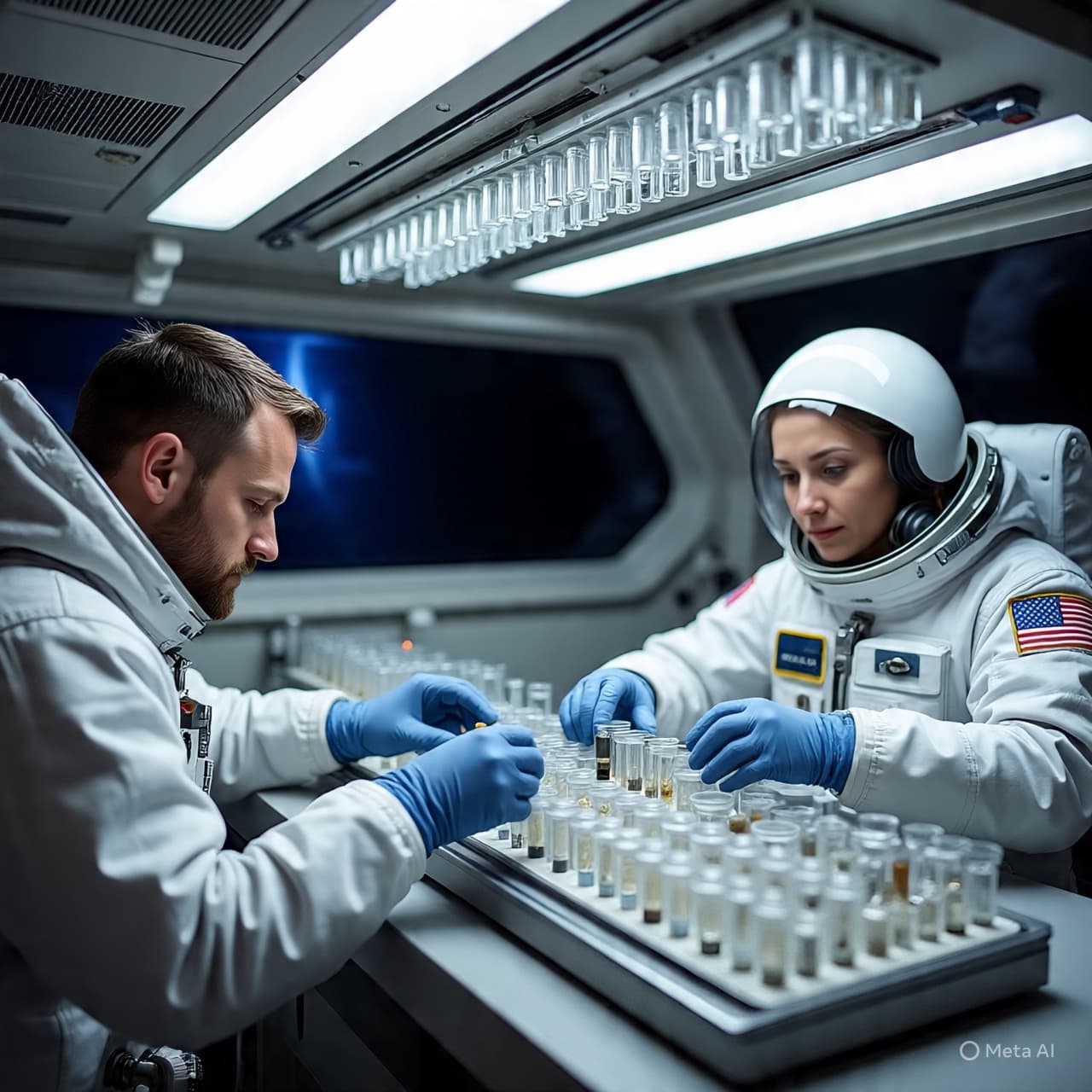
To find out, astronauts aboard the International Space Station have conducted experiments allowing microbes to interact with mineral samples under microgravity conditions. Within small culture chambers, bacteria and fungi are introduced to fragments of rock. Over time, the organisms begin to break down the minerals, slowly freeing metallic elements that can be collected and studied.
The work is subtle and slow, but the results suggest that biology may function differently—and sometimes more efficiently—in orbit. Without the constant pull of gravity, fluids behave differently, and microbial colonies spread in unusual patterns. These changes can influence how organisms interact with the surfaces of minerals.
Researchers studying these processes hope to understand whether microbes could one day assist astronauts in extracting materials from asteroids or lunar soil.
The implications reach beyond simple resource gathering. Carrying large quantities of building materials from Earth is enormously expensive. If explorers could produce metals and other materials directly from space environments, future missions might become far more sustainable.
Imagine a distant outpost where microorganisms quietly process asteroid fragments, releasing metals that can be used for construction, manufacturing, or energy systems. In such a future, the smallest forms of life could play a central role in humanity’s expansion beyond Earth.
For now, the experiments remain modest—carefully controlled studies conducted inside the orbiting laboratories of the International Space Station. Scientists monitor the growth of microbes, analyze chemical changes in mineral samples, and compare the results with similar experiments performed on Earth.
Each result adds a small piece to a much larger puzzle: how life and technology might work together in the harsh environment of space.
The idea itself carries a certain poetic symmetry. For billions of years, microorganisms have shaped Earth’s geology, slowly transforming minerals and influencing the chemistry of oceans and soil. Now, those same biological processes may help humanity reach outward, carrying the tools of life into the silent landscape beyond our planet.
And so, in the weightless calm of orbit, tiny colonies of bacteria and fungi continue their quiet work—breaking down rock, releasing metals, and offering a glimpse of how the smallest organisms might help build the next chapter of exploration among the stars
Published by Banx Network. This article is part of the Banx decentralized media programme, powered by the BXE token on the XRP Ledger.