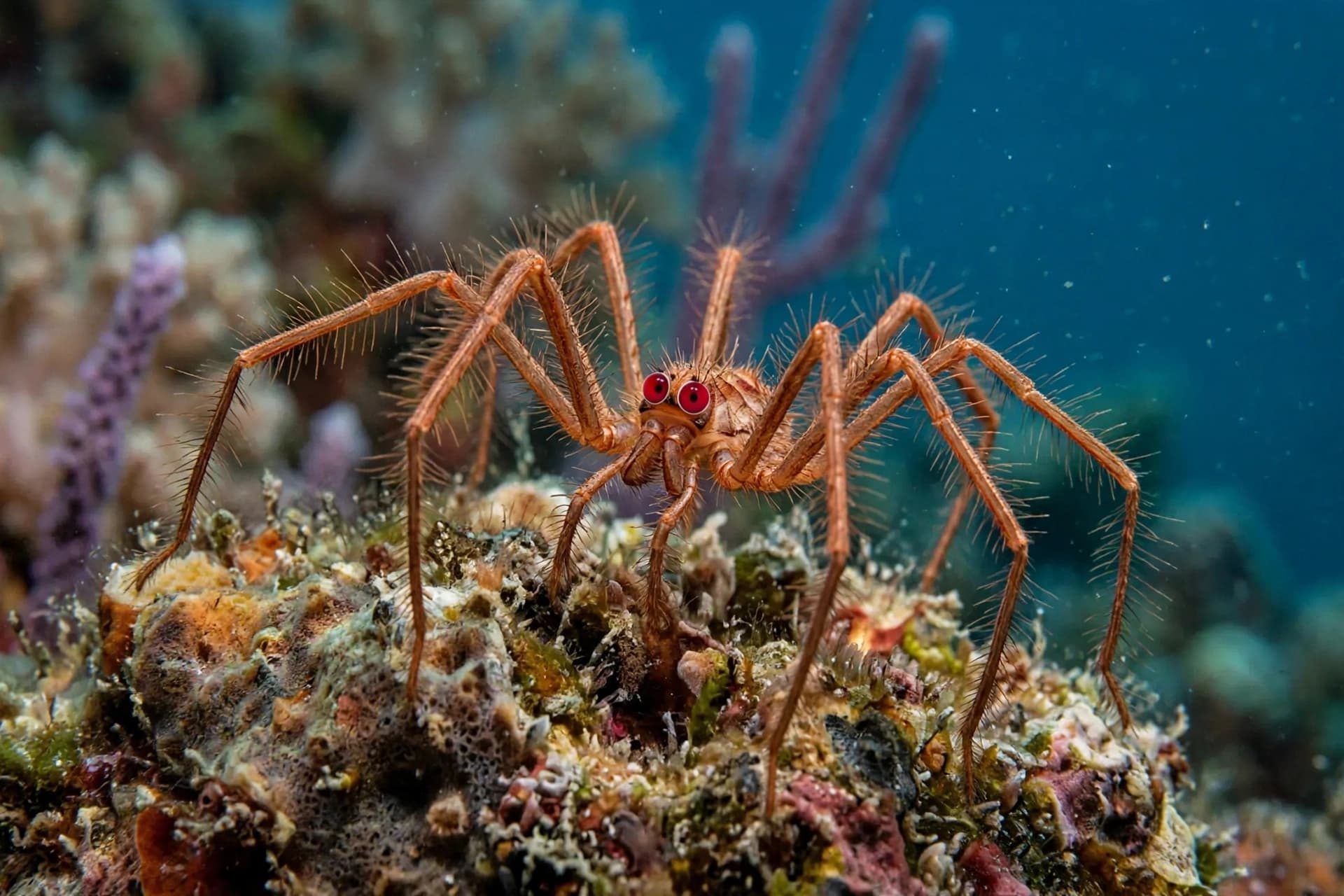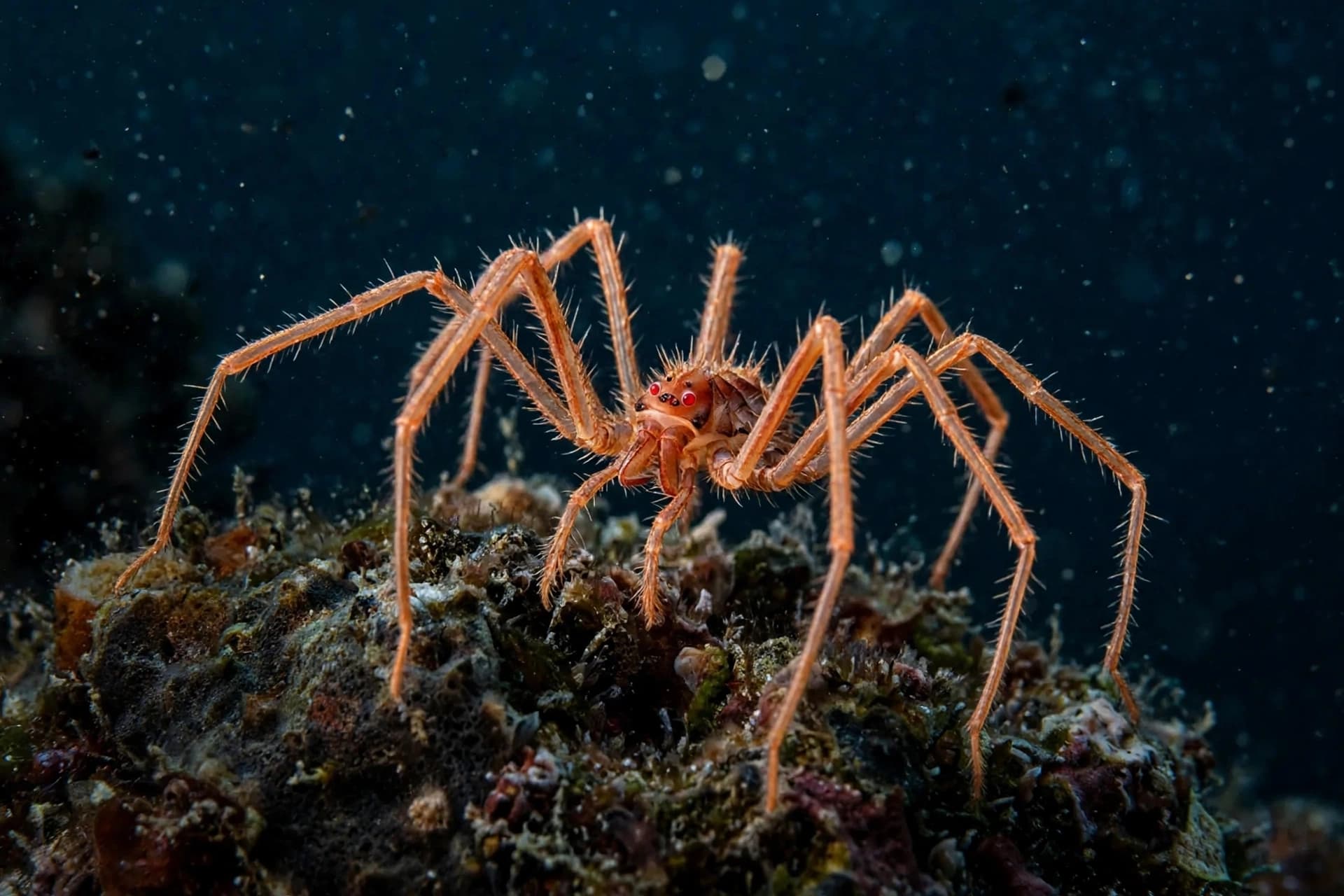
The ocean has a way of reminding us that strangeness is not a human invention. In the cold, quiet waters of the Salish Sea, between British Columbia and Washington State, researchers have found two creatures that sound like the product of a vivid imagination: one with hairy legs, red eyes, and three lips; another so burdened by its own parasites that it cannot keep itself clean. They are sea spiders, and they are entirely real.
The discovery, published in the journal Organisms Diversity & Evolution, marks the first description of new sea spider species in the Salish Sea in nearly a century. Researchers from the University of British Columbia collected the specimens during scuba dives at depths of up to 18 meters between September 2023 and August 2024, surveying sites near Quadra Island, Vancouver, Bamfield, and Victoria. Lead author Cormac Toller-Scott, who conducted the work as part of his master's degree in zoology, had initially set out to study how sea spiders are affected by climate change. He found that baseline information on which species even live in the region was largely absent.
The first new species, Callipallene pilosuspedes, takes its name from Latin words meaning "hairy feet," a reference to the long, curved spines covering its lower legs. It has red eyes, a triangular mouth opening surrounded by three lips, and claws. Its ovigers, appendages that resemble legs but serve other functions, are highly dexterous and can be used for grooming. Under a microscope, researchers watched the animal wrap these appendages around its legs, using comb-like spines to clean itself.
The second species, Tanystylum kiixin, presents a contrast in self-care. Its egg-carrying limbs are smaller and less mobile, leaving it unable to groom effectively. The resulting accumulation of debris makes it a hospitable host for even smaller parasites, which researchers frequently observed on its body. The species name, pronounced "kee-hin," derives from the sound of waves breaking at the base of an ancient Indigenous village site near where the specimens were first collected. It has an hourglass-shaped abdomen, black eyes, and knob-like claws.
Sea spiders are not true spiders, though they are related. They belong to a lineage that emerged roughly 500 million years ago, before spiders moved onto land, and they never left the ocean. Their resemblance to terrestrial spiders is a case of convergent evolution rather than close kinship. They breathe through their skin, and their digestive and reproductive systems extend into their legs. Females produce eggs that extrude through pores on their limbs; males then carry the eggs attached to their own legs until they hatch.
The discovery carries implications beyond taxonomy. Toller-Scott noted that marine invertebrates in the Salish Sea are particularly at risk from climate change and human disturbance, yet the region's biodiversity remains poorly documented. "If a master's student can find two new species of sea spider in one field season of scuba diving along the coast of BC," he said, "imagine how many undescribed species of marine invertebrates need to be documented before anthropogenic disturbance and climate change completely alter these marine communities forever."
For now, the two sea spiders join a small but growing catalog of life in a region that sits at the edge of one of the world's most developed coastlines. Their discovery is a reminder that even in waters we think we know, there is still much we have not seen.
Note: The images associated with this article are AI-generated and intended for illustrative purposes only.
Sources: CNN, CBC, Popular Science, Gizmodo, IFLScience, University of British Columbia
Published by Banx Network. This article is part of the Banx decentralized media programme, powered by the BXE token on the XRP Ledger.