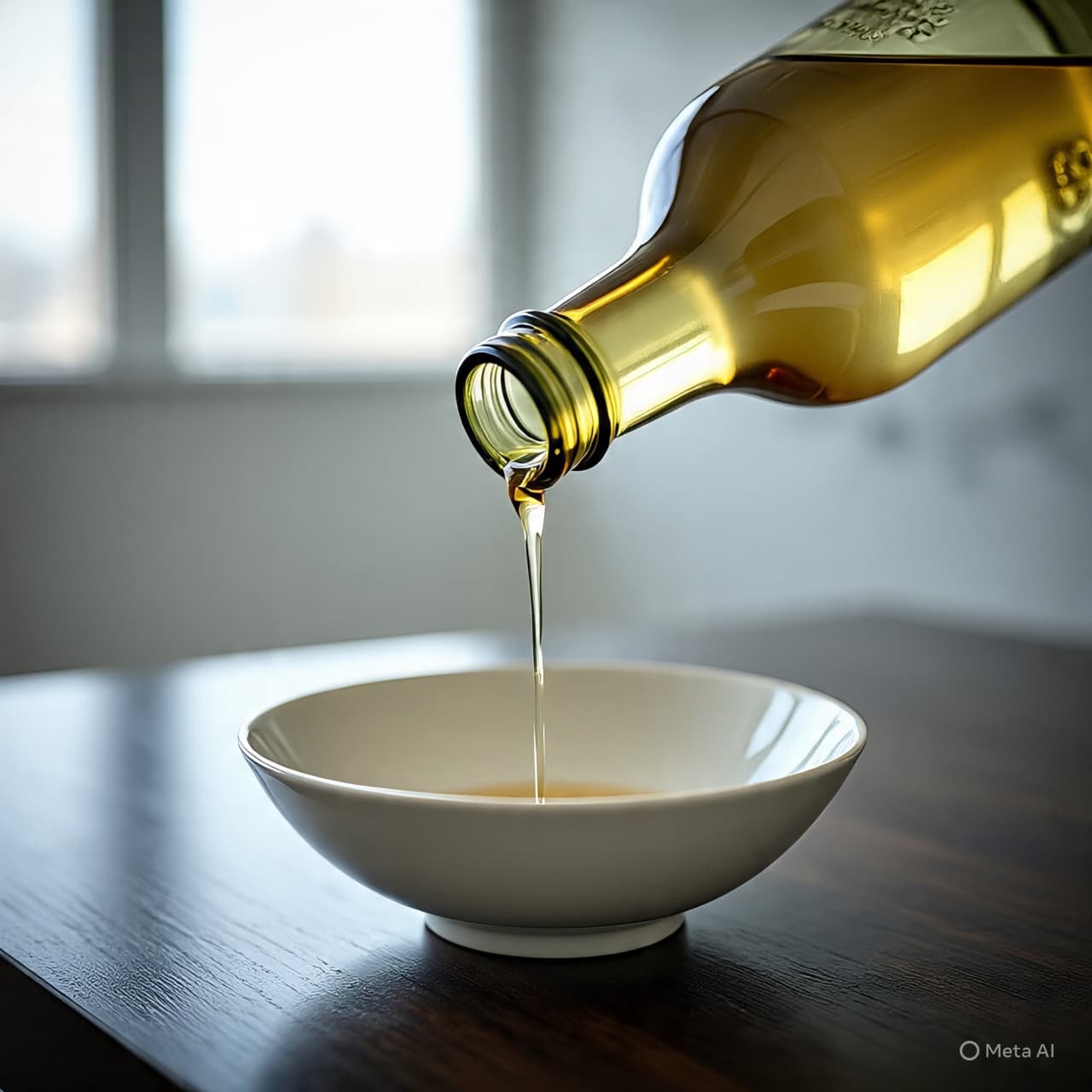
There are quiet moments in a kitchen that rarely draw attention: the slight tilt of a bottle, the patient waiting above a bowl, the faint drip that gathers itself at the lip of a container before surrendering to gravity. In such small rituals—those seconds spent coaxing the final drop of milk or oil from a carton—time seems to stretch in subtle ways. What appears trivial often carries within it a quiet complexity, as if the laws of nature are pausing there, performing their work in miniature.
It was this ordinary moment that recently caught the curiosity of physicists, who wondered whether the lingering drops clinging to the inside of bottles and cartons obey a predictable rhythm. Behind the kitchen scene lies a delicate dance of forces: gravity pulling downward, viscosity resisting movement, and thin films of liquid slowly creeping across surfaces. What feels like impatience in daily life is, in truth, the visible edge of fluid mechanics quietly unfolding.
Researchers at Brown University approached the problem with a blend of mathematical theory and practical experiment. Drawing on the Navier–Stokes equations—fundamental formulas used to describe the motion of fluids—they examined how thin layers of liquid move along a tilted surface. The work was both playful and serious: a training exercise in fluid physics that mirrored the processes the researchers already study in laboratories, including how bacteria travel across moist surfaces.
To translate theory into something tangible, the team tilted plates at about forty-five degrees and poured common kitchen liquids across them. By weighing the fluid as it drained away, they could measure how long it took for most of the liquid film to leave the surface. The results revealed a gentle but striking pattern governed largely by viscosity—the internal friction that makes some liquids flow easily while others move reluctantly.
For thin, low-viscosity liquids such as water or milk, the waiting is brief. Roughly ninety percent of the liquid film can drain in around thirty seconds when the container is tilted. Olive oil, slightly thicker and more resistant to flow, requires far more patience—often more than nine minutes for the same level of recovery. Maple syrup, whose viscosity approaches a slow, honey-like resistance, may take hours before the last of its thin film yields to gravity.
These results reveal that the stubborn drops lingering in bottles are not merely the result of inconvenient packaging. Instead, they emerge from the physics of thin films creeping along surfaces. Even when a container appears empty, a delicate layer of liquid often remains attached to the walls, sliding downward slowly under the competing influences of gravity and internal friction.
The study also explored a small domestic puzzle: how long to wait after washing a cast-iron wok before tipping it again to remove the last traces of water. Allowing the thin film of moisture to gather into a pool before pouring can help avoid leaving water behind that might encourage rust. Using the same fluid-dynamics equations, the researchers estimated that the optimal wait time is about fifteen minutes—longer than most cooks might guess.
In such moments, science reveals itself not as something distant or abstract, but as a quiet companion to everyday life. The slow drip from a bottle, the reluctant slide of oil along glass, the patient wait beside a sink—all become small demonstrations of the same physical principles that guide oceans, weather, and the movement of microscopic organisms.
In clear scientific terms, physicists studying thin liquid films have shown that the time required to drain the last drops from kitchen containers depends strongly on viscosity. Experiments and fluid-dynamics models indicate that while watery liquids drain within seconds, thicker substances like olive oil may take minutes and syrup much longer for most of the remaining liquid to flow out.
AI Image Disclaimer: These visuals are AI-generated illustrations intended to conceptually represent the topic.
Sources
Popular Science Phys.org Nautilus Brown University Physics of Fluids
Published by Banx Network. This article is part of the Banx decentralized media programme, powered by the BXE token on the XRP Ledger.