
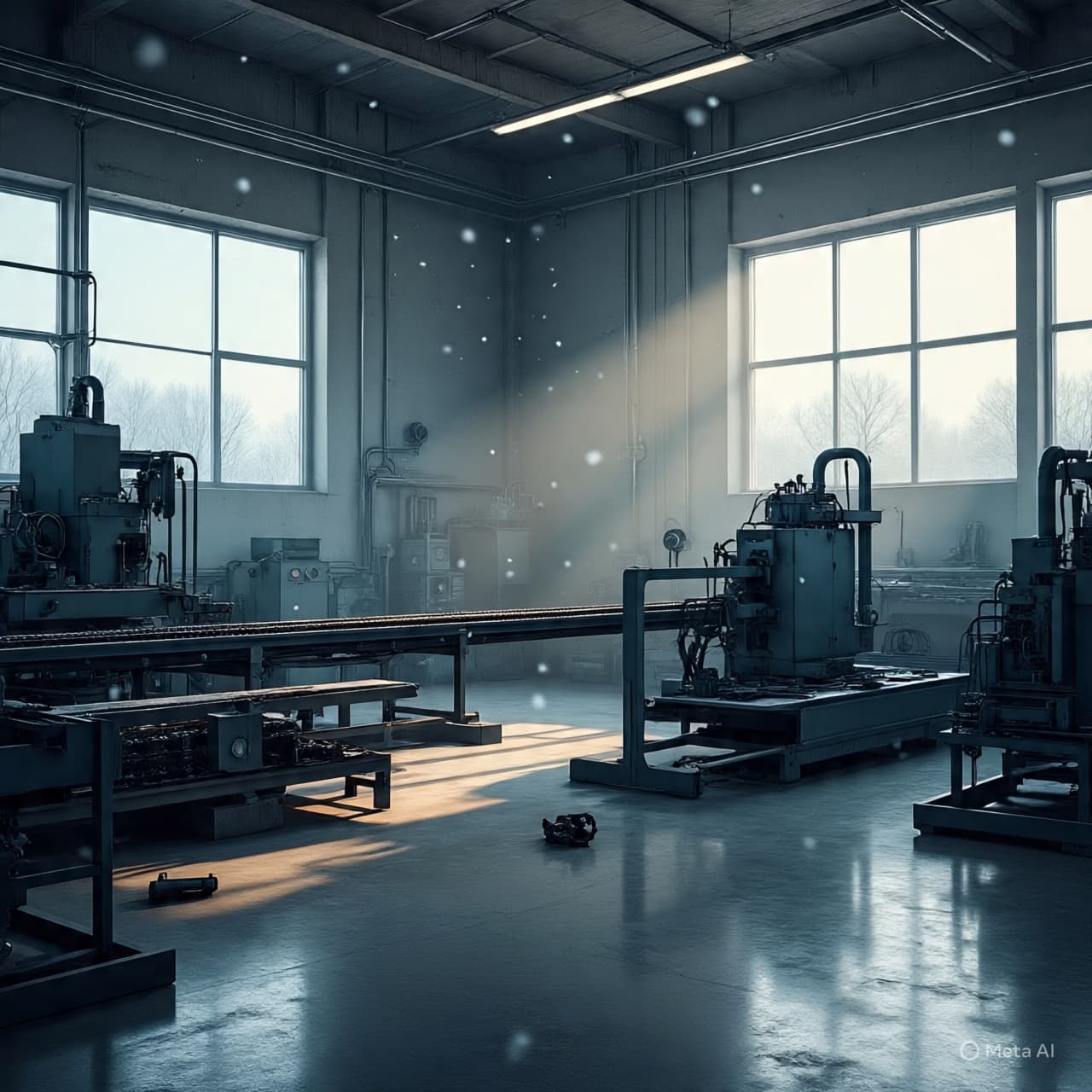
December settles over factory towns with a familiar hush. Loading docks see fewer trucks, machines pause between runs, and the echo of work stretches longer than it once did. It is a season that invites reflection, and this year the stillness carries added meaning. For the tenth month in a row, the U.S. factory sector has edged backward, extending a contraction that has quietly reshaped the industrial landscape.
Manufacturing activity continued to soften in December, weighed down by cautious demand and lingering uncertainty. Orders have remained subdued, inventories carefully managed, and hiring restrained. While the slowdown has unfolded gradually rather than abruptly, its persistence has become the defining feature. Each month adds another layer to a pattern that suggests not collapse, but endurance under strain.
Higher borrowing costs continue to influence decisions on the factory floor. Investments are delayed, expansions reconsidered, and long-term plans revisited with care. At the same time, consumers and businesses alike have shown restraint, particularly for goods tied to discretionary spending. The result is an environment where production adjusts downward not out of crisis, but out of prudence.
There are signs of balance within the slowdown. Supply chains, once stretched thin, have largely normalized. Price pressures tied to materials and transport have eased, offering some relief to manufacturers navigating tighter margins. These shifts have helped prevent sharper declines, even as growth remains elusive.
Employment within the sector reflects the same measured tone. Layoffs have been limited, but hiring has slowed, and overtime has become less common. Companies appear intent on preserving their workforces while waiting for clearer signals, aware that skills lost are not easily replaced.
Economists describe the moment as one of prolonged pause. Manufacturing has borne the weight of higher rates more directly than other parts of the economy, and its extended contraction stands in contrast to resilience elsewhere. Yet the absence of steep drops suggests an industry adjusting to conditions rather than unraveling.
As December closes and a new year approaches, factory floors remain open, if quieter than before. The machines have not stopped; they are simply waiting. In that waiting lies the story of the moment—a sector moving carefully through uncertainty, marking time until momentum finds a reason to return.
AI Image Disclaimer Visuals are AI-generated and serve as conceptual representations.
Published by Banx Network. This article is part of the Banx decentralized media programme, powered by the BXE token on the XRP Ledger.



