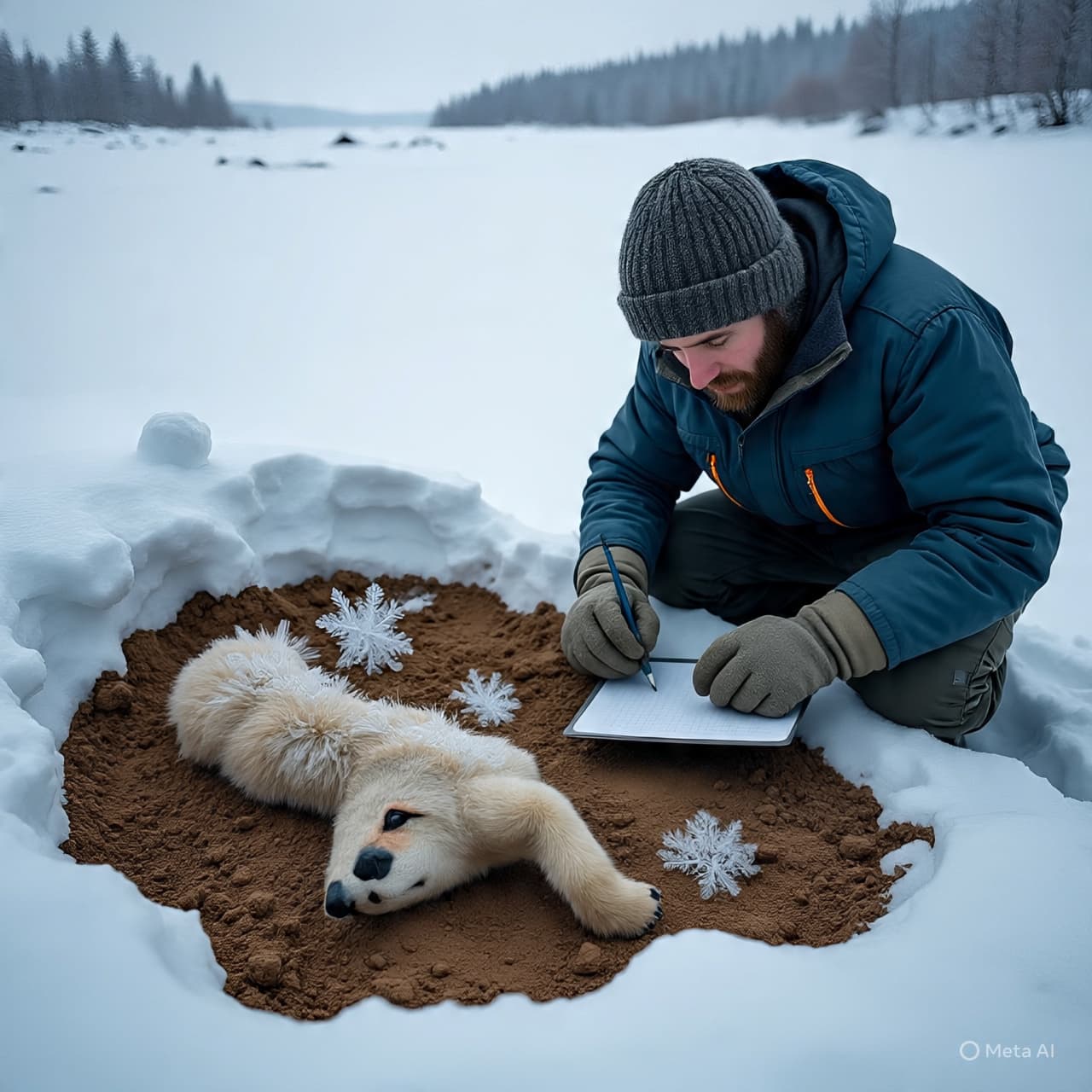
There are moments in science that feel less like discovery and more like listening to the echo of an ancient heartbeat. On the frigid steppes of Siberia, where wind seems to whisper tales into the permafrost, a tiny wolf pup lay preserved for nearly 15,000 years. Its body, once animated with the hunger and curiosity of youth, became a portal into a world long vanished not through grand bones or monumental fossils, but through the remnants of its final meal. In the quiet stillness where ice meets time, old stories sometimes find their way into the hands of modern science.
Researchers working near the village of Tumat uncovered this little creature encased in permafrost, a delicate remnant of the Ice Age. Inside its stomach was more than a memory; it was flesh from a woolly rhinoceros, one of the giants that once roamed the frozen landscapes of Eurasia. From that preserved morsel, scientists achieved something unprecedented: they sequenced the entire genome of an extinct woolly rhino, not from a bone deep underground, but from tissue once inside another animal.
This remarkable feat went beyond technical mastery, because genomes from Ice Age creatures tend to be fragile and fragmented after millennia. That an entire genetic blueprint could be reconstructed from such an unlikely source is testament to the advancing art of paleogenomics. And in those strands of ancient DNA lie clues to how species like the woolly rhinoceros lived and ultimately, why they disappeared.
Comparisons with older rhino specimens showed that these magnificent animals bore no signs of inbreeding or long-term genetic decline before they vanished. Instead, their demise appears to have been sudden a sharp cliff in time, rather than a slow slide. This challenges older ideas that humans drove them to extinction through hunting, instead pointing to the rapid environmental shifts of the late Ice Age as prime culprits.
It is poetic in a way that the story of an extinct giant came through the last moments of a young wolf that once lived and died amid the same cold winds and tangled grasses. This quiet intersection, frozen in place for tens of centuries, teaches us not just about life before us but about the fragile threads that connect all beings through time. In our own era of rapid climatic change, such lessons carry a soft urgency. Understanding how species once adapted or failed to helps guide the choices we make for those still with us.
AI Image Disclaimer (rotated wording) Visuals are created with AI tools and are not real photographs.
Sources
Reuters The Guardian Popular Mechanics Discover Magazine Live Science roundup
Published by Banx Network. This article is part of the Banx decentralized media programme, powered by the BXE token on the XRP Ledger.