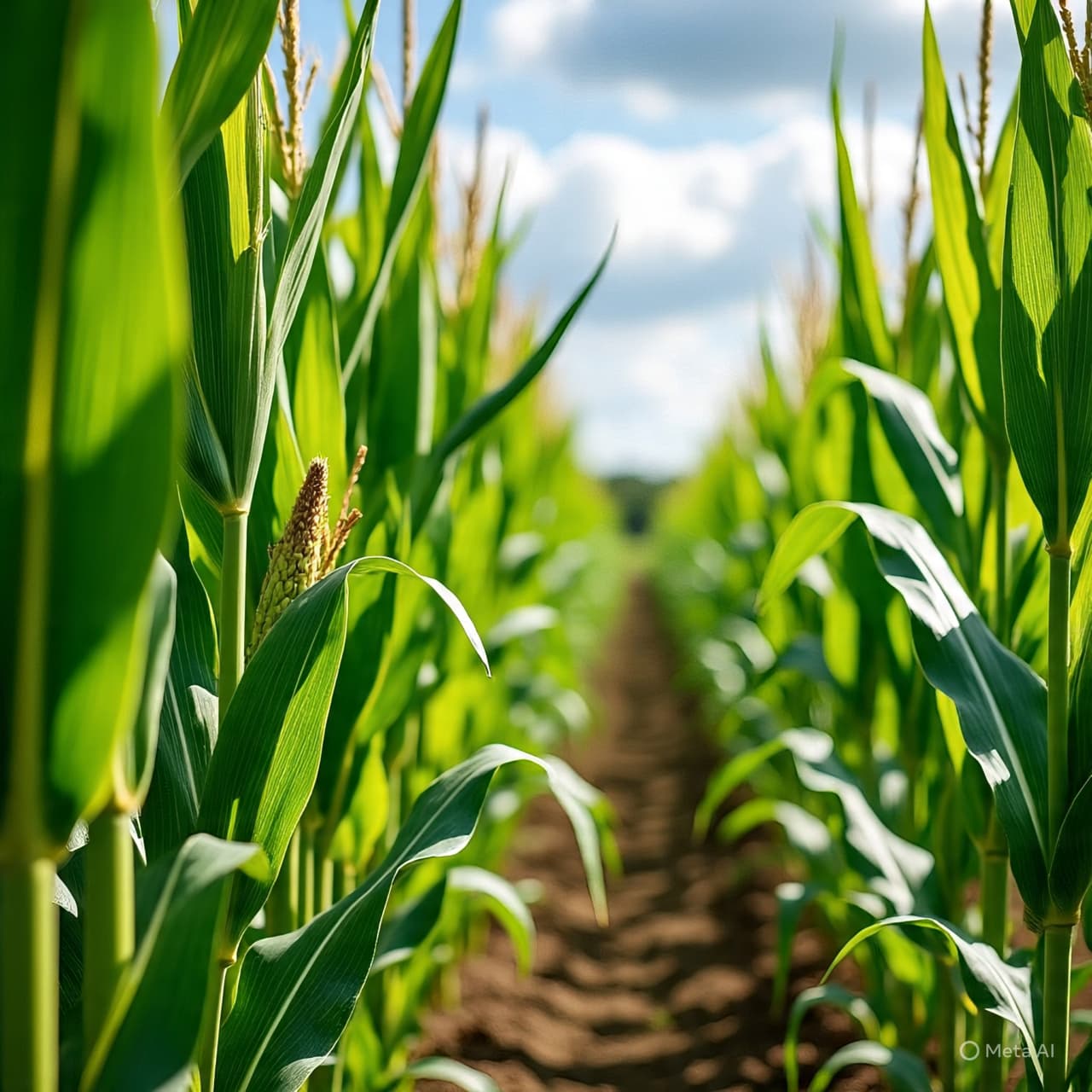
In late summer, when maize fields stretch high beneath the sun, the plants move gently in the wind. Their leaves rustle like pages turning, row after row, across landscapes shaped by agriculture and time. For centuries, these fields have fed communities and economies, their golden harvests woven into the daily rhythms of human life.
Yet beneath the familiar shape of each plant lies a world far less visible — a layered architecture of genes, molecules, and instructions written deep within the cell.
Inside every maize plant, DNA folds and unfolds with careful precision. It carries the instructions that guide how the plant grows, when it flowers, and how it responds to drought, heat, or disease. Much of this genetic script has been studied for decades, but many of its deeper workings remain partly hidden, like chapters of a book that scientists are still learning how to read.
Now researchers at Florida State University have uncovered new details about how DNA operates within maize, offering fresh insight into the complex machinery that controls gene activity in one of the world’s most important crops.
The team focused on how sections of maize DNA organize themselves inside the cell’s nucleus and how this arrangement influences which genes become active. Rather than existing as a simple linear string of information, DNA is folded into a three-dimensional structure where distant genetic regions can interact with one another.
These interactions form a dynamic network inside the nucleus, bringing regulatory sequences and genes into close proximity even when they are far apart along the DNA strand.
Using advanced genomic tools, the researchers mapped these interactions across maize chromosomes. Their work revealed previously unrecognized patterns in how DNA regions communicate, highlighting regulatory elements that help control gene expression during plant development.
In essence, parts of the genome act like distant partners in a conversation, looping through the nuclear space to influence when certain genes switch on or remain silent.
Such regulatory choreography is essential for plant life. The growth of a leaf, the formation of a kernel, and the plant’s response to environmental stress all depend on the precise timing of gene activity. If the sequence of activation changes, the plant’s development can shift in subtle or dramatic ways.
Maize offers a particularly rich landscape for such research. Its genome is large and complex, filled with repeated sequences and regulatory elements that make it both challenging and revealing for scientists studying plant genetics.
By charting these new DNA interactions, the Florida State University team has added another layer of understanding to how maize genes are controlled. The findings may also help researchers identify genetic features that influence traits important to agriculture, including yield, resilience, and adaptation to changing environmental conditions.
In the broader landscape of plant science, such discoveries contribute to a growing effort to understand not just the sequence of DNA but its spatial organization — the three-dimensional structure that shapes how genes function inside living cells.
For the moment, the maize fields themselves remain unchanged. Leaves still whisper in the wind, and kernels continue their slow development along each ear.
But within those plants, scientists are gradually uncovering the deeper patterns of the genetic language that guides their growth.
The Florida State University researchers report that newly mapped DNA interactions in maize reveal additional regulatory mechanisms controlling gene expression, expanding scientific understanding of how the crop’s genome functions.
AI Image Disclaimer This artwork was generated with AI to illustrate the topic and does not represent real photographs.
Source Check
Phys.org ScienceAlert Florida State University News Plant Nature Plants The Scientist
Published by Banx Network. This article is part of the Banx decentralized media programme, powered by the BXE token on the XRP Ledger.