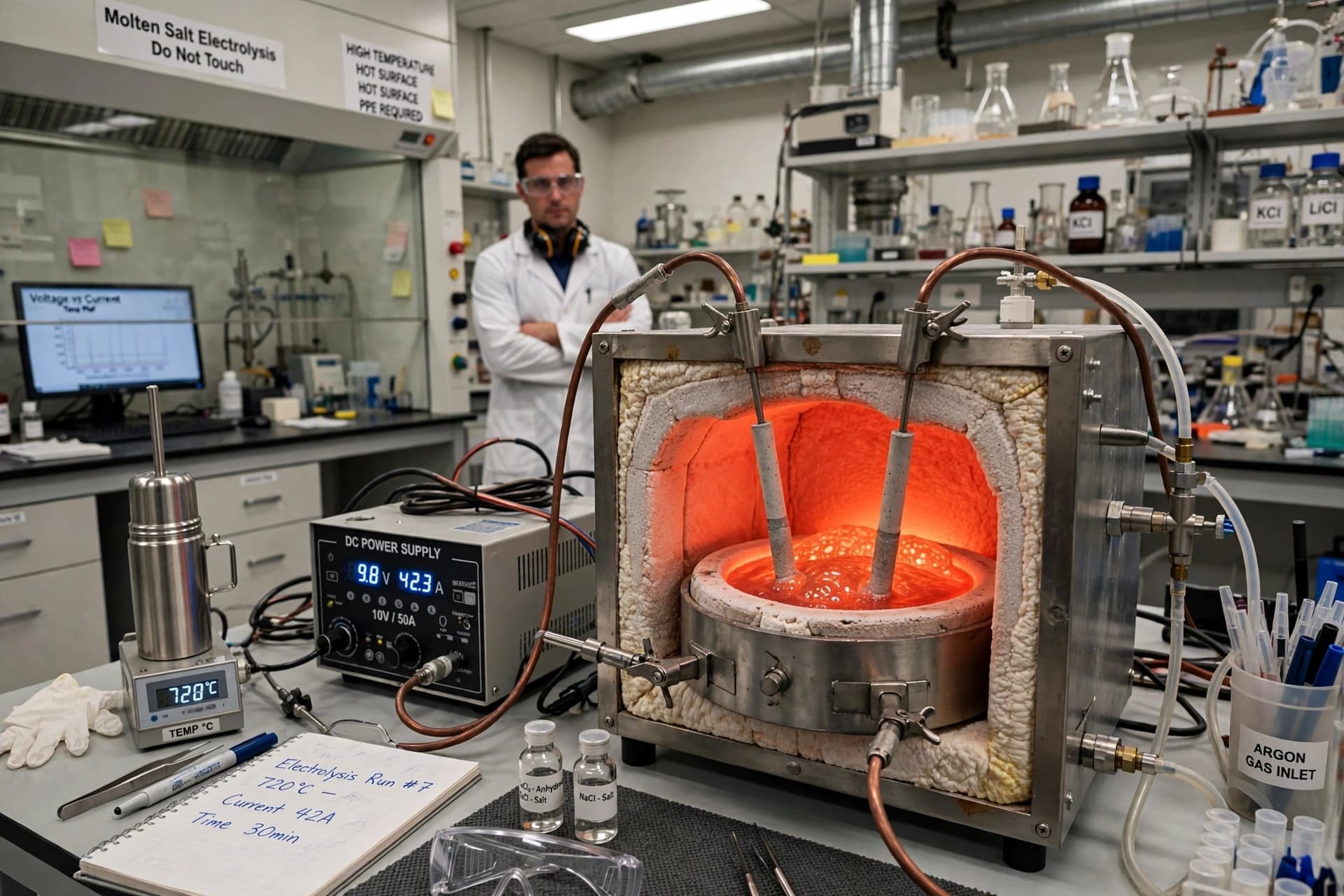
In the hidden architecture of matter, electrons dance to rhythms often invisible yet profoundly consequential. Their delicate quantum states can be disturbed by the slightest perturbation — a stray field, a jostle of atoms, or the unpredictable influence of magnetic forces. Preserving that coherence has long been a central challenge for scientists seeking to harness quantum phenomena for next-generation technologies.
Now, researchers have developed algorithms capable of maintaining electron coherence even in the presence of magnetic fields, a breakthrough that could stabilize quantum systems in unprecedented ways. These computational methods act like a gentle conductor, subtly guiding electrons to maintain harmony despite external influences that would normally scatter them.
Magnetic fields, essential for many applications, have historically posed a dilemma. They are simultaneously tools and threats — vital in imaging technologies, sensors, and quantum devices, yet capable of disturbing the fragile superpositions that define quantum states. The newly designed algorithms employ real-time feedback, predictive modeling, and error correction techniques to counteract these disturbances, effectively creating a digital scaffolding around the electron’s behavior.
Experiments demonstrate that coherence times can be extended significantly, allowing electrons to maintain their quantum states longer than ever before. This has direct implications for quantum computing, where electron coherence underpins the reliability and efficiency of qubits, as well as for spintronic devices and high-precision sensors.
The achievement is a subtle reminder that in quantum mechanics, control often comes not through brute force, but through understanding and anticipation. By modeling how electrons respond to fluctuating fields, the algorithms allow researchers to preemptively counter decoherence, reducing the need for extreme physical isolation.
Beyond computation, the work deepens our understanding of fundamental physics. Observing electrons maintain coherence in complex environments sheds light on how quantum systems behave in real-world conditions, bridging the gap between idealized laboratory settings and practical applications.
Collaboration between theorists and experimentalists was key. Theoretical insights guided algorithm design, while laboratory verification ensured that predictions aligned with observable behavior. The iterative cycle between simulation and experiment exemplifies how modern science progresses — patiently, reflectively, and with rigorous attention to detail.
While challenges remain, such as scaling the approach for larger quantum systems and integrating it with existing technologies, the breakthrough marks a milestone in quantum control. It represents a thoughtful blend of computation and physics, a quiet triumph of design over disorder.
As these algorithms are refined and deployed, the promise of more stable quantum devices edges closer to reality. Each preserved electron coherence is a small victory, a testament to human ingenuity navigating the subtle, often invisible forces that govern the universe at its smallest scales.
This advancement underscores a broader truth: in the realm of quantum mechanics, precision, foresight, and elegant problem-solving often yield the most enduring results.
AI Image Disclaimer Visuals are created with AI tools and are not real photographs.
SOURCE CHECK
Credible mainstream and niche sources covering this development include:
Nature Scientific American Phys.org IEEE Spectrum Physics Today
Published by Banx Network. This article is part of the Banx decentralized media programme, powered by the BXE token on the XRP Ledger.