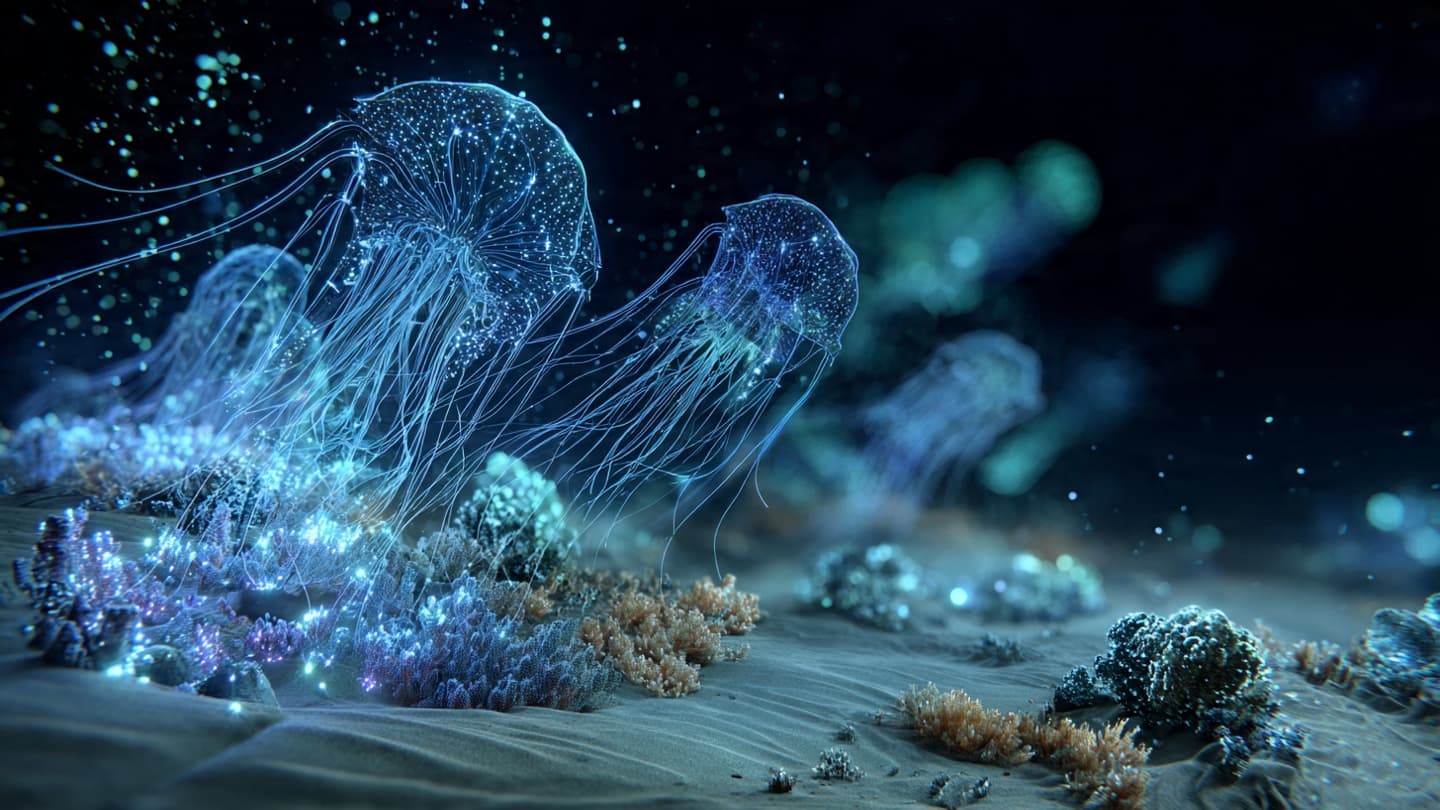
The deep ocean remains one of Earth's least explored frontiers. Hidden beneath kilometers of water, beyond the reach of sunlight, vast ecosystems persist in near-total darkness. Despite these extreme conditions, life continues to flourish, often in ways that challenge long-standing scientific assumptions.
Researchers studying deep-sea ecosystems have identified unusual biological adaptations that enable certain marine species to survive extended periods with little or no access to food. The findings offer fresh insight into how life evolves under extreme environmental pressures.
Many deep-sea habitats experience scarce and unpredictable food supplies. Organic material drifting from surface waters may take weeks or months to reach the ocean floor, forcing organisms to adapt to prolonged periods of scarcity.
Scientists discovered that some species possess remarkably slow metabolic rates, allowing them to conserve energy efficiently. Others appear capable of storing nutrients for extended durations, reducing their dependence on regular feeding.
The research also highlights the extraordinary diversity found in deep-ocean ecosystems. From specialized microorganisms to unusual invertebrates, many species have evolved unique survival mechanisms shaped by millions of years of isolation.
Understanding these adaptations could have implications beyond marine biology. Researchers suggest that studying extreme life forms may contribute to advances in biotechnology, medicine, and even the search for life beyond Earth.
The discoveries underscore how much remains unknown about Earth's oceans. Although technological advances have improved access to deep-sea environments, scientists estimate that large portions of the ocean floor remain unexplored.
As exploration continues, marine researchers believe additional discoveries are likely to emerge, further expanding understanding of how life persists under some of the planet's harshest conditions.
AI Image Disclaimer: Images accompanying this article are AI-generated scientific illustrations intended to visualize concepts described in current research.
Source Verification Check: Reuters, Nature, Science News, National Geographic, NOAA
Summary: Scientists have discovered remarkable adaptations in deep-sea animals, revealing new insights into survival in extreme environments.
Published by Banx Network. This article is part of the Banx decentralized media programme, powered by the BXE token on the XRP Ledger.