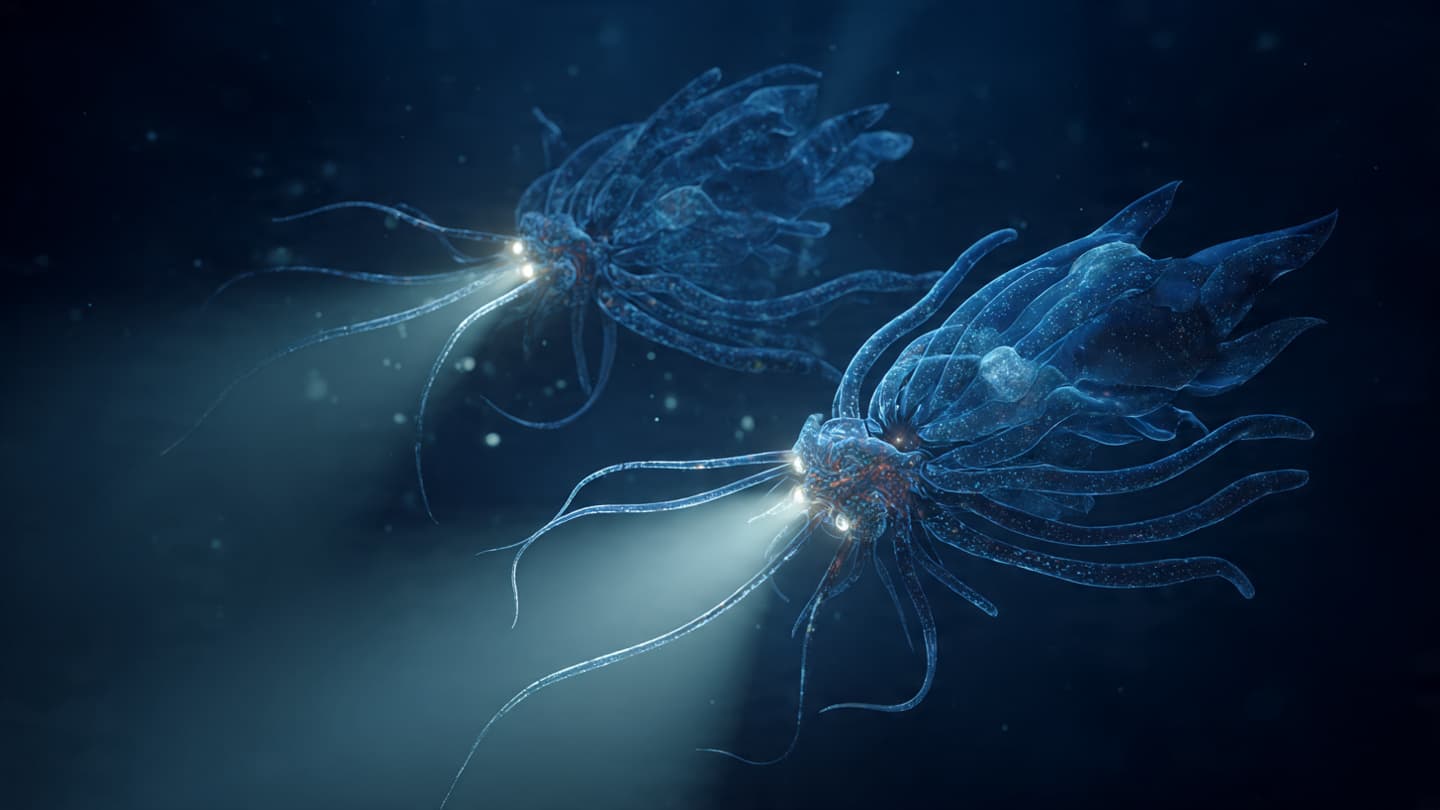
Far below the reach of sunlight lies a world that seems almost detached from the rhythms of everyday life. In the deep ocean, where darkness dominates and resources are scarce, survival often depends on strategies that challenge human understanding. A recent scientific investigation into deep-sea organisms capable of enduring years without food has shed light on one of nature’s most remarkable examples of adaptation.
Researchers studying life in extreme marine environments have focused on species that inhabit some of the deepest regions of the ocean. These areas receive little organic material from the surface, creating conditions where food can be extraordinarily limited and unpredictable.
Unlike animals living in more resource-rich environments, deep-sea organisms have evolved mechanisms that allow them to conserve energy over exceptionally long periods. Scientists believe that slow metabolism plays a key role in enabling these species to survive extended intervals between feeding opportunities.
The research highlights how life can adapt to conditions that might otherwise appear inhospitable. Some species reduce biological activity to minimal levels, effectively stretching limited energy reserves over months or even years.
Advances in underwater exploration technology have made these discoveries increasingly possible. Remotely operated vehicles, deep-sea cameras, and advanced sensors allow scientists to observe habitats that remained largely inaccessible for much of human history.
Understanding these adaptations has implications beyond marine biology. Researchers studying extreme survival strategies often find insights relevant to medicine, ecology, and even future space exploration, where resource management becomes critically important.
The deep ocean remains one of the least explored regions on Earth. Despite covering vast portions of the planet, many species and ecosystems have yet to be fully documented, leaving scientists with countless unanswered questions.
Marine researchers emphasize that deep-sea ecosystems are interconnected with broader ocean processes. Changes affecting ocean temperatures, chemistry, or circulation patterns can ultimately influence environments far below the surface.
As scientific exploration continues, discoveries from the deep ocean serve as reminders of nature’s extraordinary capacity for adaptation. Each finding expands understanding of life’s resilience and reveals how organisms have evolved to thrive under conditions once thought impossible.
AI Image Disclaimer: The images accompanying this article are AI-generated illustrations created to represent scientific concepts discussed in the report.
Source Verification Check: Reuters, Nature, National Geographic, Woods Hole Oceanographic Institution
Published by Banx Network. This article is part of the Banx decentralized media programme, powered by the BXE token on the XRP Ledger.