In the quiet corners of online forums, where words are exchanged like weapons and grievances calcify into ideologies, a man was building something. Not just weapons of crude metal and gunpowder, but a version of himself that he believed would be taken seriously by those he admired. Mark Broadhurst, a British Army chef, made a homemade cannon, stockpiled knives and crossbows, and spoke of raising a militia—all while wearing the uniform of his country's military.
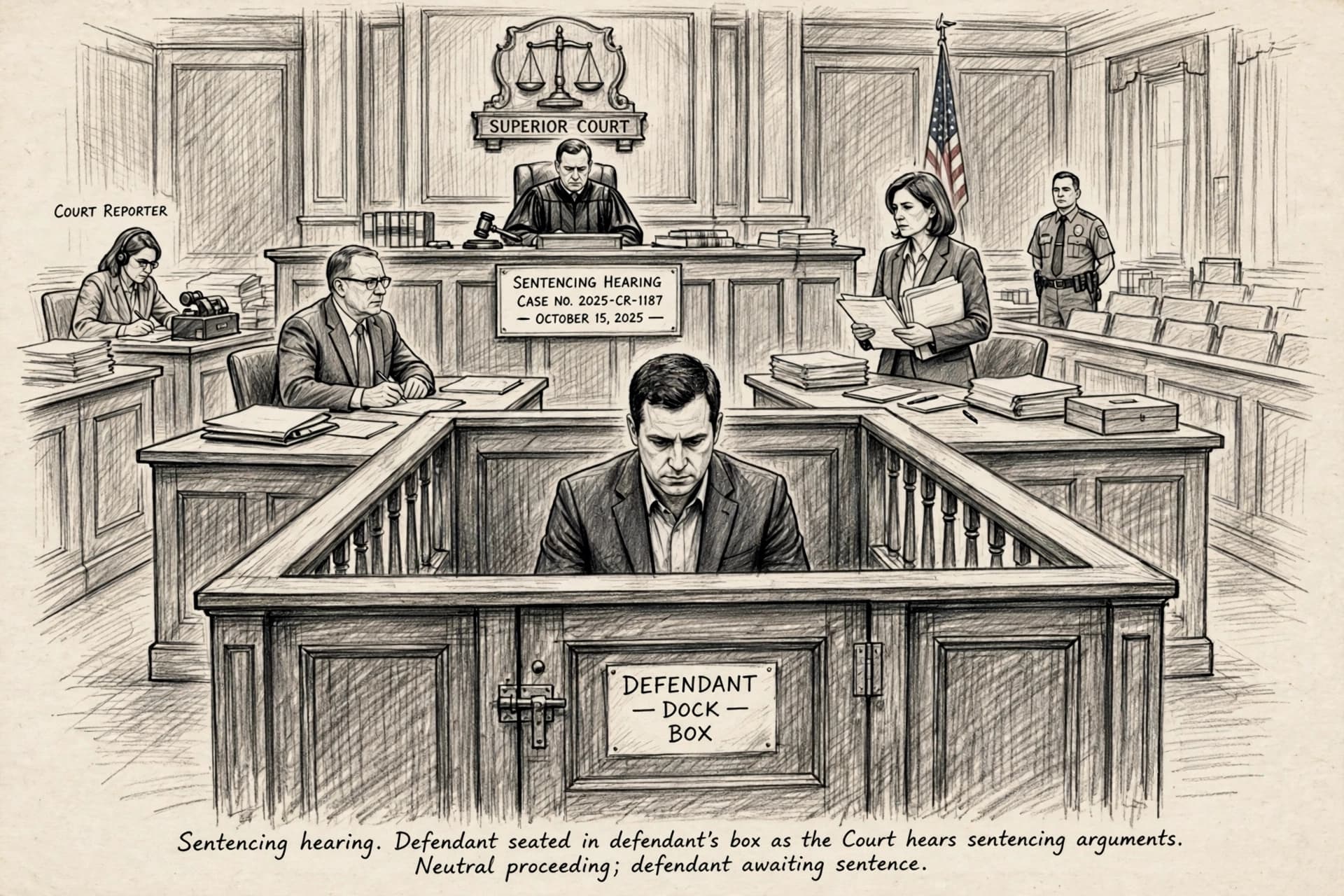
Broadhurst, 28, was sentenced Wednesday to forty-six months in prison at Sheffield Crown Court after pleading guilty to possessing explosives and a firearms offense . He was arrested at Catterick Garrison in September 2024, and searches of his home and barracks revealed a collection of weaponry that prosecutors described as crude but functional: gunpowder, a homemade cannon, crossbows, six large knives, and a baseball bat .
The case against Broadhurst rested not merely on what he possessed, but on what he believed and expressed. Counter-terrorism police first noticed him while investigating other members of extreme right-wing groups, discovering messages on online forums that prosecutors characterized as "hateful, racist, aggressive" and demonstrating "clear, extreme right-wing beliefs" . He expressed hatred toward Black, Asian, Muslim, and Jewish people. He spoke of anarchy and the end of society. He wanted to be remembered in history books for terrorism and killing police officers .
What makes this case particularly unsettling is the ordinariness of Broadhurst's professional life. A superior officer described him as "excellent at mentoring junior members of the catering team" who worked to the highest standards . He was, by all accounts, a competent chef in the British Army. But beneath that surface, he was immersed in extremist material and in contact with three now-convicted terrorists inspired by SS tactics and supremacist ideology .
The judge found that Broadhurst's offenses were connected to terrorism, rejecting his denial that his intent was terror-related. He was sentenced on the basis that he made weapons and explosives to impress other members of extreme right-wing groups and to encourage them in their violent ideology . His homemade cannon was described by an expert as similar to a fourteenth-century gun—crude, but capable of harm .
The case illustrates something that counter-terrorism officials have long understood: extremism does not announce itself with a uniform or a manifesto. It grows quietly, in the spaces between ordinary life and online radicalization, feeding on grievances and the desire for belonging. Broadhurst found community among those who shared his hatred, and in that community, he found purpose.
Detective Chief Superintendent James Dunkerley, head of Counter Terrorism Policing North East, said after the sentencing that the investigation "uncovered an extreme right-wing mindset" and that Broadhurst was "proactively ordering components to make explosives" while amassing multiple weapons . The sentence of nearly four years reflects both the severity of the offenses and the danger he posed.
The images accompanying this article are AI-generated and used solely for illustrative purposes.
Sources: BBC, Yorkshire Post, Reuters, Miami Herald
Published by Banx Network. This article is part of the Banx decentralized media programme, powered by the BXE token on the XRP Ledger.