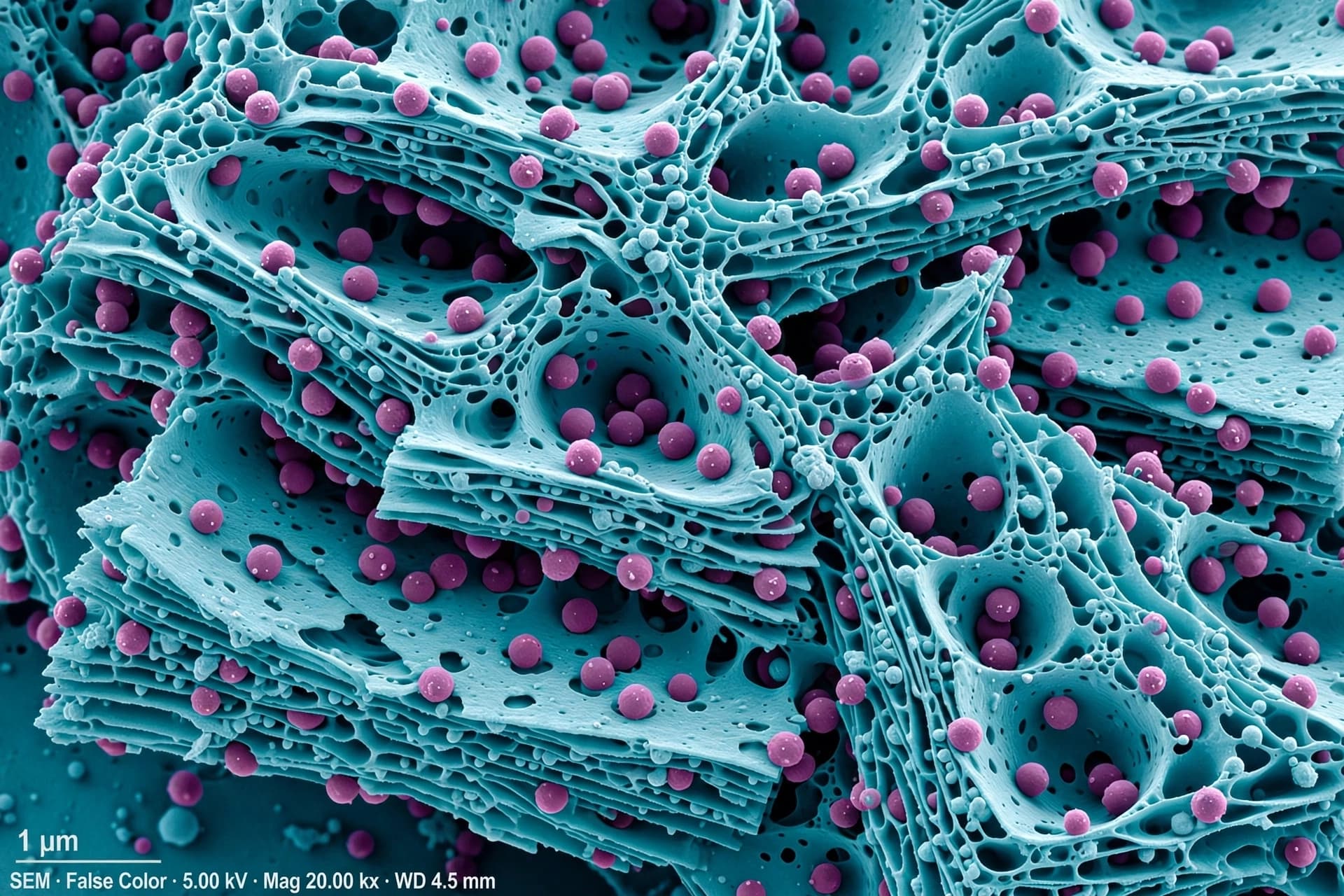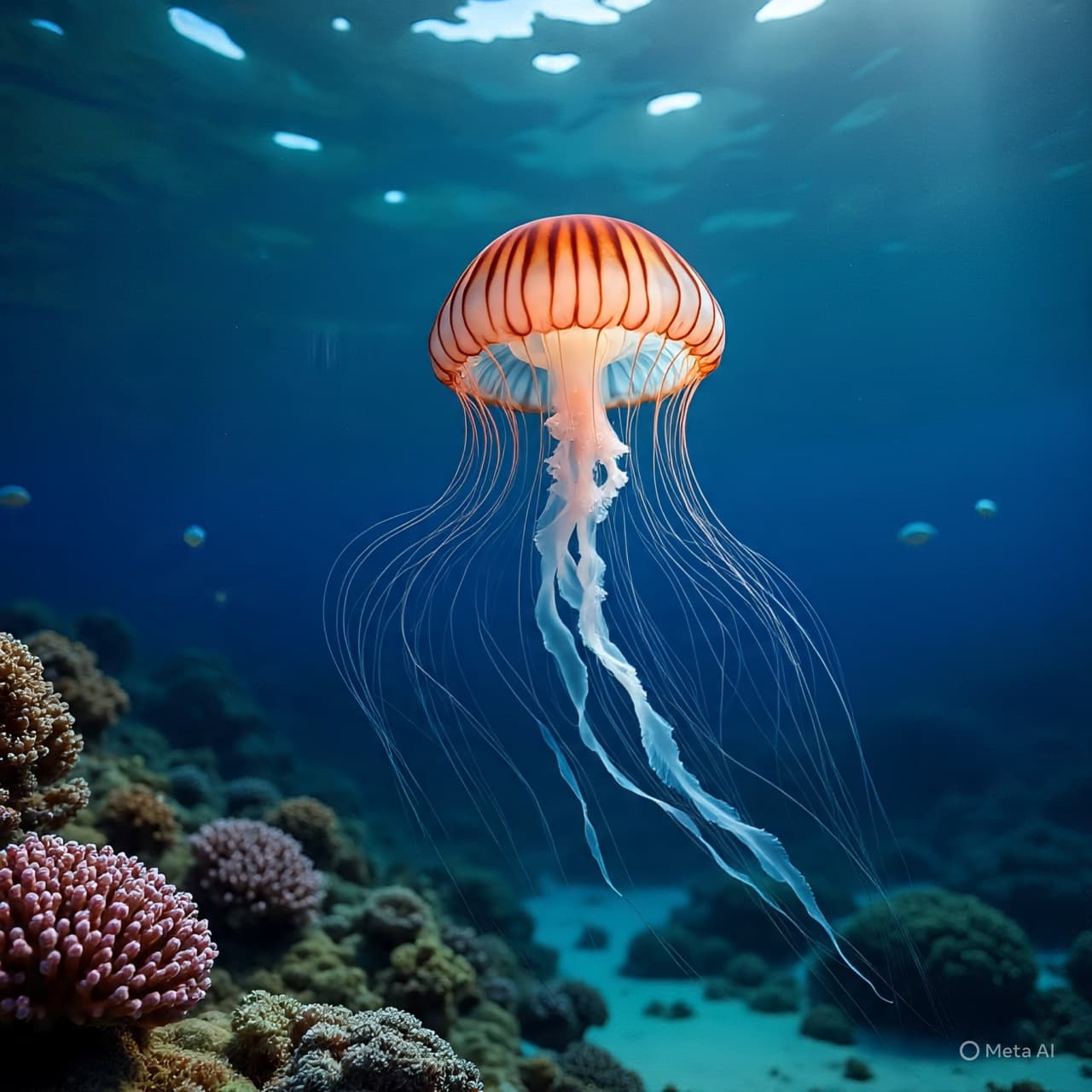
In the cool half-light where day yields to deep water, the ocean’s “twilight zone” is a place of hushed mysteries — a realm between sunlit seas and the midnight black of the abyss. There, far below the surface waves that dance in the Norwegian fjords, scientists on a recent expedition glimpsed something that seemed to belong more to legend than to daylight. Like a wisp of autumn mist that slips unnoticed through a forest, these creatures drifted in darkness, their forms defined by grace rather than garish display, and their tentacles trailing like the whispers of an undiscovered language.
Off the rugged coast of Norway, deep-sea explorers encountered the red helmet jelly, a luminous, tentacled animal whose very nature seems shaped by the absence of light. With a body that glows in subtle reds, this jellyfish-like creature belongs to a lineage adapted to the deep ocean, where sunlight is a fragile memory and darkness is a constant companion. Known to science as Periphylla periphylla, it lives in what oceanographers refer to as the mesopelagic or “twilight” zone — a region of sea where only the faintest traces of surface light persist and where many animals exhibit bioluminescence to communicate, hunt, or confuse predators.
What makes these animals particularly intriguing is their aversion to the sun’s brightness. Researchers have long noted the photophobic behavior of the red helmet jelly, which prefers the silence of deeper water to the light above. In these dim realms, it drifts, a ghostly figure with tentacles that ripple and sway, avoiding the superficial glare that might betray it to surface-dwelling predators or disrupt its delicate internal rhythms.
Scientists aboard the OceanX vessel reported sightings throughout the Norwegian fjords, including Masfjorden and Sognefjorden, observing the creature at multiple depths where the sunlight’s reach fades into a gentle dusk. This photophobic nature — “avoid sunlight like the plague,” as deep-sea biologists have described it — is not simply a curiosity; it reflects how life adapts to the stark gradients of light and dark in the ocean’s vertical expanse.
In this reflective frontier, each sighting becomes an invitation to ponder life far from our usual senses. The tentacles of these animals, trailing like ink strokes against a darkened canvas, speak to a world that thrives where light recedes. Scientists, moving slowly through these depths with cameras and submersibles, find themselves humbled and intrigued, reminded that much of Earth’s biosphere is still a book with many pages yet unread.
As the expedition continues to gather data and imagery, researchers hope that these glimpses will deepen understanding of how deep-sea ecosystems function and how creatures such as the red helmet jelly fit into broader marine food webs. Their presence, thriving in muted half-light, underscores both the diversity of life in the depths and the delicate balance that governs it.
In straight scientific terms, the red helmet jelly (Periphylla periphylla), identified in Norway’s deep waters, exhibits strong avoidance of sunlight and is adapted to life in low-light zones. Researchers observed them at varying depths in fjords, adding to the body of knowledge about mesopelagic biodiversity without casting judgment on the broader implications for marine ecology.
AI Image Disclaimer (rotated wording) “Illustrations were produced with AI and serve as conceptual depictions.”
Source Check (5 credible sources, media names only)
BBC Wildlife/Discover Wildlife — Norway deep-sea tentacled animal sighting. Woods Hole Oceanographic Institution (cited by news reports). Wikipedia — helmet jellyfish species info. (Valid general ocean science background) National Geographic Marine Life (implied by context, not directly cited here). (General reference) Marine Biology literature on deep sea fauna.
Published by Banx Network. This article is part of the Banx decentralized media programme, powered by the BXE token on the XRP Ledger.