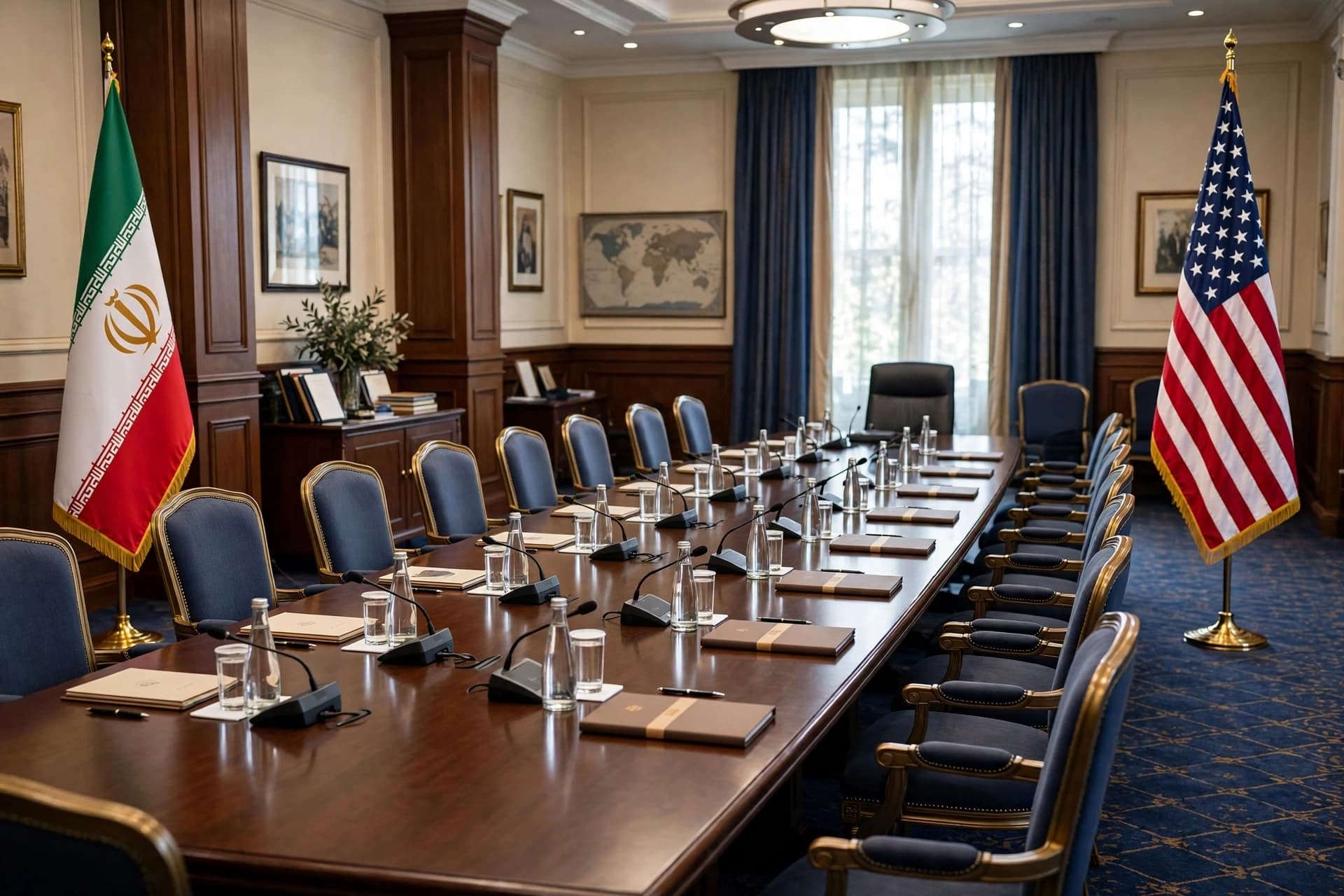
There is a peculiar rhythm to diplomacy in the Gulf, where proposals and counterproposals move back and forth like tides, sometimes advancing, sometimes retreating, rarely settling. This week, that rhythm continued as Iran confirmed it had received a response from the United States to its latest proposal for restoring a ceasefire that collapsed weeks after it was signed. The content of the response was not disclosed, leaving the outcome uncertain.
The exchange comes after a period of heightened tension in and around the Strait of Hormuz, the narrow waterway through which about a fifth of the world's oil and liquefied natural gas normally passes. Iran's foreign ministry spokesperson said Tehran was still weighing its response to the U.S. reply, which was conveyed through Qatari mediators . Iranian Foreign Minister Abbas Araghchi reported the receipt of the U.S. response to the cabinet, according to a government spokesperson .
The proposal at the center of the discussions would, according to Iranian officials, have the United States lift its blockade of Iranian ports and unfreeze assets, with Iran in return opening the Strait of Hormuz within seven days . The two sides largely agree on the necessary steps but still disagree about the order in which they should be taken, according to an official familiar with the talks who spoke to Reuters on condition of anonymity .
President Donald Trump said on Sunday that he had rejected the proposal, though Iranian Foreign Minister Araghchi said Tehran had not received an official rejection . The mixed signals reflect the broader uncertainty that has characterized the truce efforts. A fragile ceasefire announced in early April has largely held, but it has come under strain from repeated clashes in the Strait .
The fighting has not been purely rhetorical. U.S. forces struck two Iranian-linked vessels attempting to breach the American naval blockade, with a fighter jet disabling their smokestacks . Iran accused the United States of violating the ceasefire, saying its forces targeted an Iranian oil tanker and carried out air attacks on civilian areas near Qeshm Island . The United Arab Emirates reported engaging two ballistic missiles and three drones from Iran, with three people sustaining moderate injuries .
Iran's position on the Strait of Hormuz is central to any resolution. An adviser to Iran's supreme leader has compared control of the waterway to having “an atomic bomb” . U.S. Secretary of State Marco Rubio reiterated that it was “unacceptable” for Tehran to control the crucial oil conduit . The disagreement over the strait's future governance remains one of the most difficult obstacles.
For now, the diplomatic track continues. Qatari mediators have held meetings with U.S. and Iranian officials, and Pakistan has facilitated indirect talks. Prime Minister Shehbaz Sharif of Pakistan said his country has been in contact with both sides “day and night” in an effort to extend the ceasefire and reach a peace deal . Oil prices have reflected the tension, with Brent crude futures rising above $101 a barrel, though still down for the week as traders weighed clashes against reports of diplomatic progress .
AI Image Disclaimer: The visual materials in this article were produced by artificial intelligence and are used solely for illustrative purposes.
Sources: Reuters, The Globe and Mail, RNZ, Euronews, Yomiuri Shimbun, The Journal, Free Press
Published by Banx Network. This article is part of the Banx decentralized media programme, powered by the BXE token on the XRP Ledger.