Before sunrise over the quiet expanse of the Persian Gulf, the water lies smooth as glass, mirroring clouds that drift like slow thoughts across the morning sky. Fishing boats rock lightly against their moorings, and distant horizons hint at the slow stirrings of a new day. In the half‑light, there is a sense of continuity, of rhythm, of days that begin and end independent of the distant storms of human conflict. Yet beneath that quiet surface lies a pulse shaped by technologies and tactics that have leapt from battlefield to battlefield, carrying lessons and legacies across continents and seas.
In recent weeks, those echoes of distant conflict have arrived with new clarity in the Middle East. Military analysts and officials observing the war involving Iran, the United States and its allies have noted a striking shift: Tehran appears to be applying tactical lessons from Russia’s extensive use of drones in its war in Ukraine, integrating them into its own operations against American forces and regional partners. What was once a hallmark of Eastern Europe’s battlegrounds — swarms of inexpensive, hard‑to‑defend‑against unmanned aerial vehicles — now seems poised to shape another theatre of conflict, not in the rolling plains of Europe but above the sands and waters of the Gulf.
Those lessons have been forged in the crucible of the Russo‑Ukrainian conflict, where inexpensive attack drones such as the Shahed series played an outsized role by overwhelming defenses through sheer numbers and saturation tactics. Russian forces leaned on these relatively low‑cost platforms, prompting Ukraine and its partners to adapt air defenses and counter‑drone measures over years of sustained engagement. In doing so, they carved out a body of experience that now seems to be influencing Iranian doctrine, as Tehran’s proxies and allied units move to field similar systems against fixed positions and mobile units in the Gulf and beyond.
In the soft dusk of geopolitical exchange, this transfer of tactics is less about imitation than adaptation. Reports from recent weeks describe how Iranian forces and their allies are deploying advanced first‑person‑view drones with fiber‑optic guidance lines that resist conventional jamming, a technology refinement tied to battlefield experience and cross‑border cooperation — in some cases, with the very actors who pioneered them. These systems extend the reach of small airborne units far beyond the horizon of older models, giving them a voice on the battlefield that is difficult for traditional air defenses to silence.
For American service members stationed across the region, these drones have become more than theoretical threats. They have tested air defense systems, forced changes in patrol patterns and contributed to tactical recalibrations that weigh on both mission planners and ordinary lives. It is a reminder that the nature of conflict — its technologies, its ideas, its innovations — does not stay confined to one front; it drifts like seeds on the wind, ready to take root wherever conditions allow.
In towns and cities along trade routes near the Strait of Hormuz, and among the commanders and crews on naval vessels that trace the contours of the Gulf, the presence of drones has woven itself into daily life with a mixture of anxious calculation and engineering curiosity. For some young soldiers, it has meant adjusting tactics learned months ago for new skies; for others, it has meant watching and waiting, knowing that the machines overhead may be distant cousins of those first seen over Ukrainian fields.
Yet as morning light deepens over the water and fishermen cast their nets into gently rippling waves, there is also an enduring reminder of continuity and resilience. Life here continues — boats still set sail, markets still open, children still greet the day with unfettered laughter. The lessons of war and the shadow of drones hover in the background, yet they do not define the entirety of these places or their people.
And so as voices in distant capitals debate doctrine and as analysts trace the paths of drones from Europe to the Middle East, the Gulf’s morning unfurls with a quiet grace. The sun rises on a world shaped by many forces — tradition and innovation, risk and routine, conflict and calm — all moving in the same soft light that has illuminated human stories for generations.
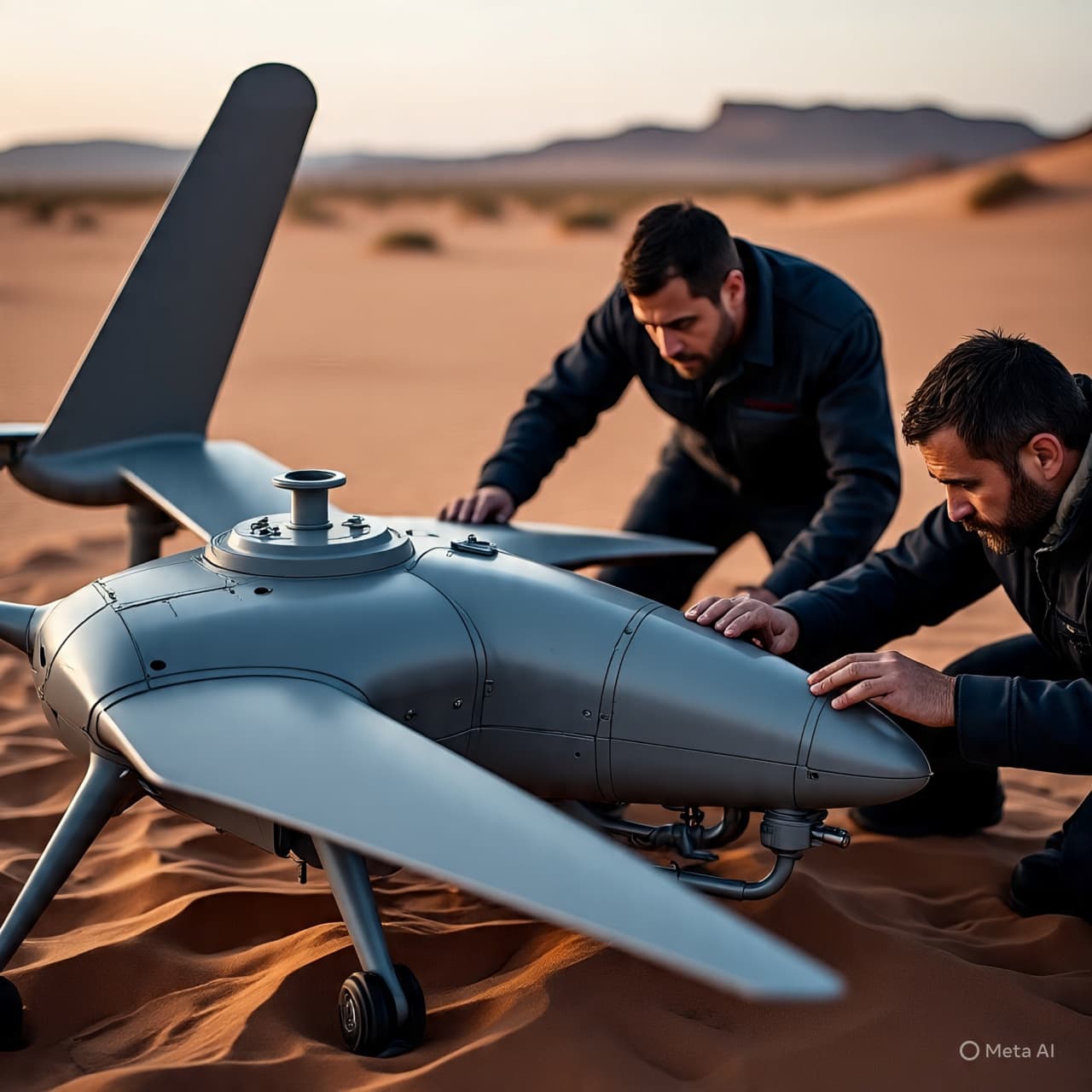
AI image disclaimer Visuals are AI-generated and serve as conceptual representations.
Sources Wall Street Journal, Carnegie Endowment, Reuters, Wikipedia on drones.
Published by Banx Network. This article is part of the Banx decentralized media programme, powered by the BXE token on the XRP Ledger.