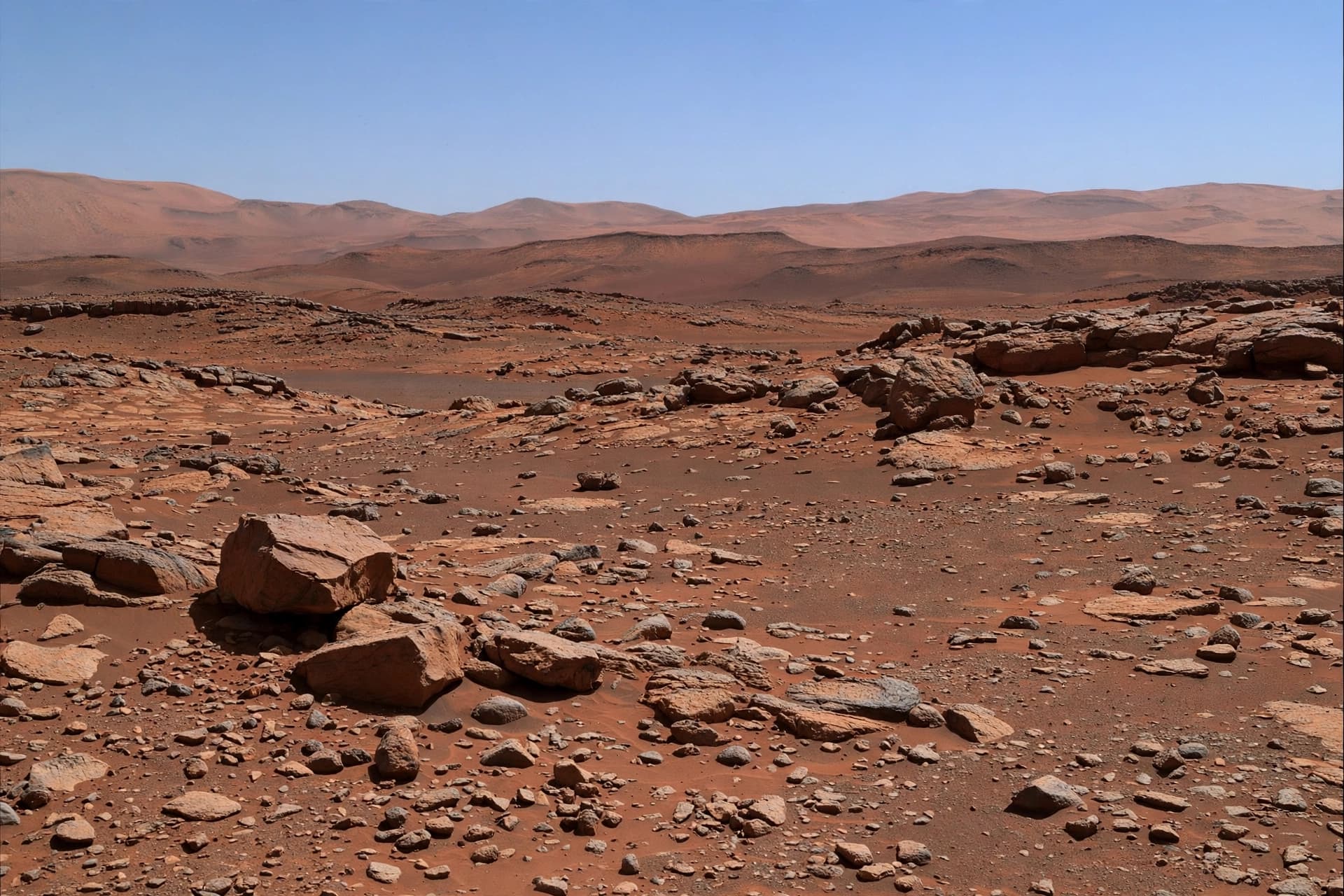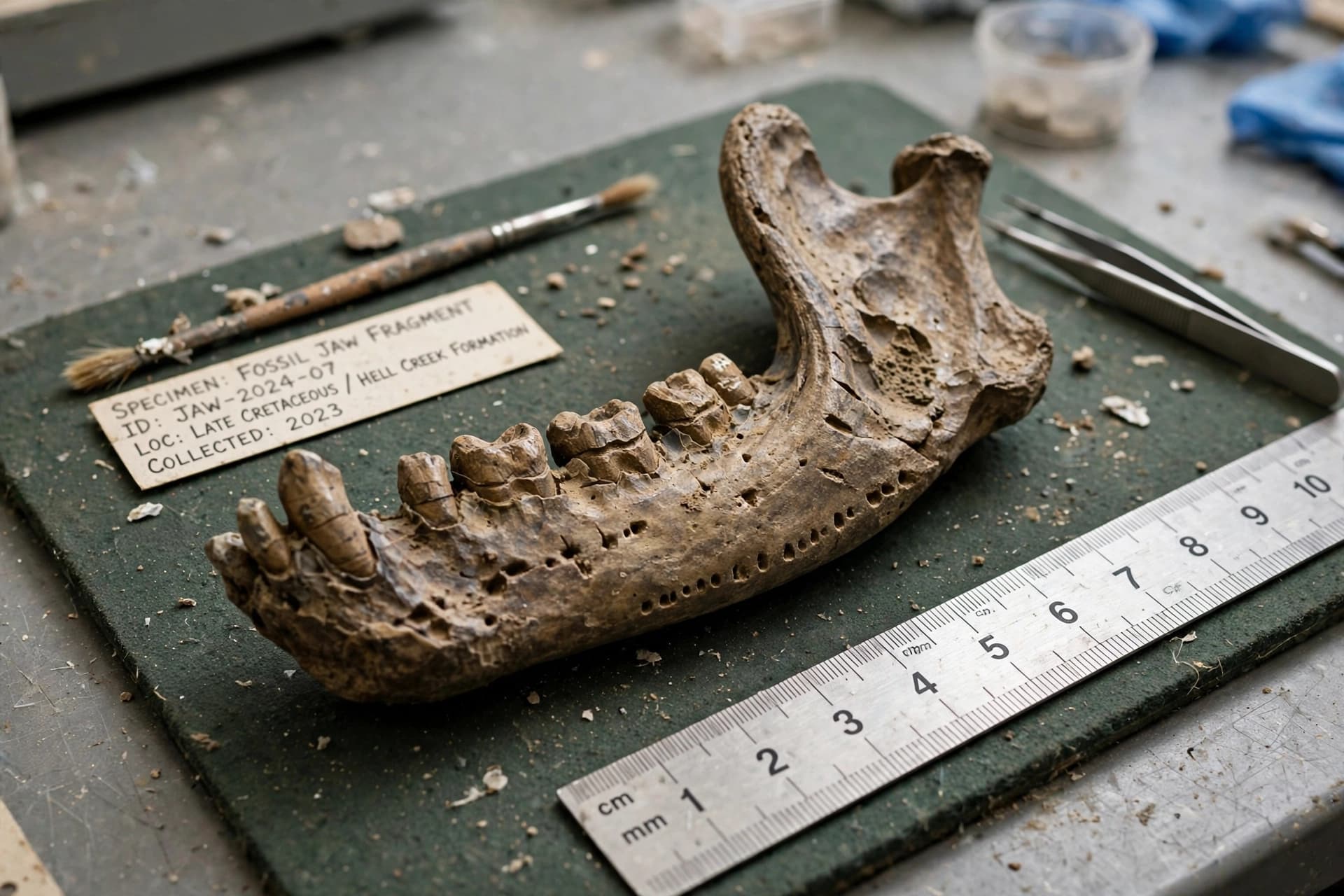
In the badlands of southern Alberta, where the land folds into coulees and the wind carries the smell of dry grass and old stone, a fossil emerged from the rock in 2022 that told a story no one had expected to hear. It was the jaw of an Albertosaurus, a close relative of Tyrannosaurus rex that roamed the region some seventy million years ago. The animal was young, perhaps eight years old, not yet full-grown but already formidable. Something had left tooth marks on its jaw, and those marks opened a window into a moment of prehistoric scavenging that researchers at the University of Alberta have now described in detail .
The find was made by a member of the public canoeing near Drumheller, who reported it to the Royal Tyrrell Museum. As staff prepared the fossil, they noticed the marks. Joshua Doyon, a master's student in paleontology, took on the puzzle. By measuring the spacing between the bite marks and comparing them with the teeth of carnivorous dinosaurs known from the same time and place, he and his supervisor, Philip Currie, arrived at two possible explanations .
The most likely scenario, they concluded, is that a small raptor—a two-legged meat-eater roughly the size of a German shepherd—fed on the Albertosaurus after it died of unknown causes. The suspect belongs to a group called dromaeosaurs, possibly Atrociraptor, a local species about two meters long . The alternative is more unsettling: a much younger Albertosaurus, perhaps less than two years old and about two meters in length, may have cannibalized the larger sub-adult .
What makes the finding significant is not merely the identity of the diner but the rarity of the evidence. Direct proof of one carnivorous dinosaur feeding on another is uncommon in the fossil record. Currie described it as one of those rare occasions where we actually have information on a carnivore eating a carnivore, noting that Albertosaurus was one of the dominant predators of its time . The discovery suggests a more complex food web than previously understood, one in which even apex predators could become a meal for smaller scavengers.
Doyon said he hopes the study encourages paleontologists and members of the public to pay closer attention to small tooth marks that might otherwise go unnoticed. The fossil was not a spectacular skeleton, not a complete skull mounted for display. It was a fragment with tiny indentations, and those indentations carried a story .
The research, published in the Journal of Paleontology, adds a quiet page to the understanding of Late Cretaceous ecosystems in Alberta. It does not rewrite the rulebook. It simply reminds us that the past is rarely as simple as the categories we impose on it. A small raptor, a large carcass, a meal that lasted perhaps an afternoon—these are the ordinary moments that fossils sometimes preserve, if someone is patient enough to look.
AI Image Disclaimer: The images in this article are generated by AI and are illustrative reconstructions, not photographs of the specimens described.
Sources: CBC News, Calgary Sun, Popular Science, Journal of Paleontology, University of Alberta
Published by Banx Network. This article is part of the Banx decentralized media programme, powered by the BXE token on the XRP Ledger.