There is a place in the Pacific Ocean, between Hawaii and Mexico, where the seafloor lies more than four thousand meters beneath the surface, in permanent darkness and near-freezing water. There, scattered across the abyssal plain like stones in a slow river, lie polymetallic nodules, small lumps of manganese, nickel, and cobalt that grow at a rate almost impossible to imagine: one to two millimeters over the course of a million years. In their undisturbed state, they serve as the only hard surface on an otherwise soft seafloor, and small creatures cling to them, two or three organisms per nodule, sea anemones and soft corals and stalked sponges that in turn shelter others .
In the spring of 2021, a Belgian company tested a remotely operated nodule collector in this region, the Clarion-Clipperton Zone. For seventy-four hours, the machine drove about thirty-two kilometers across the seafloor and harvested nodules from an area roughly equivalent to seven soccer fields. It removed not only the nodules but the rich layer of surface sediment and the living things attached to them. A sediment plume rose and resettled, burying sessile fauna that could not escape .
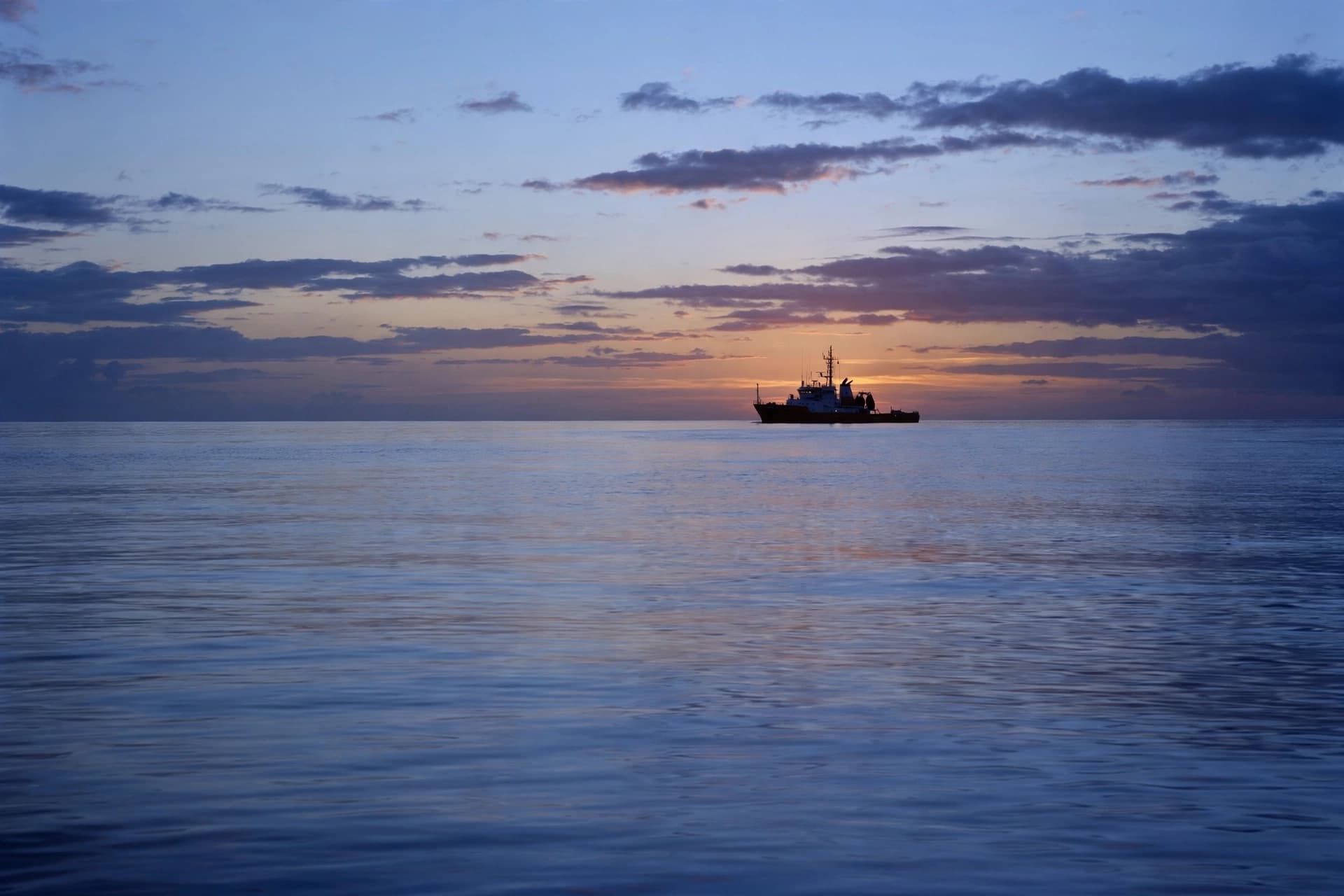
Now, five and a half years later, a research vessel named SONNE has set sail from San Diego to return to that site. Led by Dr. Matthias Haeckel of the GEOMAR Helmholtz Centre for Ocean Research Kiel, a team of thirty-nine researchers from seventeen institutions and seven European countries will spend fifty-four days at sea, investigating what has happened in the intervening years. The expedition is part of the MiningImpact project, which has studied the environmental consequences of potential deep-sea mining since 2015 .
The expectations are sobering. Haeckel has said plainly that he does not expect to see recovery. The nodules are gone, and with them the hard substrate that took millions of years to accumulate. The deep sea operates on a timescale that makes human patience seem almost comical. A site disturbed in a single afternoon may require geological time to heal, if it heals at all .
The expedition will deploy a remotely operated vehicle called KIEL 6000, autonomous underwater vehicles, benthic landers, and sediment corers. The team will compare the mined site with undisturbed reference areas, examining how faunal communities have changed, how long the effects of the sediment plume persist, and whether artificial hard substrates might encourage recolonization. They will also study the pelagic ecosystem above the seafloor, and conduct ecotoxicological experiments in situ .
What makes this work consequential is not only the specific site but the broader question it addresses. The Clarion-Clipperton Zone is a region of immense interest to mining companies and to the international bodies that will regulate them. The data gathered on this expedition will feed directly into recommendations for those regulations. The decision of whether and how to mine the deep sea will not be made in a laboratory or a boardroom alone. It will be informed by what the seafloor can tell us about its own capacity to endure .
Haeckel has acknowledged how much remains unknown. Many species in the zone are extremely rare, and about ninety percent of those sampled have not yet been identified or named. The connections between populations across the vast distances of the Pacific are poorly understood. We are, he said, only just beginning to understand the deep sea. The expedition does not promise to close that gap. It promises only to look, carefully and patiently, at what a wound in the abyssal plain looks like after five and a half years of silence .
AI Image Disclaimer: The images in this article are AI-generated illustrations and are not photographs of the actual expedition or site.
Sources: GEOMAR Helmholtz Centre for Ocean Research Kiel, EurekAlert, Ocean News & Technology, Scinexx
Published by Banx Network. This article is part of the Banx decentralized media programme, powered by the BXE token on the XRP Ledger.