In the quiet outskirts of our solar system, where sunlight thins into a pale whisper, even the smallest worlds can carry invisible symphonies. Space, we often imagine, is empty and still. Yet it hums. It vibrates. It shimmers with forces that rarely meet the human eye. And now, around a tiny ice-covered moon, scientists have traced a vast, hidden web of electromagnetic waves—an unseen architecture woven into the dark.
The discovery centers on observations gathered during close spacecraft flybys of a small icy world orbiting a giant planet. Though modest in size, this frozen moon has revealed a surprisingly dynamic environment. Instruments detected complex patterns of electromagnetic waves rippling outward and threading through surrounding space. Rather than isolated bursts, the signals form an intricate, interconnected system—an expansive network that stretches far beyond the moon’s surface.
Electromagnetic waves are not unusual in planetary systems. They arise from interactions between charged particles and magnetic fields, especially near large planets with powerful magnetospheres. But what startled researchers was the scale and structure of the wave activity surrounding this diminutive world. The moon appears to act as both participant and conductor, influencing and shaping the flow of charged particles that stream past it.
At the heart of the phenomenon is the relationship between the icy moon and its parent planet’s magnetic field. As the moon orbits, it moves through a sea of plasma—electrically charged gas trapped within the giant planet’s magnetic embrace. This interaction can generate wave activity, particularly when material from the moon’s surface or subsurface escapes into space. Even a thin atmosphere or plume of particles can disturb the magnetic environment enough to produce detectable electromagnetic signatures.
Data suggest that the wave structures may be linked to subsurface processes. Some icy moons are believed to harbor oceans beneath their frozen crusts. If salty water exists below, it could conduct electricity and subtly alter the surrounding magnetic field. That, in turn, would influence how electromagnetic waves propagate. While the latest findings do not confirm an ocean, they add a compelling layer to the ongoing investigation of what lies beneath the ice.
The web-like pattern of waves also reveals how energy moves through planetary systems. Charged particles accelerate along magnetic field lines, generating radio emissions and plasma oscillations. These waves can travel vast distances, carrying information about their origin. In this sense, the icy moon is not isolated; it is embedded in a larger magnetic conversation, continuously exchanging energy with its planetary host.
There is a certain elegance in discovering such complexity around something so small. The moon itself, locked in cold and shadow, might appear inert from afar. Yet its presence reshapes the invisible environment around it. Like a stone dropped into still water, it sends ripples—only here the ripples are electromagnetic, and the pond is space itself.
For scientists, mapping this hidden network offers practical insight as well. Understanding electromagnetic wave behavior helps researchers interpret spacecraft data more accurately and refine models of planetary magnetospheres. It also informs future missions, especially those seeking signs of habitability beneath icy crusts. Electromagnetic clues may one day guide landers or orbiters toward regions of particular scientific interest.
As analysis continues, the newly revealed wave structures are being folded into broader efforts to understand how small moons interact with powerful magnetic systems. The findings do not overturn existing theories, but they add texture and depth. They remind us that even in the cold margins of our solar neighborhood, space is active, layered, and alive with motion.
In official statements, researchers describe the discovery in measured scientific language. Yet behind those careful words lies something quietly profound: a reminder that invisibility does not equal emptiness. Around a tiny ice world, a vast electromagnetic tapestry has been found—evidence that even the smallest bodies can stir the currents of the cosmos.
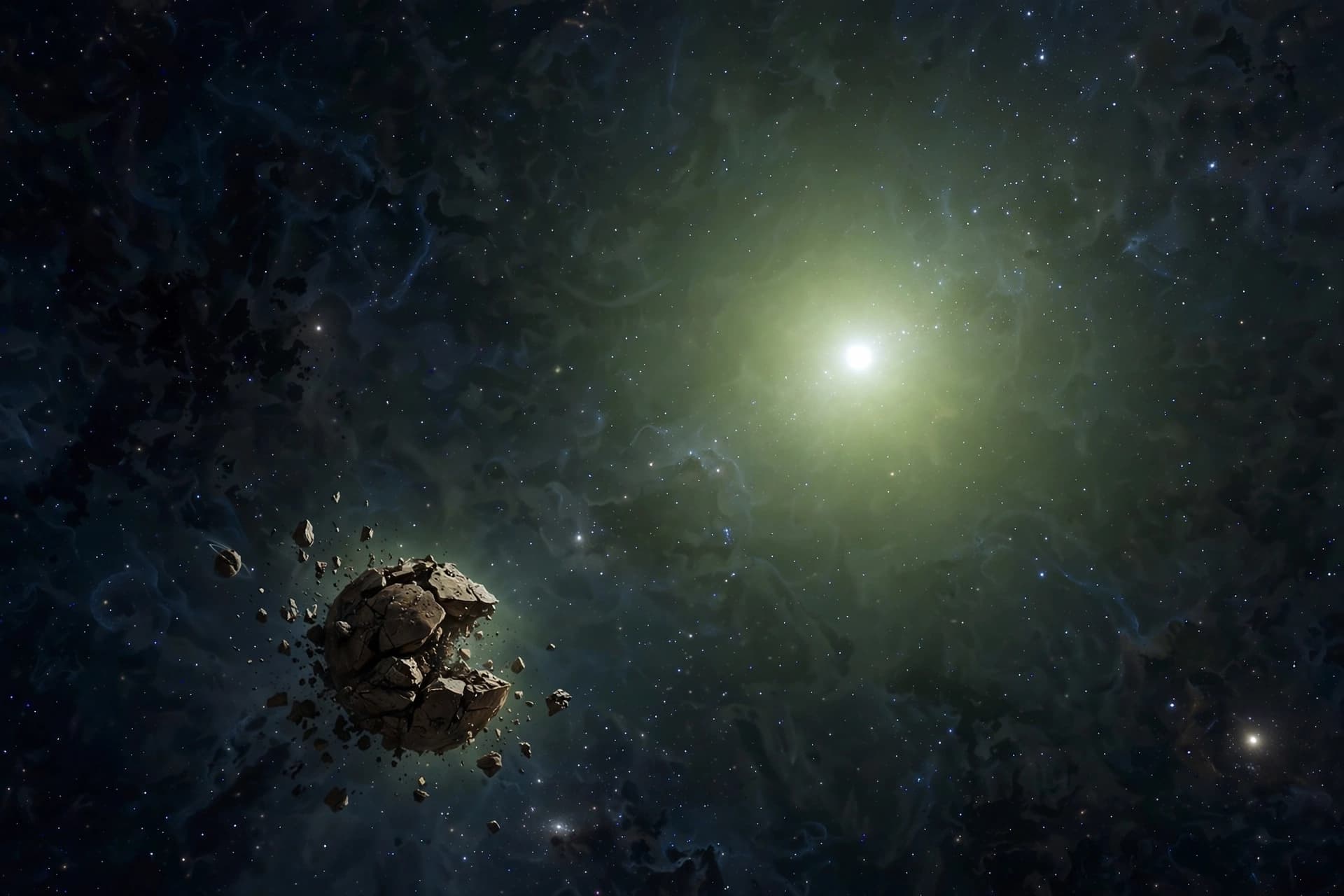
AI Image Disclaimer (Rotated Version) Illustrations were produced with AI and serve as conceptual depictions.
Sources: NASA Space.com BBC Science CNN Science New Scientist
Published by Banx Network. This article is part of the Banx decentralized media programme, powered by the BXE token on the XRP Ledger.