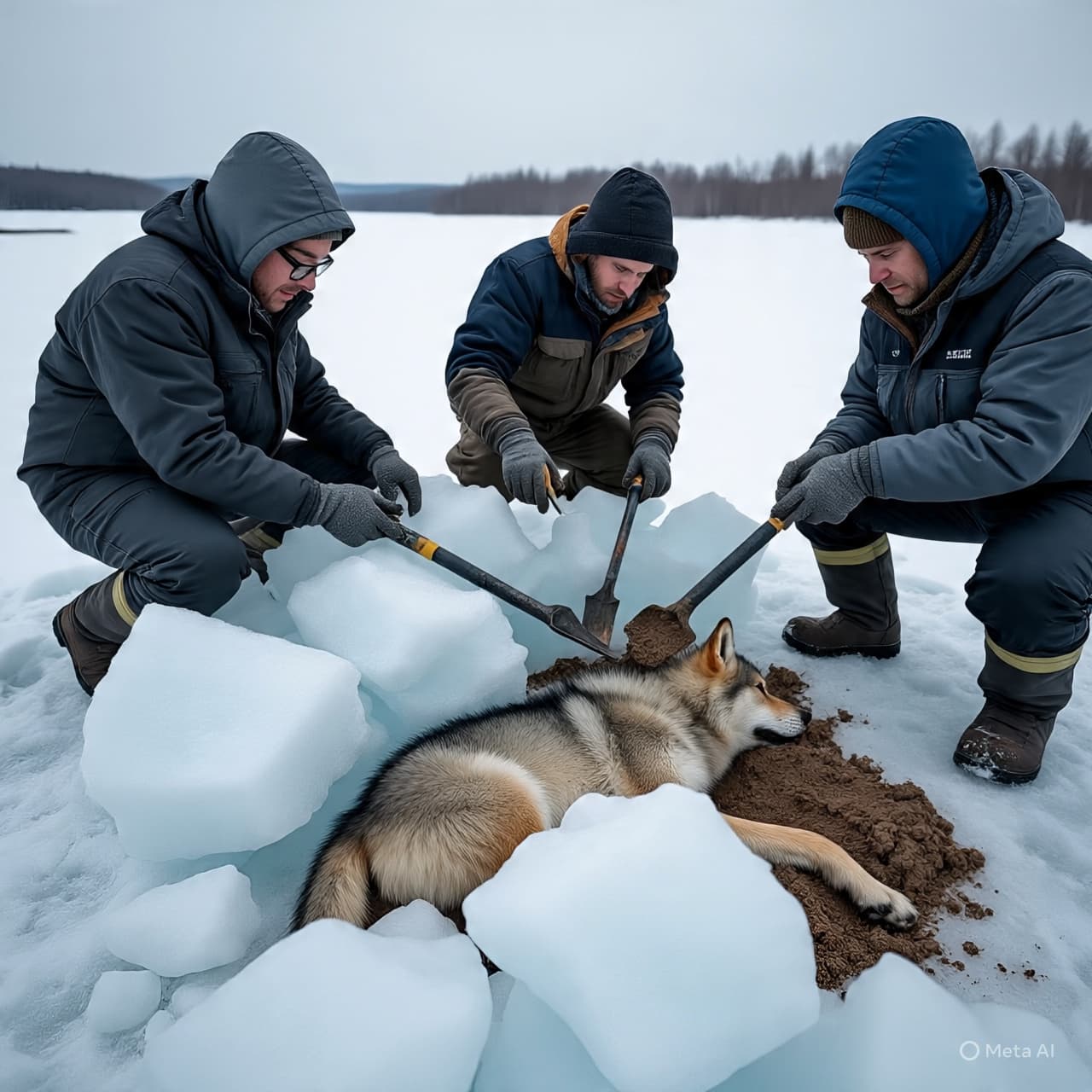
Opening In the quiet deep of a Siberian winter, where time itself seems to rest beneath crystalline layers of permafrost, a story from the Ice Age has whispered its way back into daylight. Imagine a young wolf pup, frozen in time for nearly 15,000 years, its last meal preserved like an echo inside a cavern of silence. Within that tiny, frozen fragment lay not just a morsel of flesh but a secret — the DNA of a woolly rhinoceros, a giant of a bygone world that once roamed the tundra. This remarkable find, unearthed from the pup’s stomach and decoded by modern science, offers a bridge between the distant past and the questions that stir in our present.
Body In 2011, mammoth-ivory hunters in northeastern Siberia stumbled upon what would later be called “Tumat-1,” a mummified wolf pup buried deep in permafrost. Nearly intact, this puppy — no larger than a child’s shoe — held what would become one of the most extraordinary biological time capsules ever studied. When researchers conducted an autopsy on the specimen, they discovered a small chunk of undigested tissue in its stomach. DNA sequencing revealed that this wasn’t just any leftover bite: it belonged to a woolly rhinoceros, an Ice Age herbivore that vanished from Earth more than 14 millennia ago.
The team of paleogeneticists, led by researchers at Stockholm University and collaborators, took on the painstaking task of extracting and sequencing the rhino’s genome from this unusual source — the first time a complete genome has been retrieved from tissue preserved inside another animal’s stomach. Such work is fraught with challenges: DNA degrades over time, and separating the predator’s genetic material from its prey’s adds yet another layer of complexity. Still, through patient laboratory effort, the genetic code of this woolly rhino — one of the youngest ever recovered — came into focus.
What this genetic portrait revealed was surprising. When compared with older woolly rhino genomes from specimens dated tens of thousands of years earlier, the newly sequenced genome bore no obvious signs of increased inbreeding or genetic decline. This suggests that, until shortly before its disappearance, the species was still genetically robust. Such stability contradicts some previous assumptions that the woolly rhino’s demise was a gradual fade; instead, the data supports a scenario of sudden collapse, likely tied to rapid climate warming at the end of the last Ice Age, which drastically transformed the vast, grassy steppes these great beasts once called home.
By unlocking this genetic whisper from the past, scientists gain not only a richer understanding of how mega-fauna responded to ecological upheaval but also a poignant reflection on the fragility of life in the face of climatic change. From the silent tundra to the hum of sequencers in a modern lab, this frozen snapshot carries meaning far beyond its tiny size.
Closing As gentle observers of history’s long arc, researchers remain mindful of the delicate interplay between species, environment, and time. The woolly rhino’s genetic story, rediscovered within an Ice Age wolf’s stomach, adds an extraordinary chapter to our understanding of extinction — one shaped not by slow decay, but by abrupt change. While the woolly rhino itself now lives only in genomes and fossilized echoes, its legacy invites reflection on the ancient world and its link to our own.
AI Image Disclaimer Illustrations were produced with AI and serve as conceptual depictions, not real photographs.
Source Check (Credible Media) Reuters The Guardian Popular Science Discover Magazine National Geographic
Published by Banx Network. This article is part of the Banx decentralized media programme, powered by the BXE token on the XRP Ledger.

.jpg&w=3840&q=75 "September 2026 Was the Second-Warmest on Record, With Global Temperatures Above 1.5°C for a Second Month")