There is a particular kind of silence in the Arctic—vast, white, and seemingly untouched. But beneath that silence, the ground is shifting. Not the permafrost, though that too is changing, but the geopolitical terrain that has long defined Canada’s relationship with its northern reaches. Foreign Affairs Minister Anita Anand says the threats facing Canada’s North have “shifted significantly” in recent years, shaped by Russia’s full-scale invasion of Ukraine and an upended global order . What was once a quiet frontier has become a region of renewed attention and quiet concern.
Anand’s assessment came after she attended a meeting of Arctic nations convened by U.S. Secretary of State Marco Rubio last week, where she said there were “frank discussions” about collective cooperation on Arctic security . She emphasized that Canada and the United States continue to coordinate closely on Arctic security and sovereignty, and that her ongoing conversations with Rubio focus on how to advance shared interests within multilateral frameworks like NATO .
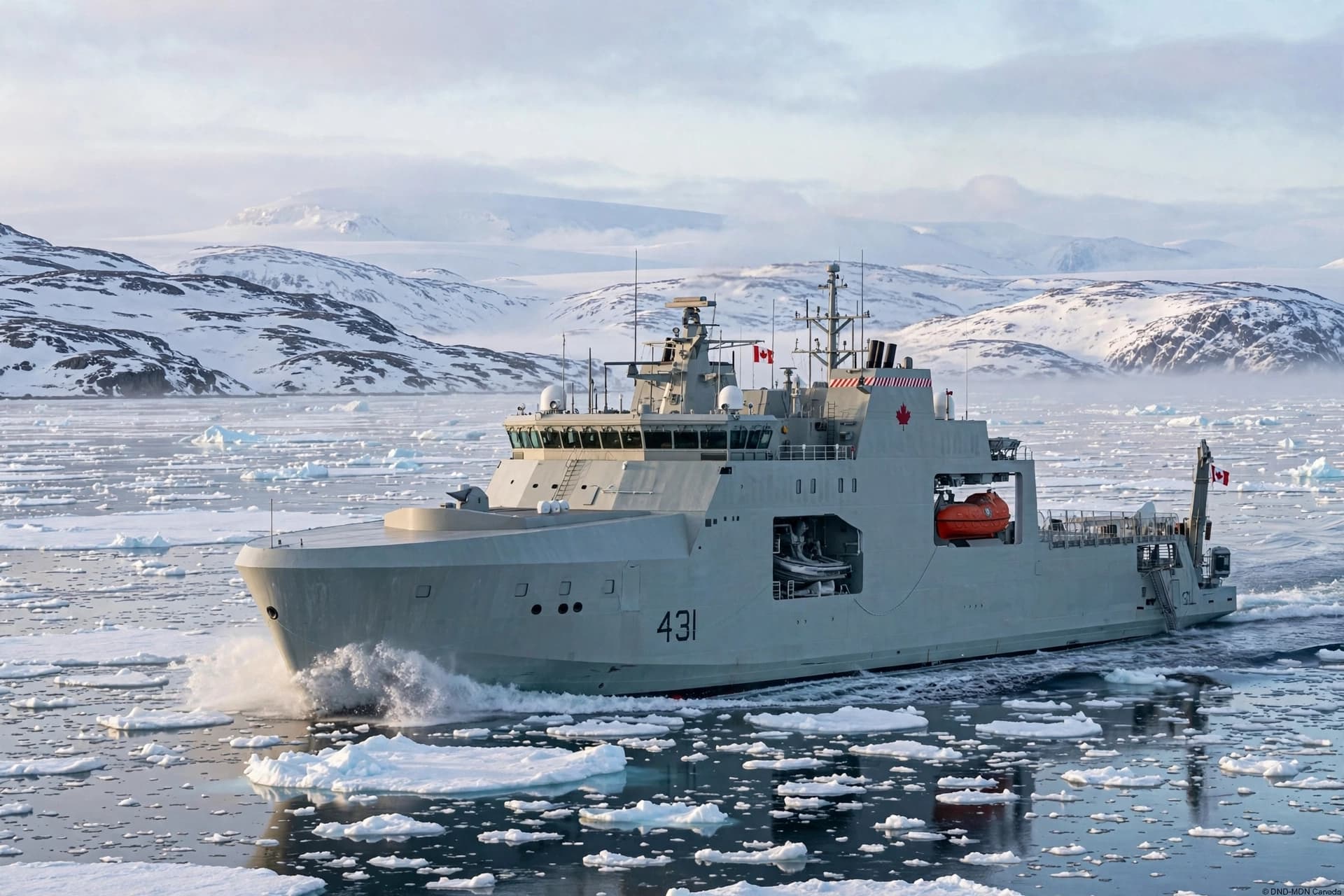
The defense dimension is substantial. Anand pointed to Prime Minister Mark Carney’s decision to significantly increase military spending, including a contract with Germany’s TKMS for up to twelve submarines and plans to purchase new fighter jets—a decision that remains to be finalized . She noted that Russia’s 2022 invasion of Ukraine not only changed Europe’s security environment but also deeply affected the Arctic. “Canada has Operation Reassurance on the eastern flank,” she said, “but we cannot forget that NATO must conduct a strategic assessment of the North and the Arctic to ensure our defense work there is adequate, not just focused on the east” .
Diplomatically, Canada has been expanding its presence. A new consulate opened in Nuuk, Greenland, and another is planned for Anchorage, Alaska . Anand said the Nuuk consulate is intended to ensure Canada “fulfills its representative duties outside the Arctic region and cooperates with other like-minded Arctic states,” including strengthening ties with Indigenous peoples, particularly the Inuit .
Yet a striking finding from a recent poll complicates the picture. A survey of residents in Nunavut, the Northwest Territories, Yukon, and Nunavik found that nearly half—48 percent—view the United States as the greatest threat to the region, far higher than Russia at 30 percent or China at 12 percent . That perception reflects a complicated reality: the ally with whom Canada coordinates most closely on Arctic defense is also the one northern residents distrust most.
Experts have raised questions about whether Canada has enough diplomatic capacity to match its Arctic ambitions. A Global News report asked whether Ottawa has sufficient diplomats to build and sustain the relationships its new consulates and defense partnerships require . The answer will shape how effectively Canada can navigate a region where the ice is thinning, the shipping lanes are opening, and the interests of multiple powers are converging.
Canadian Foreign Affairs Minister Anita Anand says threats to Canada’s North have “shifted significantly” due to Russia’s invasion of Ukraine and a changing geopolitical order. Canada is increasing defense spending and expanding diplomatic presence, though a poll shows northern residents view the U.S. as the region’s greatest threat.
AI Image Disclaimer: Visuals in this article are produced by artificial intelligence for illustrative purposes only and do not represent actual locations or events.
Sources: Global News, Sing Tao Daily, The True Story, NAADSN, Sohu
Published by Banx Network. This article is part of the Banx decentralized media programme, powered by the BXE token on the XRP Ledger.