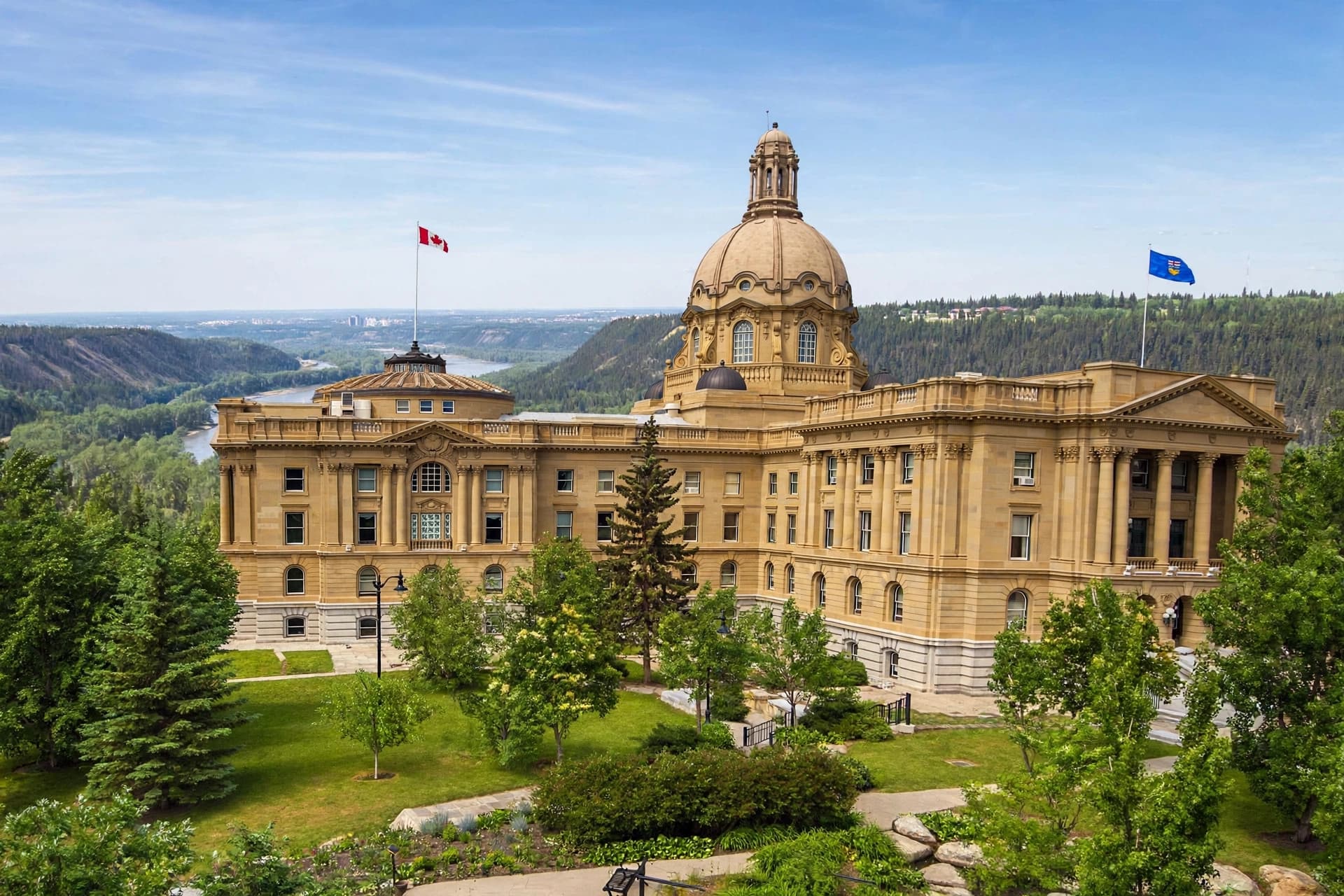
There is a particular weight that settles on a province when its people are asked, all at once, to decide not merely who should govern but how they wish to be governed. On October 19, Albertans will head to the polls not for a general election but for a referendum—ten separate questions printed on numbered and color-coded ballots, each one a small doorway into a larger argument about the province's place within Canada . Some questions concern immigration and social services. Others reach for the constitutional architecture itself. And one, quietly placed last, asks whether Alberta should remain a province at all. It is a moment that invites reflection on what a federation is for, and what it costs to hold one together.
The first nine questions are straightforward yes-or-no propositions. Five of them concern immigration. Albertans are being asked whether the province should take increased control over immigration to "decrease immigration to more sustainable levels," prioritize economic migration, and give Albertans first priority on new employment opportunities . Another question asks whether only Canadian citizens, permanent residents, and those with Alberta-approved immigration status should be eligible for provincially funded programs such as health care and education . A related question would require non-permanent residents to live in Alberta for at least twelve months before qualifying for social support, while another would charge them a fee or premium for using the health care and education systems .
The four constitutional questions are more ambitious in scope. One asks whether Alberta should work with other willing provinces to amend the Constitution so that provincial governments, not Ottawa, select justices for provincial King's Bench and Appeal courts . Another proposes abolishing the unelected federal Senate . A third would allow provinces to opt out of federal programs that intrude on provincial jurisdiction—health care, education, social services—without losing the associated federal funding . The fourth, and perhaps the most far-reaching, would give provincial laws priority over federal laws when the two conflict in areas of shared or provincial jurisdiction .
Public opinion on these questions varies considerably. A Research Co. poll conducted in late August found that majorities of likely Alberta voters support the five immigration questions, with support ranging from 58 to 66 percent . The constitutional questions fare less well. The proposal to prioritize provincial laws over federal ones drew 46 percent support; abolishing the Senate drew 39 percent . The idea of provincial control over judicial appointments received 45 percent support . These are not overwhelming mandates, but they are not dismissals either.
The tenth question is different in kind. It asks: "Should Alberta remain a province of Canada, or should the Government of Alberta commence the legal process required under the Canadian Constitution to hold a binding provincial referendum on whether or not Alberta should separate from Canada?" . The phrasing matters. A vote for the second option would not itself separate Alberta. It would authorize the provincial government to begin a legal process toward a future binding vote. The result is not binding, as Elections Alberta has stated, but the political signal would be unmistakable . Polling suggests that a substantial majority of Albertans—74 percent in one survey—would choose to remain in Canada . Separatist support hovers around 22 to 30 percent, largely confined to a segment of the province's conservative base .
The questions emerge from a longer history of western alienation—grievances over equalization payments, the National Energy Program of the 1980s, and more recent federal policies perceived as hostile to Alberta's energy sector . Premier Danielle Smith has framed the referendum as a mandate-seeking exercise, a way to strengthen Alberta's hand in negotiations with Ottawa. Prime Minister Mark Carney has called the separation question a "dangerous bluff," warning that voters should not treat it as a free option that can be reversed without consequence .
For Blackfoot and other Treaty Nations, the referendum raises questions that precede Confederation itself. The Blackfoot Confederacy has stated that Blackfoot Nations are "Treaty partners, not simply stakeholders" in decisions concerning lands, rights, and future . In May 2026, the Alberta Court of King's Bench ruled that the province had breached its duty to consult First Nations in litigation concerning an earlier separation petition . The referendum, whatever its outcome, will not resolve those deeper questions about whose voices must be heard when the shape of a province—and a country—is at stake.
Albertans will vote on ten referendum questions on October 19, covering immigration policy, constitutional reforms, and a final question on whether to begin the legal process toward a separation referendum. Polls show majority support for immigration questions but lower support for constitutional changes and separation.
AI Image Disclaimer: The images accompanying this article are generated by artificial intelligence and are intended for illustrative purposes only.
Sources: Blackfoot Confederacy, Research Co., Policy Magazine, Calgary Herald, Toronto Star, Radio-Canada
Published by Banx Network. This article is part of the Banx decentralized media programme, powered by the BXE token on the XRP Ledger.