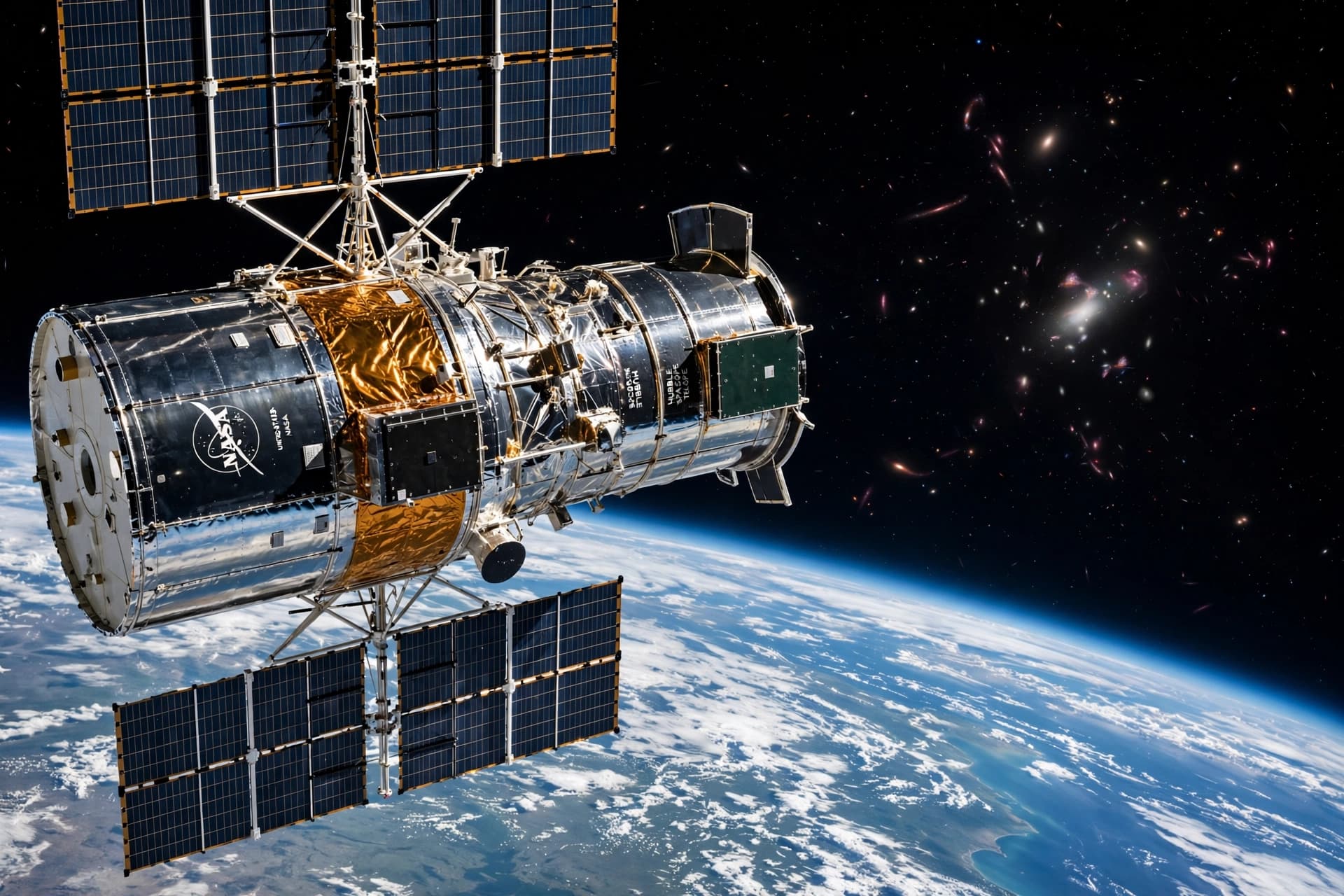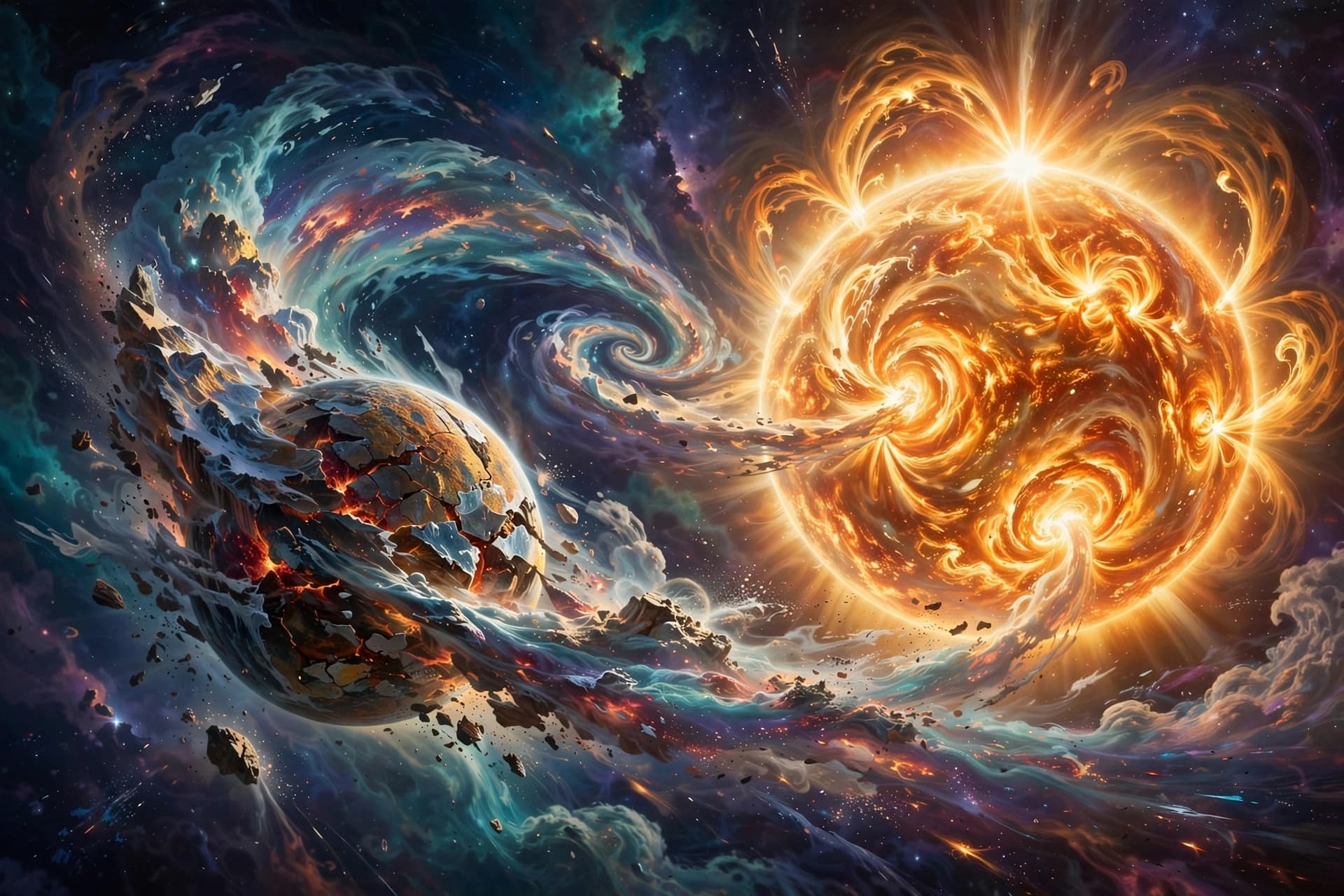
In the cold silence between stars, planets sometimes die not by slowly fading but by falling. They spiral inward, drawn by the gravity of the star they orbit, until they graze an atmosphere they cannot escape. What happens next—the tearing, the burning, the burst of gas and dust—has long been imagined by theorists but rarely witnessed. Now, the James Webb Space Telescope has offered a front-row seat to one such violent ending.
The object of study is a star called ZTF SLRN-2020, located about 12,000 light-years away . In 2020, the Zwicky Transient Facility in California caught a sudden brightening of this star, and follow-up observations with NASA's NEOWISE mission showed a slow infrared glow building for about a year beforehand . Initial interpretations suggested a red giant star had expanded and swallowed a planet, a theory that seemed plausible for an older star nearing the end of its life.
But Webb's infrared vision told a different story. The star was not a red giant at all. It appeared to be a regular star, with only about 70 percent of the Sun's mass . That ruled out the engulfment-by-expansion scenario. Instead, researchers led by Ryan Lau at NOIRLab concluded that the planet itself must have spiraled inward and crashed directly into the star.
The mechanics of this death spiral are subtle. Astronomers know that some gas giants, called hot Jupiters, form far from their stars and migrate inward over time . The planet around ZTF SLRN-2020 likely did the same, drifting closer until the star's gravity and tidal forces began to deform it. Morgan MacLeod of the Harvard-Smithsonian Center for Astrophysics described the process: the planet started to graze the star's atmosphere, then fell in faster and faster, smearing around the star as it was torn apart .
When the planet finally slammed into the star, the collision ejected a massive plume of gas into space. That gas cooled and formed the infrared glow that NEOWISE had detected. But Webb revealed something unexpected in that aftermath: a disk of molecular gas circling tightly around the star . Colette Salyk, an exoplanet astronomer at Vassar College, noted that the disk has the characteristics of a planet-forming region, even though no planets are forming there . The gas likely fell back into orbit after the ejection, creating a structure that scientists are still trying to understand.
The discovery, published in The Astrophysical Journal, offers a rare glimpse into a process that may be common in the universe . If planets can crash into stars with some regularity, it could explain odd chemical signatures seen in some stellar atmospheres. It could also inform our understanding of the final fates of planetary systems, including our own distant future.
For now, the research remains a first-of-its-kind observation, with much left to learn. The planet is gone, consumed in a matter of months. But its final act left a mark that Webb could see—a ring of gas and a fading glow, telling the story of a world that fell.
---
AI Image Disclaimer: The visual content accompanying this article was generated by artificial intelligence and is intended for illustrative purposes only.
Sources: The Astrophysical Journal, NASA, NOIRLab
Published by Banx Network. This article is part of the Banx decentralized media programme, powered by the BXE token on the XRP Ledger.