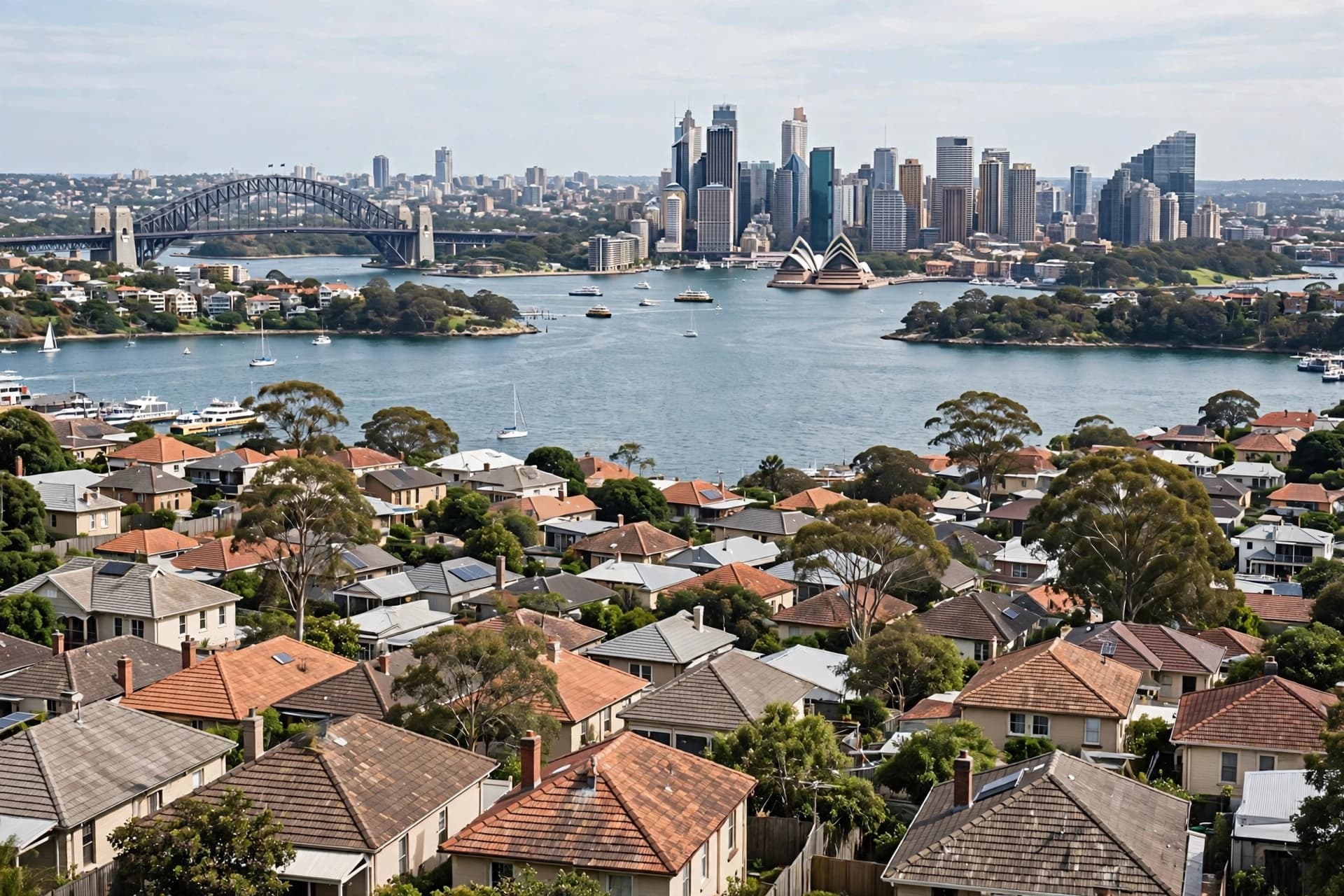
There is a tension in every city between the impulse to preserve and the need to grow—a tension that plays out not in abstractions but in streets, in views, in the height of buildings and the character of neighborhoods. In Sydney, that tension has found a particular focus in two local government areas, Mosman and Woollahra, where developers and business groups have grown increasingly frustrated with what they describe as obstruction to housing supply .
At the center of the dispute is the New South Wales government’s low- and mid-rise housing policy, which aims to increase density around transport hubs and town centers . Woollahra Council has opposed a plan to add nine thousand four hundred new homes near a revived train station, proposing a scaled-back alternative. Mosman Council has taken a similar approach, developing its own master plan that concentrates development along Military Road while seeking to limit mid-rise apartment blocks in low-density backstreets .
Urban Taskforce Australia, a developer peak body, has described the councils’ alternative plans as either “unrealistic” or failing to meet the state government’s targets . In a submission to the Productivity Commission’s housing supply inquiry, chief executive Tom Forrest wrote that the “anti-development attitudes” of some councils were hampering project feasibility and making financing increasingly difficult . He urged the state government to “show they are serious” by stripping councils such as Mosman and Woollahra of their planning powers, or by appointing an administrator to take over housing projects . “They don’t care about the carrot, they just don’t want change,” he said. “So the government needs to look at the stick” .
The Productivity Commission’s interim report, released in July, called for broad upzoning, including allowing three-story homes on most residential land . It asked how governments should deal with councils that are “slow or are obstructing approval pathways,” suggesting grant funding as a mechanism of both reward and consequence . The Business Council of Australia supported handing planning powers to state governments if councils blocked housing, arguing that “persistent failure to meet statutory responsibilities should lead to escalation” . The Committee for Economic Development Australia proposed withholding grant funding from obstructing councils .
Mosman and Woollahra councils have defended their positions. Woollahra Mayor Sarah Dixson described the government’s approach as “all stick and no carrot,” noting that the rezoning plan contains no funding for road upgrades, schools, or hospitals to support nine thousand four hundred new homes and twenty thousand additional residents . Mosman Council has raised concerns about heritage, neighborhood character, scenic views, and transitions to surrounding residential areas .
New South Wales Planning Minister Paul Scully has been clear that council master planning must be consistent with the low- and mid-rise framework. “The Minns-Labor government’s low- and mid-rise housing policy is here to stay,” he said. “It’s disappointing that some councils are continuing to stand in the way of much-needed housing supply” . The government is still deliberating on Mosman’s alternative plan, while Woollahra’s proposal remains under public exhibition .
What emerges from the submissions and counter-submissions is not simply a dispute about building heights or planning processes. It is a conversation about what Sydney will become, and who gets to decide. The councils speak of character and infrastructure; the developers speak of feasibility and supply. Both invoke the public interest. The Productivity Commission’s final report, due to the federal treasurer by the end of March 2027, may offer a framework for resolution—but the underlying tension, between the desire to preserve and the need to accommodate, will not be legislated away .
AI Image Disclaimer: The imagery associated with this article is AI-generated and does not depict actual people, places, or events.
Published by Banx Network. This article is part of the Banx decentralized media programme, powered by the BXE token on the XRP Ledger.