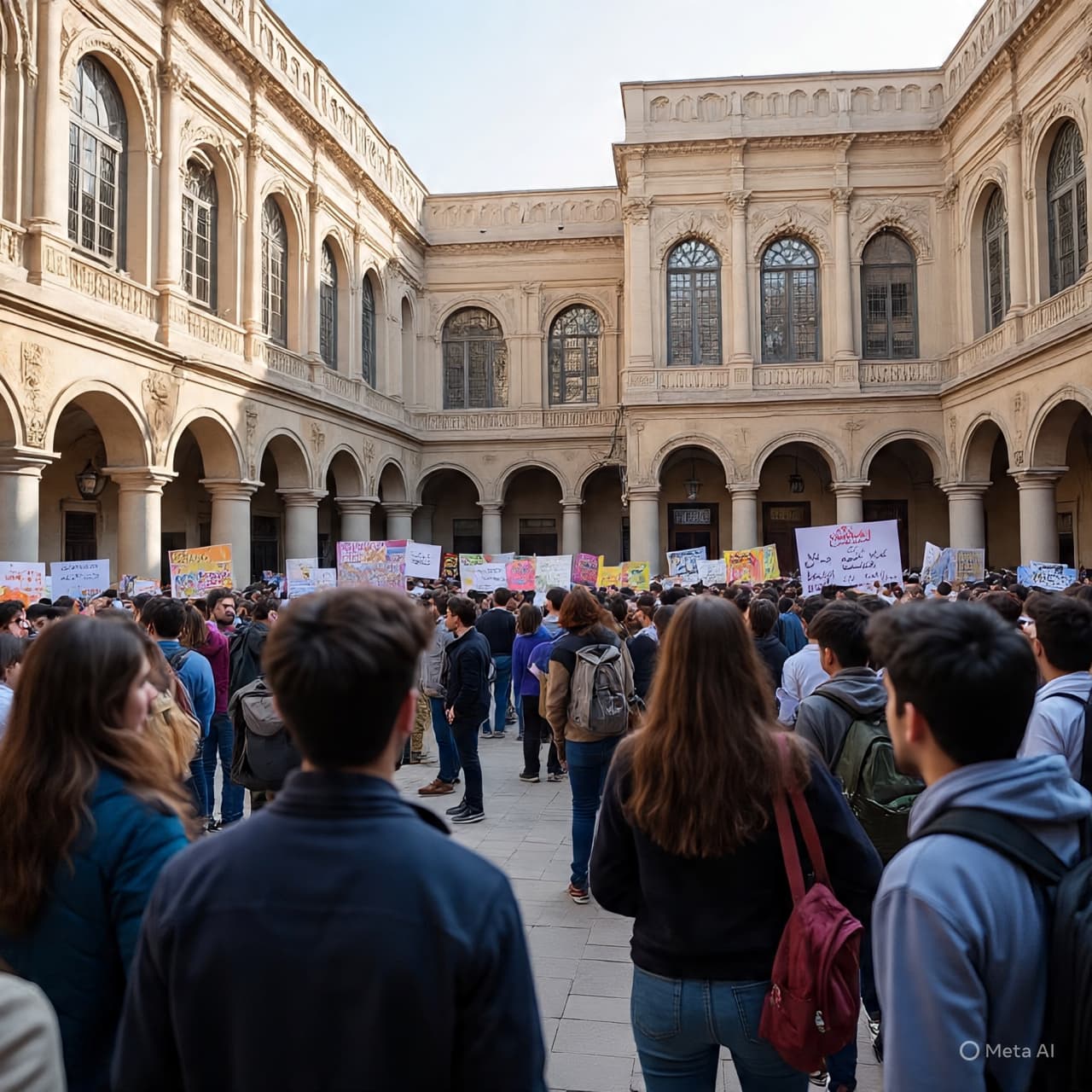
Opening On a campus courtyard at dawn, the first light softens the stone and glass of lecture halls, and in that gentle glow, voices begin to rise. Like birds stirred into flight by a distant wind, Iranian students have taken to walkways and plazas across their universities — not merely to speak, but to seek meaning in a moment that feels larger than any individual. What began as a quiet return to classrooms for a new semester has rippled outward, carrying with it memories of loss and sparks of conviction, as students gather again to express deep-seated concerns about the direction of their nation.
Body Across cities from Tehran to Isfahan and Mashhad, campuses that once echoed with lecture bells now carry chants and phrases that reverberate through courtyards and public squares. Young men and women in breezy jackets and scarves have stood beneath tall columns, raising slogans that blend remembrance with a yearning for change, while others hold flags or symbols that harken to eras before the present political order. These gatherings, unfolding at institutions like the University of Tehran, Sharif University of Technology and Amirkabir University of Technology, reflect not only a revival of protest activity but also a deep pause in collective thought about the nation’s recent path.
Interspersed with rhythmic clapping and voices calling out together, the atmosphere on these campuses feels reflective and earnest — a mosaic of determination and sorrow observed through the frames of cellphone cameras that capture the scenes for audiences both inside and beyond Iran’s borders. Many students carry with them the memory of a brutal crackdown that took place recently, shaping a narrative that goes beyond economics and enters into questions of governance, dignity and future possibilities for their society. Often, chants such as “Woman, Life, Freedom” and calls to reconsider the country’s leadership ripple through the crowds, blending grief with an appeal for compassion and justice.
Meanwhile, the response by university authorities and security forces remains measured yet tense, with occasional scuffles reported and signals of possible disciplinary action aimed at participants. On some campuses, the presence of youth aligned with state-linked organizations has added layers of complexity to these gatherings. Yet despite the potential consequences — from warnings texted to students to reports of temporary exclusion from campus grounds — many remain, quietly calculating their role in a moment that feels at once urgent and uncertain.
This unfolding scene is not merely about slogans or pageantry; it is about a generation wrestling with the weight of history and the shape of what lies ahead. The rustle of footsteps across a quad can feel like a whisper of change, steady and persistent — a gentle but unmistakable signal that, within these university walls, voices continue to seek space to breathe, to speak, and to reflect.
Closing Students across multiple Iranian universities have continued to protest against the government for a third consecutive day, with gatherings reported in Tehran, Isfahan and Mashhad. Demonstrations have coincided with the start of the new academic term and involve chants and symbolic acts expressing criticism of the current leadership. There have been occasional confrontations with pro-government groups and warnings of disciplinary measures, but the protests have persisted as campuses witness renewed expressions of dissent.
AI Image Disclaimer (rotated wording) Illustrations were produced with AI and serve as conceptual depictions.
Sources Reuters Associated Press (AP) The Guardian ABC News TRT World
Published by Banx Network. This article is part of the Banx decentralized media programme, powered by the BXE token on the XRP Ledger.