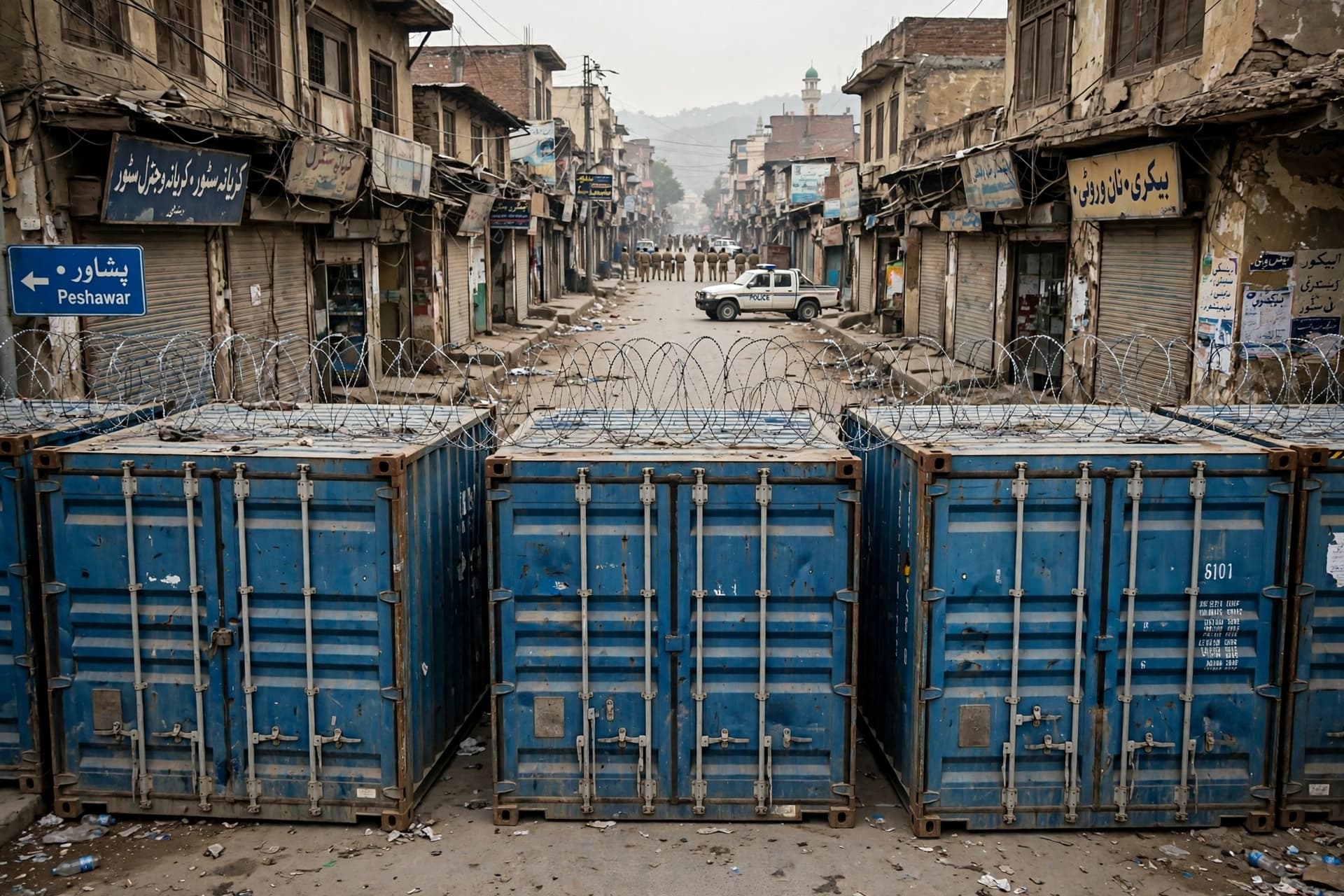
There is a particular kind of quiet that descends when a government decides that a province must be sealed—not by war, but by containers, razor wire, and the suspension of the ordinary rhythms of daily life. In Khyber Pakhtunkhwa, the provincial stronghold of Imran Khan’s Pakistan Tehreek-e-Insaf party, that quiet arrived on Sunday when the federal government imposed emergency rule, suspended the provincial government, and deployed police and paramilitary forces across the region . Schools closed. Internet service was partially shut down. Roads into Peshawar’s administrative zone were blocked by shipping containers and wire .
The government’s stated reason was security. Information Minister Attaullah Tarar told journalists that the PTI-led provincial government was “hand in glove with the terrorists” and that emergency rule was necessary to protect the population from the threat of militancy . He did not provide evidence at the time and promised to do so soon. Two days later, schools in Peshawar had reopened and most internet services had been restored, but the political crackdown had only deepened . Police officials, speaking anonymously, told AFP that 278 PTI members had been detained in the province since the emergency declaration .
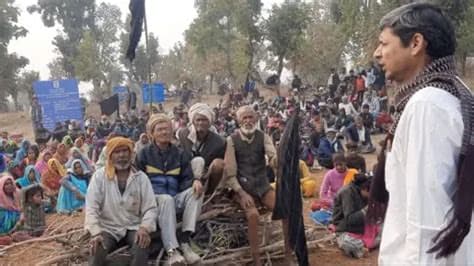
The timing of the move has drawn scrutiny. For the past week, thousands of Khan’s supporters had marched through Khyber Pakhtunkhwa, where the PTI has governed for 13 years, demanding the release of the former prime minister, who has been imprisoned since August 2023 on charges he and his legal team describe as politically motivated . The protests were led by Chief Minister Sohail Afridi, whose whereabouts remain unclear. His party says he has been arrested; the government says he is in “protective custody” .
Observers see the emergency rule as less about terrorism and more about political control. Farzana Sheikh, an associate fellow at Chatham House, told the BBC that the government’s stated rationale “sounded disingenuous.” Journalist Arifa Noor said she did not see a link with terrorism, adding that the move may have been the “last straw” in a government decision that it did not want to deal with an opposition-run province . Michael Kugelman of the Atlantic Council noted that the PTI rank and file had become increasingly restless amid concerns about Khan’s health, and that the government may have decided “now is the time to send a very strong message” .
The crackdown has already begun to draw the kind of attention that authoritarian measures often invite. On Tuesday, dozens of PTI supporters took to the streets in Bara, in Khyber district, and police fired tear gas to disperse them . In Peshawar, small groups of protesters played a cat-and-mouse game with police, chanting slogans and dispersing, then returning . The protests were smaller than the marches that preceded the emergency declaration, but the anger they represent has not disappeared—it has merely been pushed underground.
What happens next depends on how long the emergency measures remain in place and whether the government’s promised evidence of terrorist links materializes. The PTI has described the measures as undemocratic and a grab for power by the federal government . The balance of power, as one analyst told the BBC, has shifted decisively toward the military establishment, which is feeling confident that it has the cards in its hands . But confidence and control are not the same thing, and the history of locked-down provinces is not a history of quiet resolutions.
Emergency rule was imposed on Sunday, October 11. The PTI-led provincial government has been suspended and is described by federal officials as “non-functional.” At least 278 PTI members have been detained, according to police officials. Chief Minister Sohail Afridi is in custody, though the government disputes the term “arrested.”
Note: The visuals accompanying this report are AI-generated and are not photographs of real events.
---
Sources: BBC News, The New Indian Express, The Hindu, La Libre, Bangladesh Pratidin
Published by Banx Network. This article is part of the Banx decentralized media programme, powered by the BXE token on the XRP Ledger.