There are movements so slow that they seem indistinguishable from stillness, like the drifting of continents beneath our feet. For much of human history, Earth has appeared steady, a quiet stage upon which everything else changes. And yet, beneath this illusion of permanence, the planet has always been in motion—its surface reshaped not in moments, but across unfathomable stretches of time. Now, new research suggests that this restless choreography began far earlier than once believed, as if the Earth had learned to move almost as soon as it had learned to exist.
For decades, scientists have debated when plate tectonics—the process that drives continents to shift, collide, and reshape the planet—first began. Traditional models often placed its origins around 2.5 to 3 billion years ago, a time when Earth had cooled enough to sustain stable crustal plates. But recent findings, drawn from the study of ancient rocks dating back 3.5 billion years, suggest a different story—one in which the planet’s surface was already dynamic, already alive with motion.
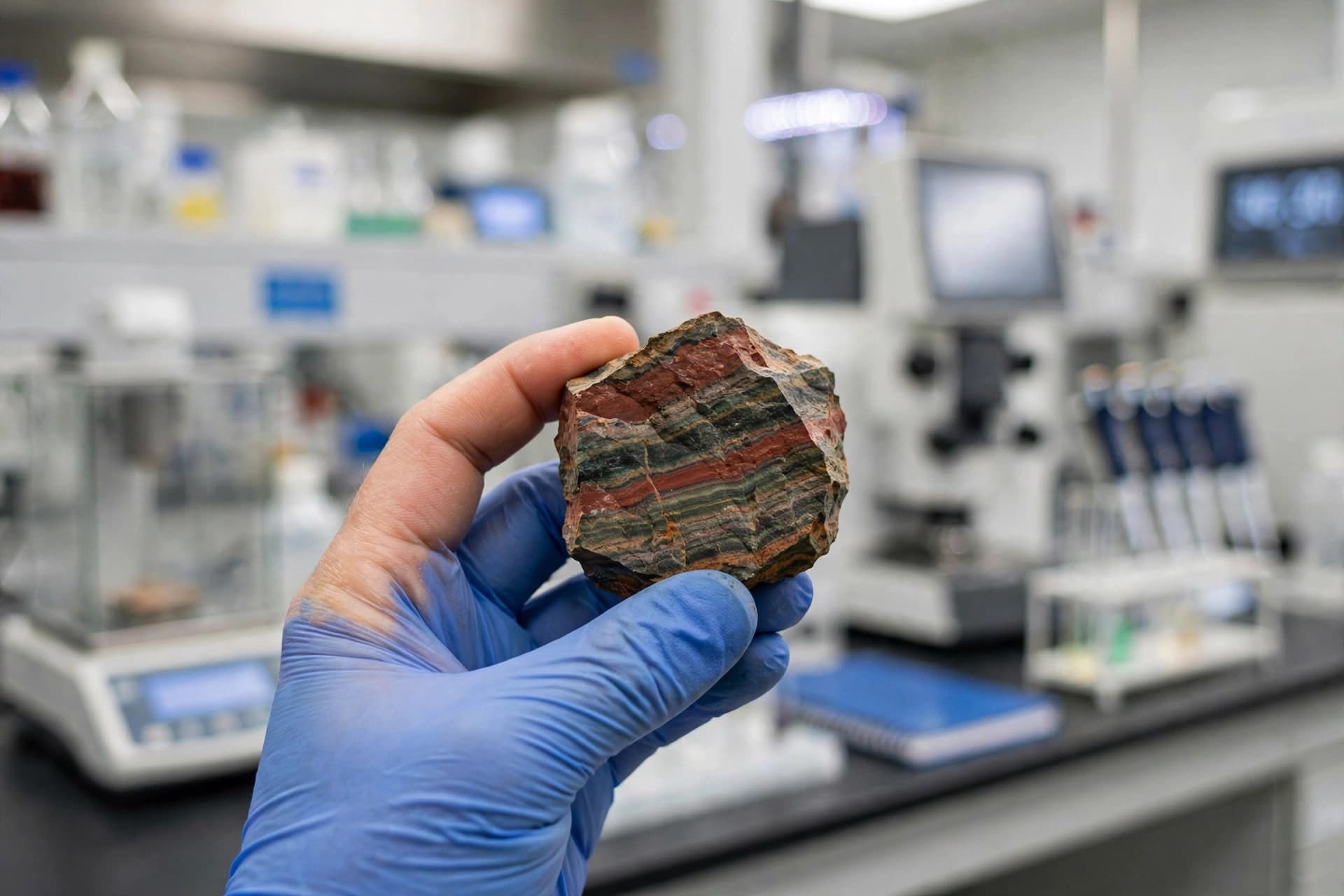
The clues lie within some of the oldest surviving fragments of Earth’s crust. These rocks, preserved in regions such as ancient cratons, carry subtle chemical and structural signatures. Scientists have found patterns that resemble those formed by modern tectonic processes—evidence of crust being pushed, pulled, and recycled. In particular, isotopic compositions and mineral alignments hint at processes similar to subduction, where one plate slides beneath another, a hallmark of active plate tectonics today.
This does not necessarily mean that early Earth looked like the world we know now. The tectonic system of 3.5 billion years ago may have been less organized, more fragmented—a patchwork of shifting plates rather than the large, stable continents we recognize. Heat from the young planet’s interior was far greater, potentially driving more vigorous and chaotic movements. In this sense, early tectonics may have resembled a restless experiment rather than a settled system, a planet still learning the rhythms of its own geology.
Yet even in that turbulence, there is a quiet continuity. Plate tectonics is not merely a geological curiosity; it is deeply tied to the conditions that make life possible. The movement of plates helps regulate Earth’s climate over long timescales, cycling carbon between the atmosphere and the interior. It shapes oceans and continents, creates environments where life can emerge and evolve. If tectonic activity began earlier than once thought, it may have provided a stable stage for life sooner as well, subtly influencing the earliest chapters of biological history.
There is, however, a careful restraint in these conclusions. Ancient rocks speak in fragments, and their stories must be interpreted with patience. Not all scientists agree on how to read these signals, and alternative explanations remain under discussion. Some suggest that early Earth’s processes may have mimicked tectonics without fully resembling the modern system. In this way, the debate itself becomes part of the story—a reminder that understanding deep time is as much about questioning as it is about discovery.
What emerges is not a definitive answer, but a shifting perspective. The Earth, it seems, may not have waited long to become dynamic. Its surface may have begun moving while the planet was still young, still hot, still forming its identity. This possibility reframes our understanding of planetary evolution, suggesting that motion—rather than stability—may be one of Earth’s earliest traits.
In the end, the idea of a young Earth already in motion carries a quiet resonance. It invites us to see the ground beneath us not as something fixed, but as something that has always been changing, even when we could not perceive it. The continents we inhabit are part of a story still unfolding, their journeys measured not in years, but in billions of them. And in that long, slow movement, there is a kind of continuity—a reminder that even the most solid foundations are, in their own way, always becoming.
AI Image Disclaimer Graphics are AI-generated and intended for representation, not reality.Source Check Credible coverage of this topic appears in:
Nature Geoscience Science BBC News National Geographic The New York Times
Published by Banx Network. This article is part of the Banx decentralized media programme, powered by the BXE token on the XRP Ledger.