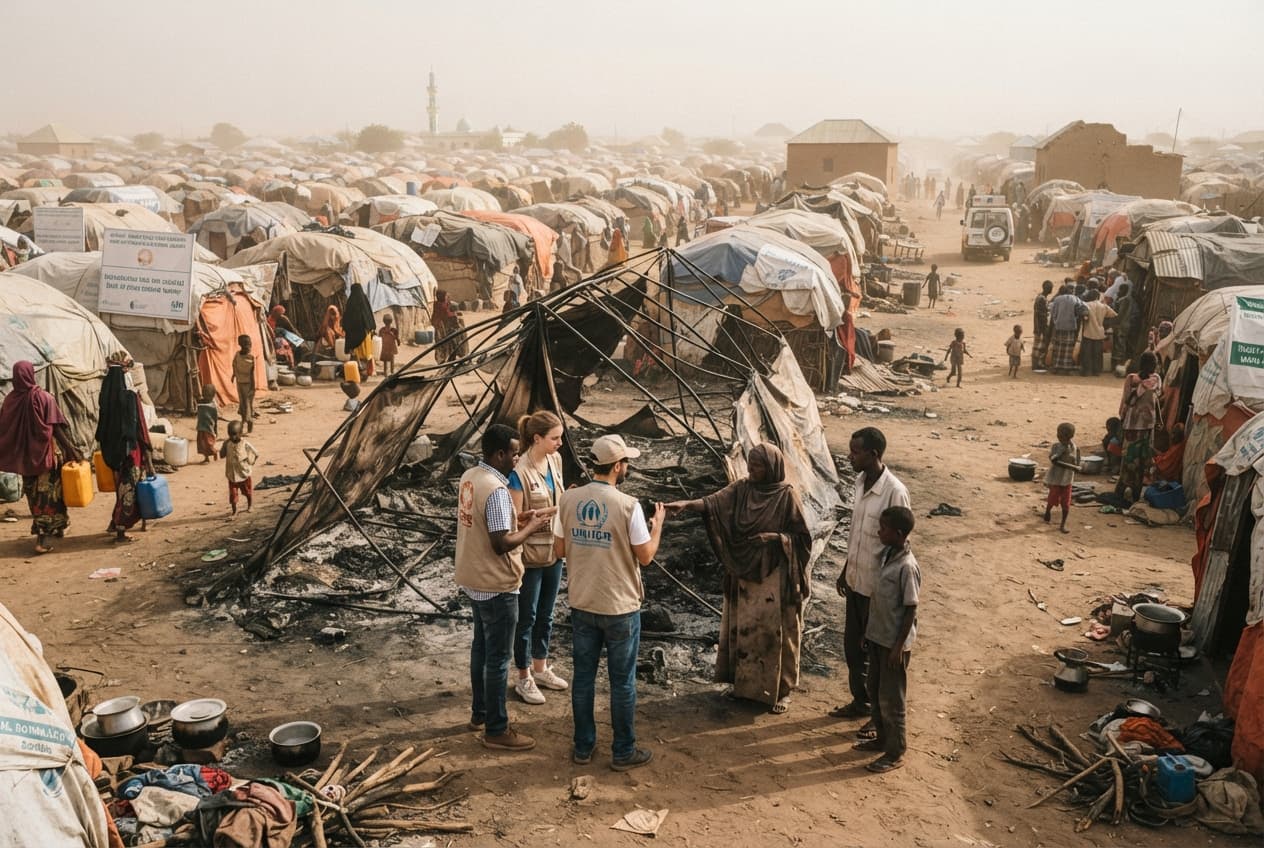
Baidoa, Somalia—A fast-moving tent fire ripped through a crowded internally displaced persons camp, killing four young children inside a makeshift shelter. Camp residents used sand and water buckets to combat the flames, but synthetic canvas materials fueled the blaze instantly. Humanitarian aid workers on site confirmed that the children were trapped inside when the lightweight structure collapsed. Emergency medical volunteers rushed to the zone, but victims succumbed to severe burns and smoke inhalation before reaching care.
Camp management officials stated that an unattended cooking fire inside the cramped family tent likely triggered the sudden blaze. Displaced families live in tightly packed clusters constructed from branches, plastic sheeting, and cloth, creating extreme fire hazards. Aid agencies have repeatedly warned that overcrowding and lack of fire safety infrastructure turn routine cooking into a daily gamble. Local health clinic staff treated several adults for smoke inhalation and minor burns sustained during rescue attempts.
The tragedy underscores the desperate living conditions faced by thousands of families sheltering in regional displacement settlements across the drought-affected zone. Municipal authorities lack the resources required to implement firebreaks or provide fire-resistant housing materials to vulnerable populations. Relief coordinators distributed emergency blankets and temporary shelter kits to the grieving family and neighboring households. Security personnel cordoned off the ash-covered plot while community elders assisted with immediate funeral arrangements.
Aid organizations renewed urgent appeals for international funding to improve basic safety infrastructure within overcrowded displacement camps. Camp committees scheduled an emergency safety meeting to educate residents on open-flame risks inside confined canvas structures. Regional government officials visited the site to offer condolences and promised a coordinated distribution of safer cooking stoves. Forensic volunteers documented the structural damage to verify figures for international humanitarian reporting databases.
Relief teams continue assessing surrounding tent rows to ensure no structural hazards remain that could trigger secondary camp fires. Community volunteers started clearing the charred frame to help the family rebuild a basic shelter before nightfall. Mental health counselors arrived at the camp to provide trauma support to surviving family members and witnesses. Official investigations into the exact ignition source remain open pending final reports from camp security committees.
Published by Banx Network. This article is part of the Banx decentralized media programme, powered by the BXE token on the XRP Ledger.