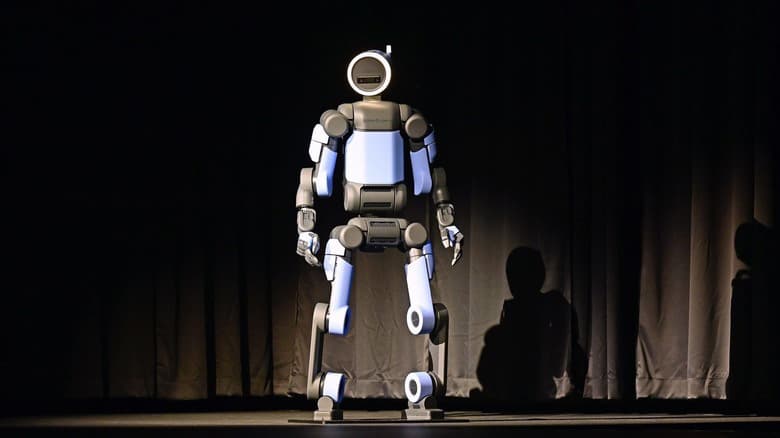
The labor union at Hyundai Motor is vigorously opposing the company’s plans to integrate humanoid robots into its workforce, citing significant concerns over job losses and economic repercussions. Following the recent unveiling of the Atlas humanoid robot at CES 2026, the union has formally warned Hyundai against deploying these robots without union approval.
Hyundai aims to utilize a fleet of Atlas robots in its Metaplant America in Georgia starting in 2028. According to reports, the automaker intends to build a factory capable of producing 30,000 robots annually and deploy tens of thousands across its factories. This ambitious plan comes alongside a $26 billion investment in U.S. operations through 2028.
Union leaders expressed skepticism over the company's intentions, arguing that the introduction of these robots is a move to reduce labor costs significantly. They emphasized that unless there's an agreement between labor and management, no new technology, including robots, will be allowed into the workplace. This stance is indicative of broader concerns that automation could exacerbate unemployment.
The Atlas robot, designed for tasks involving repetitive motions and heavy loads, is expected to begin by handling parts sequencing and eventually move into more complex assembly tasks. While the union sees potential for these robots to disrupt jobs—especially given their ability to operate continuously with minimal maintenance—the exact nature of robot tasks and their impact on human workers remains unclear.
The labor union is also critical of Hyundai’s shift in production focus towards the U.S., arguing that the new factory threatens job security at existing Korean facilities. The continuing development of the Atlas robot has led to rising tensions between automated operations and job security for Hyundai employees, highlighting a critical intersection of technology, labor rights, and economic stability.
As discussions continue, the union insists that Hyundai address the potential consequences of automation on its workforce before proceeding further with its plans to integrate humanoid robots. This situation reflects a growing concern globally about the balance between technological advancement and the protection of workers' rights in evolving industries.
Published by Banx Network. This article is part of the Banx decentralized media programme, powered by the BXE token on the XRP Ledger.