The Geminid meteor shower of 2025 once again transformed ordinary nights into moments of shared wonder. Originating from the rocky asteroid 3200 Phaethon, these meteors are known for their steady pace and bright presence, often leaving short-lived trails that feel deliberate rather than fleeting. Unlike many meteor showers that rely on comets, the Geminids carry a different story, shaped by stone and sunlight instead of ice and vapor.
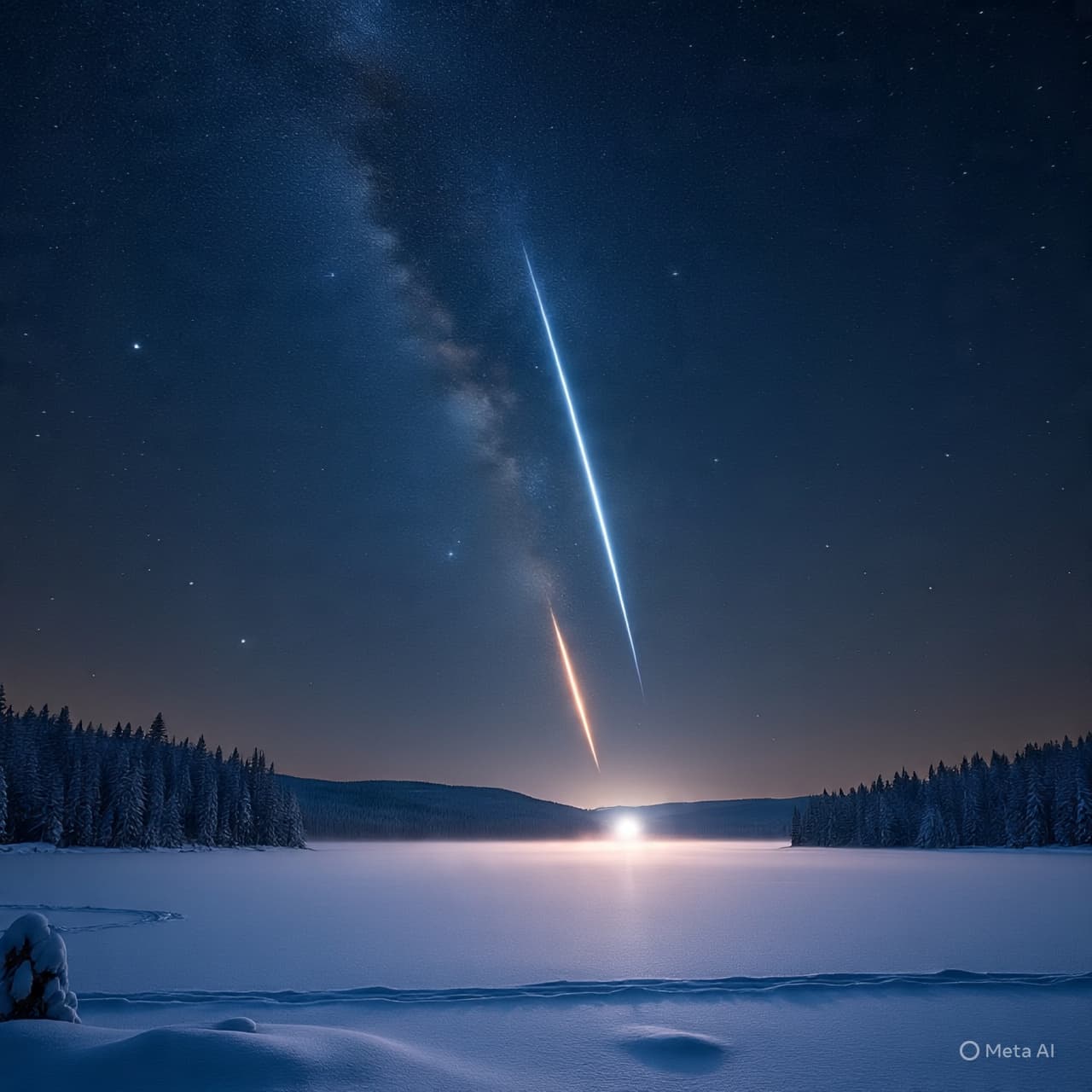
This year’s display benefited from favorable viewing conditions, allowing observers across much of the world to witness dozens of meteors per hour at its peak. From rural fields to suburban backyards, people paused, looked upward, and counted streaks that seemed to stitch the sky together. Photographers captured arcs of light against winter constellations, while casual viewers simply stood still, letting the moment pass through them.
There was no urgency to the Geminids, only rhythm. Each meteor arrived unannounced, then vanished without insistence, echoing the quiet certainty of celestial mechanics. In a year crowded with noise and motion, the shower offered something gentler: a reminder that the universe still moves according to its own calm schedule.
As the Geminid meteor shower fades into memory, it leaves behind images, photographs, and small personal moments shared under open skies. The event marks another completed cycle in Earth’s journey around the Sun. For skywatchers, it quietly closes the astronomical year, with no final message beyond the simple fact that the sky continues to perform.
AI Image Disclaimer
Visuals are created with AI tools and are not real photographs.
Source :
Space.com
Published by Banx Network. This article is part of the Banx decentralized media programme, powered by the BXE token on the XRP Ledger.